Williamstown Officials Mull ARPA Funds to Address School Race Issue
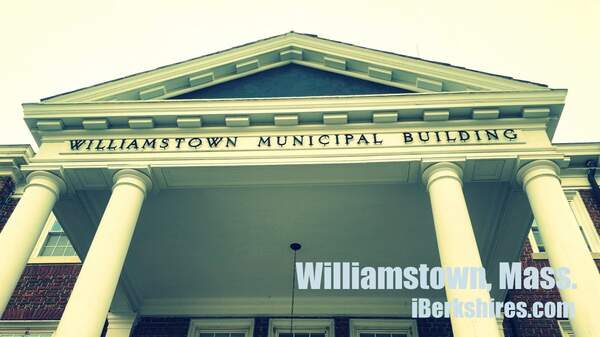
WILLIAMSTOWN, Mass. — The Select Board on Monday will consider considered dedicating some of the town's remaining ARPA funds to address an emergency situation in the local public schools.
Randal Fippinger brought the idea to the board in response to detailed testimony on racist incidents at Williamstown Elementary School and Mount Greylock Regional School that were raised both to the town's diversity committee and the Mount Greylock Regional School Committee.
Last week, the School Committee was asked to form a task force to address the issue and to bring in an outside consultant to advise the district on how to properly train its staff and, going forward, create a more inclusive environment in the preK-12 system.
On Monday, Fippinger suggested an amount, $27,000, that the town could spend to help pay for the consultant and a source for that money: the remaining American Rescue Plan Act funds that need to be committed by the end of the calendar year.
Fippinger raised the idea during a continuation of a discussion from the board's April 22 meeting about a request from Town Manager Robert Menicocci to allocate nearly $80,000 in ARPA funds for a sewer project.
With only three Select Board members present at the April 22 meeting, they decided to take no action on the request. But in the April meeting, Fippinger and Menicocci offered differing recollections of the board's intentions for about $166,000 remaining from the nearly $2 million ARPA allocation.
Menicocci said it was his understanding that the board was OK with him counting on the remaining funds for infrastructure needs. Fippinger countered that the board had made no such commitment and was still open to addressing other priorities with the federal aid.
On Monday, Fippinger was more blunt.
"We can have the best infrastructure in the world, but if young parents don't want to live here, what's the point of it?" Fippinger asked, referring to the concerns over race-based incidents in the schools.
"We talked in the Finance Committee about needing more people here or all our taxes are going to go up. If we're not making this a better town and improving the quality of life for people in the multiple ways we want to do it, none of this matters."
Fippinger argued that the town already had used enough of the ARPA funds for infrastructure and that he wanted to see not one more dime go to that type of expense.
"ARPA is a special thing," Fippinger said. "We've given over $700,000 to capital improvement. I think that's important. I'm glad we did it. But I think this last little bit of money needs to go to quality of life issues."
The other four members of the board agreed with Fippinger that there needs to be a dialogue with the Mount Greylock district parents and the school administration about concerns raised last week in the School Committee meeting. And they were generally sympathetic to the notion that ARPA funds, which are controlled by the board, could play a part.
Menicocci explained that the $79,883 he sought in ARPA funds would be leveraged to unlock $150,000 in a state grant toward a $300,000 asset mapping project for the town's sewer lines. The balance, roughly $70,000, would be part of the town's match for the state grant in the form of in-kind contributions (time and money) that would come from the regular town budget.
Select Board Chair Jeffrey Johnson, who identifies as multiracial and was a founding member of the town's Diversity, Inclusion and Racial Equity Committee, agreed with Fippinger that the town needs to spend more money to make Williamstown more inclusive to a wide variety of residents — both in terms of town amenities and the current issue in the schools.
But he acknowledged the potential benefit of Menicocci's request.
"Your son, your daughters and my son have dealt with issues in the schools," Johnson said, addressing colleagues Fippinger and Jane Patton. "And it's not OK. Where does the buck stop?
"I feel terrible because we're put in the situation where roughly $80,000 can get us $150,000 to take care of a need. And, at the same time, I'm sitting here after four years, including my year on DIRE, and the town website still isn't where it needs to be, there are no pickleball courts, no basketball court. Thank God for Bill [MacEwen] and Purple Valley and the group that is actually going out there and doing some stuff."
Fippinger made a motion that the board commit the nearly $80,000 in ARPA funds for the sewer project and, at the same time, earmark $27,000 for diversity, equity and inclusion work in the Mount Greylock Regional School District.
After some discussion, it became apparent that the other members were not comfortable tying up a specific amount of ARPA money without a more structured proposal on the table for the $27,000, so Fippinger withdrew that motion. Instead, the board voted 5-0 to commit the $79,883 for the infrastructure problem and take no action on the remaining $66,257 in ARPA funds until after it has discussed a formal proposal from the district and the parents who are sounding the alarm.
Johnson and Fippinger agreed to open a dialogue with the district administration with hopes of bringing a proposal back to the Select Board in the coming weeks.
In other business on Monday, the Select Board:
• Decided to offer the town flag that formerly hung in the town hall meeting room to the Williamstown Historical Museum.
• Agreed with Menicocci that the town needs a policy on accepting donations after receiving a request from a family to donate a new bench at Mount Hope Park on Green River Road.
• Finalized the amended version of a proposed charter amendment to create a charter enforcement process. The amended language will be inserted into the printed warrant that residents receive at the May 23 annual town meeting at Mount Greylock Regional School. Boyd, who was among those who raised concerns about the enforcement provision earlier this spring, voted in the minority of a 4-1 vote to recommend the amended version because of continued concerns, including its lack of specificity on actions that could be taken when a charter violation is found.
• Heard that the town has hired a new finance director and has a number of resumes for its vacant information technology position. But, Menicocci said, his office is still thinking through how to address human resources needs after the collapse of a shared-services agreement with North Adams and Adams to employ an HR officer for all three communities.
• And discussed potential revisions to a Select Board handbook that board members drafted a few years ago. The non-binding "handbook," which has no authority from either state law or town bylaw, does not obligate future members of the Select Board to any of the practices it lays out but serves more as a set of principles for whoever happens to occupy the five positions on the elected board at a given point in time. The handbook was added to the list of potential topics for the Select Board's planned retreat on the morning of June 5 6 at the Williams Inn.
Tags: ARPA,