Clark Art Exhibit Explores Imperialism, Lost History of South America
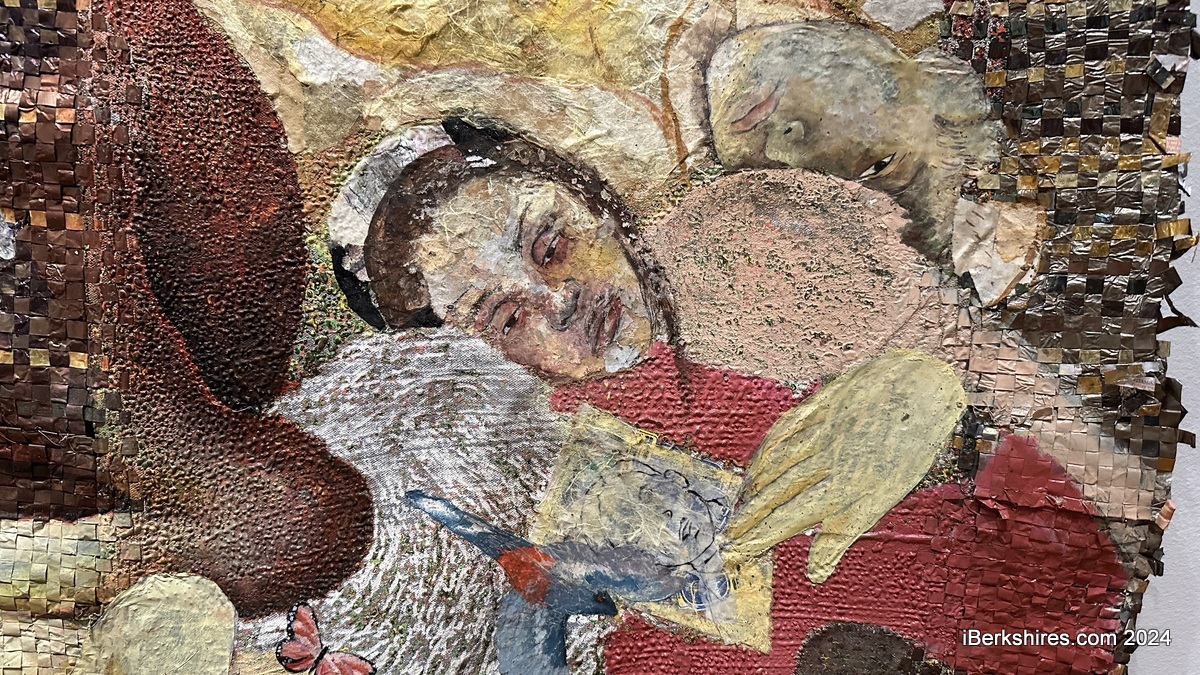
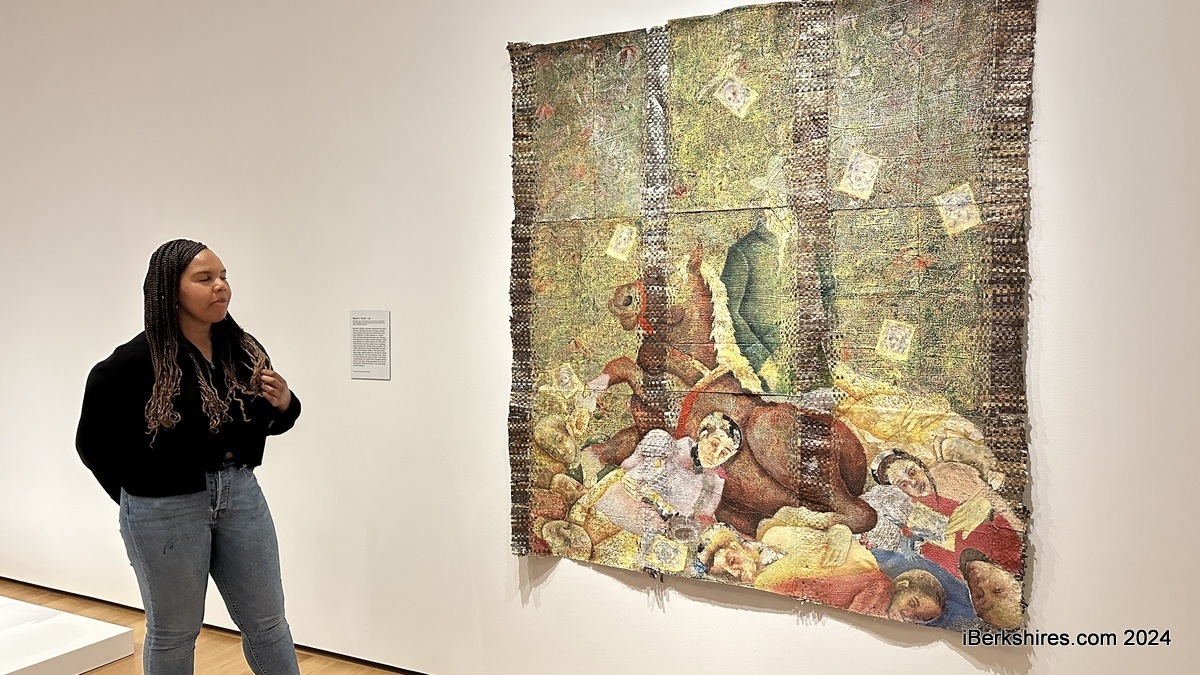
A close-up of Kathia St. Hilaire's 'Mamita Yunai,' the aftermath of the massacre of striking United Fruit Co. workers by Colombian soldiers.
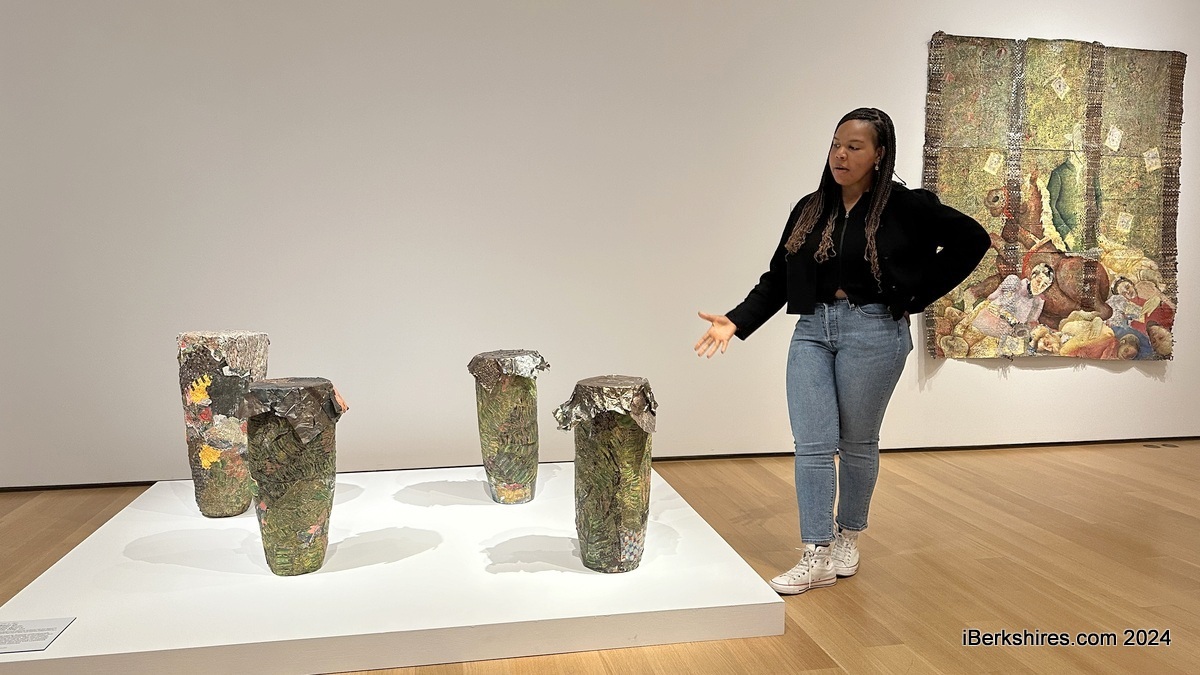
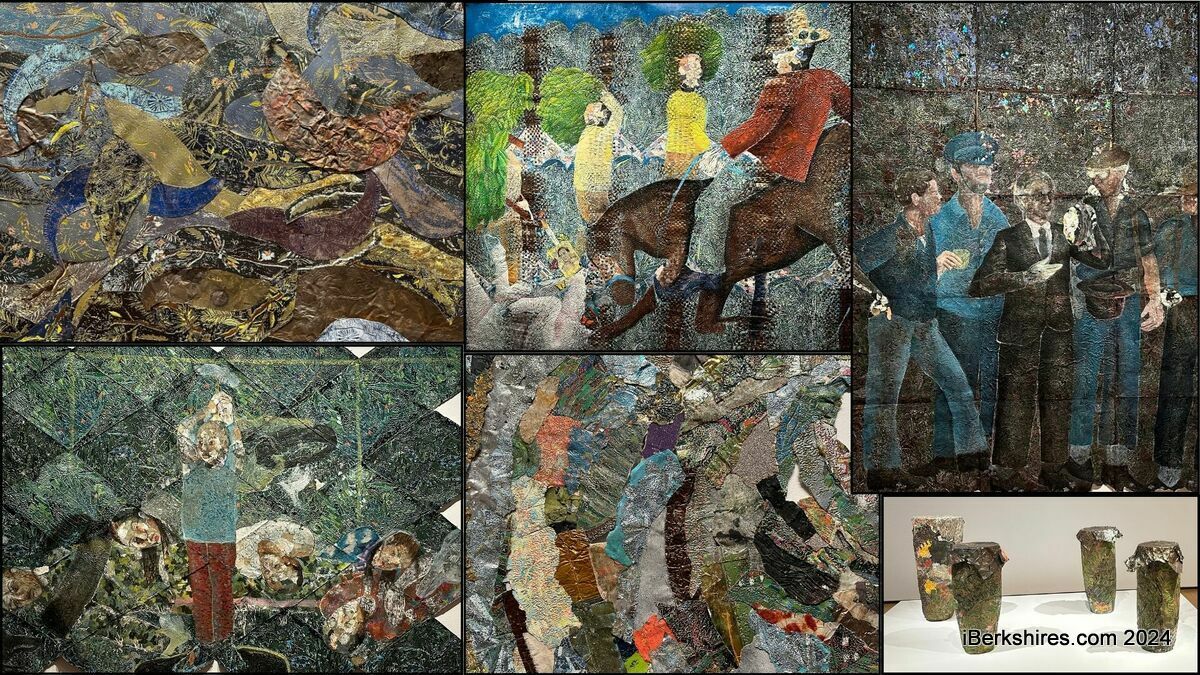
Artist Kathia St. Hilaire uses mixed mediums, including printmaking, painting, collage, and weaving, to explore the lost Haitian history and culture she has heard as tales told by her parents and investigates how imperialism persists today in subtler forms.
In her work, St. Hilaire uses various materials, including "beauty products," such as skin lighteners, industrial metal, fabric, and tires. She brings to life the lost history while drawing inspiration from Haitian vodou flags.
St. Hilaire is informed from her experiences growing up in Caribbean and African American neighborhoods in South Florida and being raised by parents who immigrated to the United States from Haiti.
Her work depicts historical moments, including the Haitian revolution, French colonialism, foreign interventions in the Caribbean, and the banana massacre in , and brings to life forgotten historical figures, including Rosalvo Bobo, Benoît Batraville, and Charlemagne Péralte, and integrates them with legends of Haiti's leaders.
The stories that St. Hilaire tells are personal, "familial about the diasporic communities in which she was raised," and national "about the first free black Republican world, Haiti, and they are international pertaining to the "wider region, the Caribbean, Latin America, areas in which the United States has taken a great interest in, to put it lightly in historical terms," curator Robert Wiesenberger said.
The way she narrates these stories together and depicts the effect they have on the present is an "unbelievable craft," he said.
During these historical events, history was "slowly happening at the simultaneously," and through these decisions viewers can see how intervention plays again in today's society, St. Hilaire said.
She uses her work to show how stories of the past have become incomplete with time. Wiesenberger point's out how in the piece "Mamita Yunai" (the nickname Haitians had for United Fruit Co.) the woven edges are incomplete and pieces are woven together, showing how this oral history is incomplete.
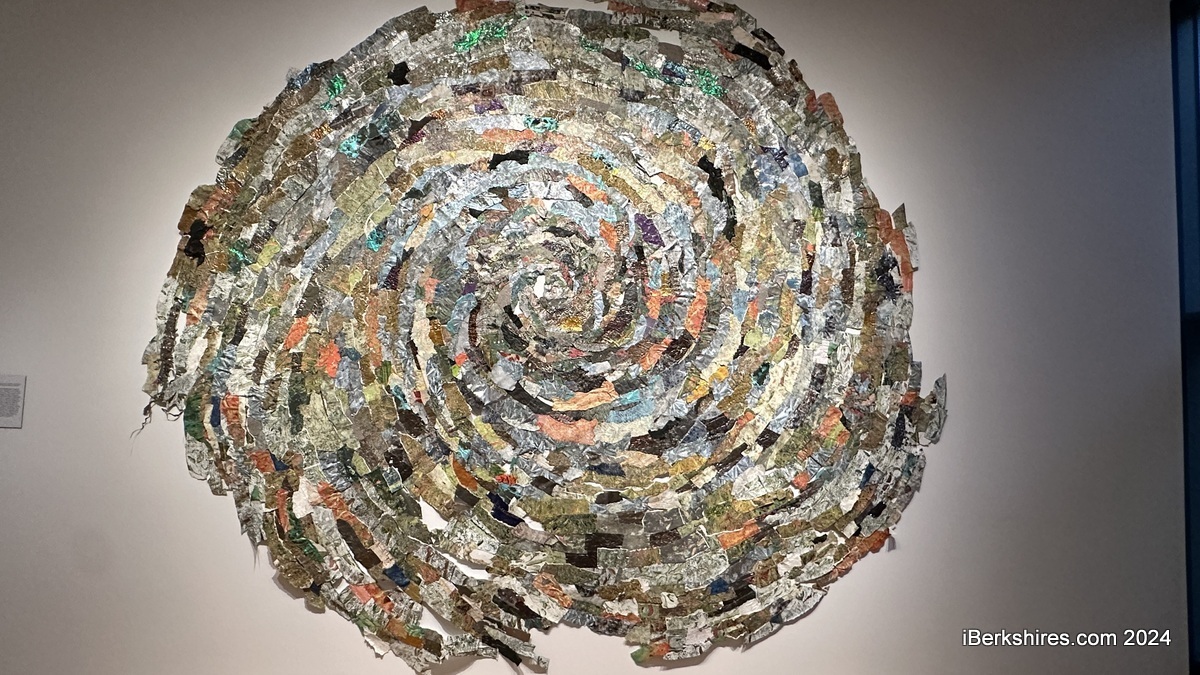
"Mamita Yunai" was once part of her other artwork "David," which is named after a hurricane that her mother experienced in the 19 70s while she was in Haiti. "David" was created first as a way to experiment with different textures and attempt to bring them together, in addition to it being a creative way clean up her studio floor. It is made up of the scrap pieces from her other works of art.
The piece demonstrates how you do not have to always look for something new but can reuse items and how these items can interestingly connect to the past even though it was not directly related to the moment in history, she said.
After reading the book "One Hundred of Solitude" by Gabriel García Márquez, she combined the two pieces as a metaphor for imperialism, similar to the storm within the story.
The past informs the present yet these historical moments have been lost to time and represent themselves in subtler forms, St. Hilaire said.
A piece that strongly shows this is her piece "Skin Lightening $2.19" which shows how the Latin Americans, Middle Eastern, and African American people are still experiencing the impact of imperialism through the utilization of skin lighteners.
It is not about how skin lighters are a way of self hate, rather it is seen as way of beautifying yourself, St. Hilaire said. There is this idea of a "black revolution" but then there are these conflicting products that are being used, repeating history in a subtler way.
The artist's work not only reflects historical events but also shows St. Hilaire's personal journey of self-introspection.
From the subtle homage to the flowers that grow in her parents' garden, to the utilization of the skin lightener that her family uses, to the stories told by her parents, and to the connections from Márquez's book, St. Hilaire's biographical experiences shine through in her works.
St. Hilaire took a year to read "One Hundred Years of Solitude," taking the time to unravel the book and search for the overall message but instead finding a combination of messages that deeply resonated with her. Underneath each message a new one appears, almost like a literal matryoshka doll, she said.
Prior to reading the novel of a family haunted by and repeating its past, she did not realize the importance of oral history and how prevalent it is in Latin American and African cultures, thinking it was something that only her parents told her.
Now when she listens to her father tell her a tale from history she will "be more privy to it because you don't know if it's really documented," she said.
Through the nearly 20 works St. Hilaire has developed between 2018 and 2023, she aims to memorialize these untold stories. She strives to create a space for these communities to reflect on how this oral history was passed down and connect with each other through mutual understanding.
It would be interesting to hear from others on what they think of and how they were told this similar oral history, St. Hilaire said.
Experiencing these other perspectives adds more weight to the history she has heard her whole life, she said.
Tags: art exhibit, Clark Art,