Hancock Town Meeting Features Major Question on School Choice
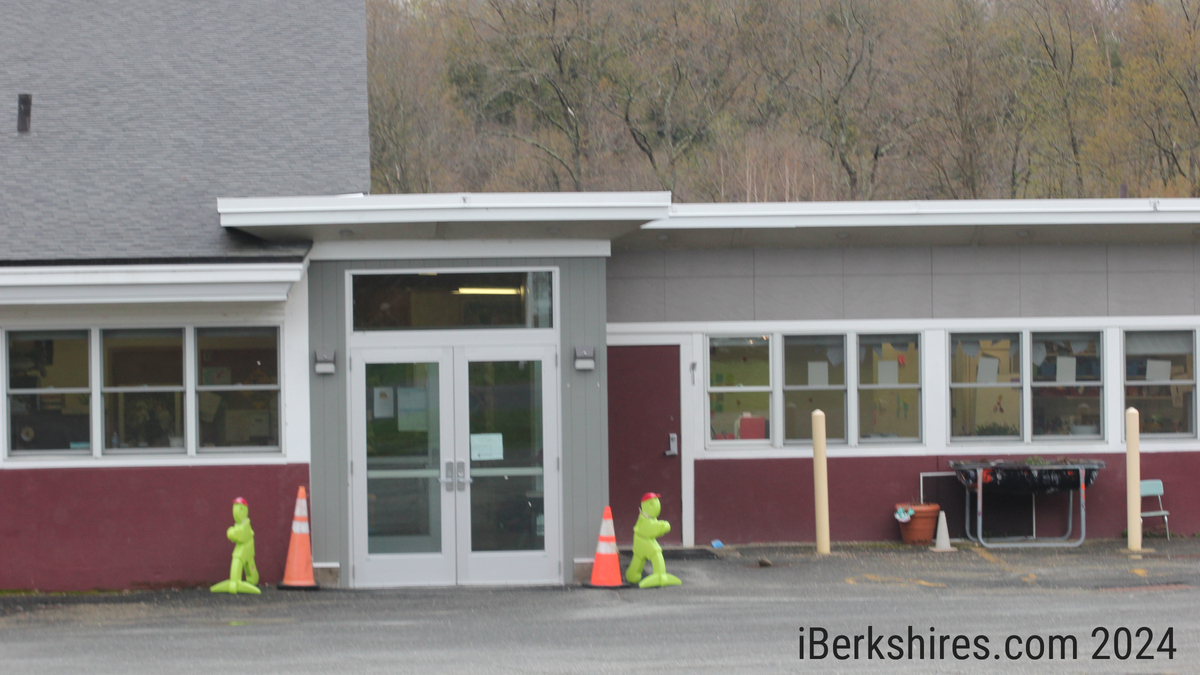
HANCOCK, Mass. — Town meeting voters will be asked Monday to approve a request to change state law in a way that will preserve education at Hancock Elementary School.
They also may be asked to take a stand on an addition to the town report that stirred some controversy in the town of 757.
Article 18 on the annual town meeting warrant is a home-rule petition to ask the Legislature to exempt the single-school district from a provision in state law that enables students enrolled under Massachusetts' School Choice program to continue their education at the same school as their classmates after sixth grade.
Massachusetts General Law Chapter 76, Section 12B, subsection (k) specifies that, "Any child accepted to attend a public school in a community other than the one in which he resides pursuant to this section shall be permitted to remain in that school system until his high school graduation … ."
Although it is not a new provision of the enabling legislation that created school choice in the commonwealth, it only recently came up in the context of the handful of schools, like Hancock Elementary, that are not part of a K-12 district and, instead, have tuition agreements with secondary schools.
In the case of Hanocock, it has two tuition agreements, one with New Lebanon High School in New York and one with Mount Greylock Regional School in Williamstown.
For decades, the town has sent its resident students to one of those two schools after sixth grade, paying a per-pupil tuition rate until graduation. Pupils who attended Hancock Elementary under school choice either found another school choice option for middle and high school or returned to their "home district" for seventh grade and beyond, Hancock Superintendent Rebecca Phillips explained on Tuesday.
"We weren't aware of subsection (k)," Phillips said. "I believe there are 11 or 12 districts in the state that fall under this. We were not aware until a memo was distributed last September [by the Department of Elementary and Secondary Education] that was designed to remind districts of their obligation under section (k).
"It did cause a lot of concern for these districts. It's something people were not aware of. It's one of those things that was overlooked for literally 30 years."
Now that it is on Hancock's radar, the district has two choices: keep accepting school choice pupils for kindergarten through sixth grade and accept the tuition bill that they bring or pull out of the school choice program going forward.
Fortunately, for the school choice enrollees already attending Hancock, the district has a plan to pay the bill for the next few years without blowing up the town budget.
"We've been judicious about not spending [school choice revenue] in hopes at some point we could do a small addition," Phillips said. "That's been the goal of saving this money. In the event the home-rule bill is not passed, we would use that money."
And it would be a significant bill for a town the size of Hancock.
The district currently pays about $18,000 per year for tuition for students in seventh- through 12th-grade at Mount Greylock. For school choice students, that would be partially offset by the $5,000 any school district receives for choice enrollees.
But it still would add up to $13,000 per year per choice student, Phillips said. Over a six-year career at Mount Greylock, that's $78,000, before inflation.
To put that number in perspective, Hancock's total education budget to be raised in local property taxes for fiscal year 2025 (if approved by Monday's meeting) is a little more than $2 million.
If, hypothetically, three non-resident school choice students at Mount Greylock were added, that's an additional $39,000 to the town's bottom line, or about a 2 percent jump in the total planned education expenditure.
Phillips said Hancock Elementary School currently has 14 school choice students. About half of that number would fall under the provisions of subsection (k); the other seven are residents of Williamstown or Lanesborough who would be headed to Mount Greylock as their "home" district after leaving Hancock anyway.
Understanding that the district's current school choice reserve will be eaten up fairly quickly and hoping to prevent significant increases for local taxpayers in the years to come, the School Committee this spring voted not to accept new school choice pupils at the elementary school for the 2024-25 academic year, Phillips said.
That decision will not affect youngsters already attending Hancock Elementary under school choice either. Once they're in the school via choice, they have the right to stay there through sixth grade — and, under subsection (k), beyond.
The decision to pull out of school choice is not one the School Committee took lightly either.
For a school the size of Hancock Elementary (enrollment 58 for the 2023-24 academic year), 14 students represent nearly a quarter of the student body. And for a school that already combines two grade levels in a single classroom, a deep cut in enrollment can have serious repercussions.
"Fourteen students, it's not huge, but it does impact education," Phillips said. "Next year's kindergarten class is slated to be approximately four students. Because we're not going to take any school choice, we have kiddos on a waiting list who would love to come here. For those four students, we could provide a more robust experience by having other students here.
"Then you start looking at what is the best educational approach for all students. It happens at some schools, but it's not really sound educational practice to have three grades in one classroom."
It also is worth noting that Hancock cannot go the route of "only" accepting school choice pupils from Lanesborough or Williamstown. School choice is, by design, a program that is blind to the "sending" town of the applicant; receiving schools either accept choice students or not.
So Hancock cannot afford to pay the new tuition bills for middle and high schoolers indefinitely. And it does not want to dramatically decrease enrollment at the elementary school by pulling out of school choice for good.
The solution? Find a way around subsection (k).
That is the approach that Hancock and similarly impacted school districts around the commonwealth tried this fall after the DESE memo came out, Phillips said. The answer from Boston was that the legislative provision needs a legislative fix.
And that brings things back to Article 18 on Monday's town meeting warrant.
Phillips said that state Sen. Paul Mark and state Rep. John Barrett III jumped in to file a petition on Beacon Hill to exempt Hancock from the provisions of subsection (k).
"I cannot say enough wonderful things about how supportive they've been in this process," Phillips said of the local legislators. "The home rule bill was filed at the end of February."
But the clerk of the House of Representatives has told the district that it needs a town meeting vote to back up the petition, which is why attendees at Monday's meeting will have their say on the matter.
Both the School Committee and Board of Selectmen already have endorsed the home-rule petition, Phillips said. And Hancock, to her knowledge, is further along the process of getting the special legislation advanced on Beacon Hill. Though she knows of at least one other town, Warwick in Franklin County, which has a similar home-rule petition on May's annual town meeting warrant.
"The legal process is slow," she said. "We were hoping to get our resolution up quicker, but we're in the process and doing due diligence to make sure our community school can continue to thrive."
A non-financial matter could cause some conversation at Monday's meeting after Article 18, the last substantive item listed on the warrant.
This spring, some Hancock residents have raised objections to what appears to be an social media meme that was included on the second page of the annual town report, a publication that includes the warrant.
Most of the report is given to typical fare like reports on the activities of town departments and committees, lists of elected and appointed officials and a reminder to obtain a current sticker to use the town dump.
Page 2 of the report, however, includes a message that some perceive as potentially stifling dissent in the town.
On the inside cover of the 42-page report, in large-point, sans serif type is the following sentiment: "You came here from there because you didn't like it there, and now you want to change here to be like there. You are welcome here, only don't try to make here like there. If you want to make here like there, you shouldn't have left there in the first place."
The message caught the eye of Robin Keeney, who reached out to iBerkshires.com to point out the text, which already was the subject of discussion on a Facebook page frequented by Hancock residents.
"My first reaction [to the meme in the town report] was, 'Do they mean me?'" Keeney said last week. "I've only been here five or six years. But then I thought about it and realized this could be interpreted by people as voter intimidation to have in the town report. That's a bit of a scary thing. Generally speaking, it's inflammatory, and it divides the town.
"Or, to people looking at the town to potentially buy a property, the message is: Newcomers are not welcome. I think that's pretty clear."
Tom Nicholson said he thought Keeney was joking when she told him about the inside cover of the report until he picked up his own copy of the town document.
"At the most basic level, it is inappropriate in the town report," Nicholson said. "It politicizes the town report. Who knows who they're targeting with this message? When you put it in the report, it gives the impression that's the feeling of the majority of residents."
Nicholson said a resident inquired with the Attorney General's Office and was told there is nothing illegal about the messaging in the report.
On Monday, Jason Tait of the commonwealth's Office of Campaign and Political Finance indicated that the "you shouldn't have left there in the first place" meme does not rise to the level of inappropriate speech that would concern his office either.
"The campaign finance law prohibits the use of public resources for political purposes concerning elections, candidates, ballot questions and parties," Tait wrote. "The office does not enforce the use of public resources for other types of messaging, generally. For example, if a town used resources to ask readers of a report to vote for certain candidates or ballot questions, then that would be an issue our legal team would investigate."
A phone message left at Hancock Town Hall on Tuesday morning for Board of Selectmen Chair Sherman Derby asking to speak about the meme was not returned.
Nicholson last weekend indicated that he and other residents are inclined to use Article 19 on the town meeting warrant, the "any other business" article, to raise the issue of the meme.
"It will be interesting to see what the sentiment is on Monday at the town meeting," Nicholson said. "We have to get our heads together on what we're asking for [from the floor of the meeting]: basically a retraction. There needs to be a conversation. That's why we're bringing it up.
"There are many instances of people from New York being told you don't really belong here. You're not like us."
Tags: annual town meeting, school choice, town meeting 2024,