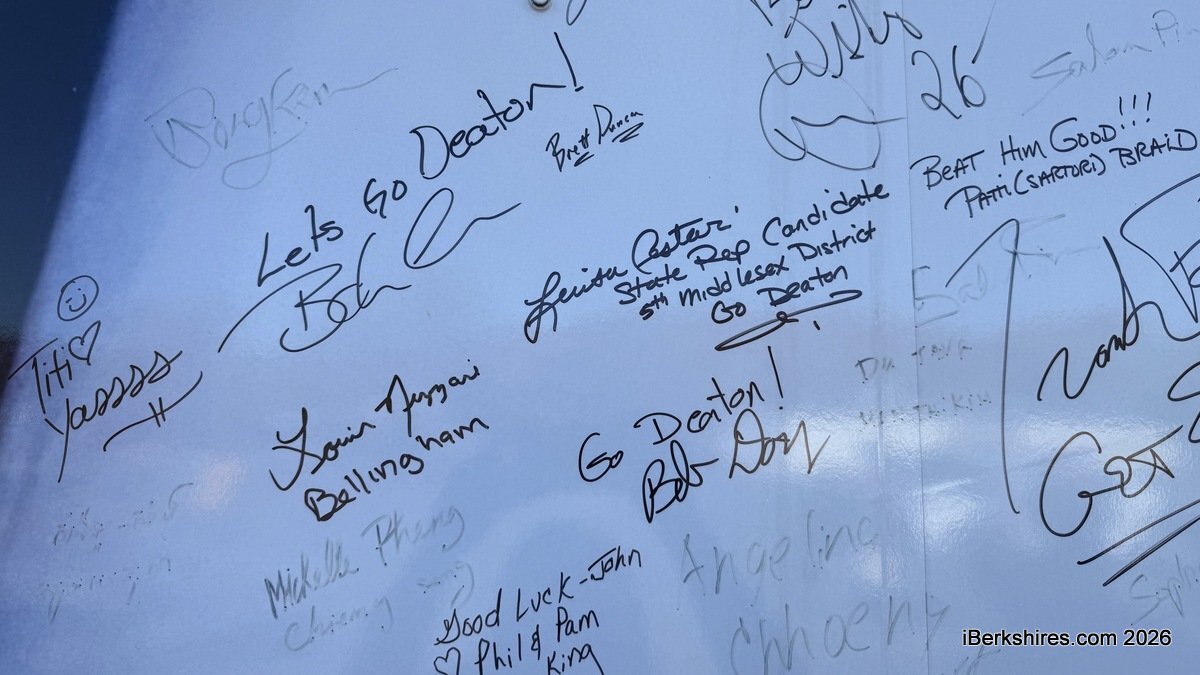
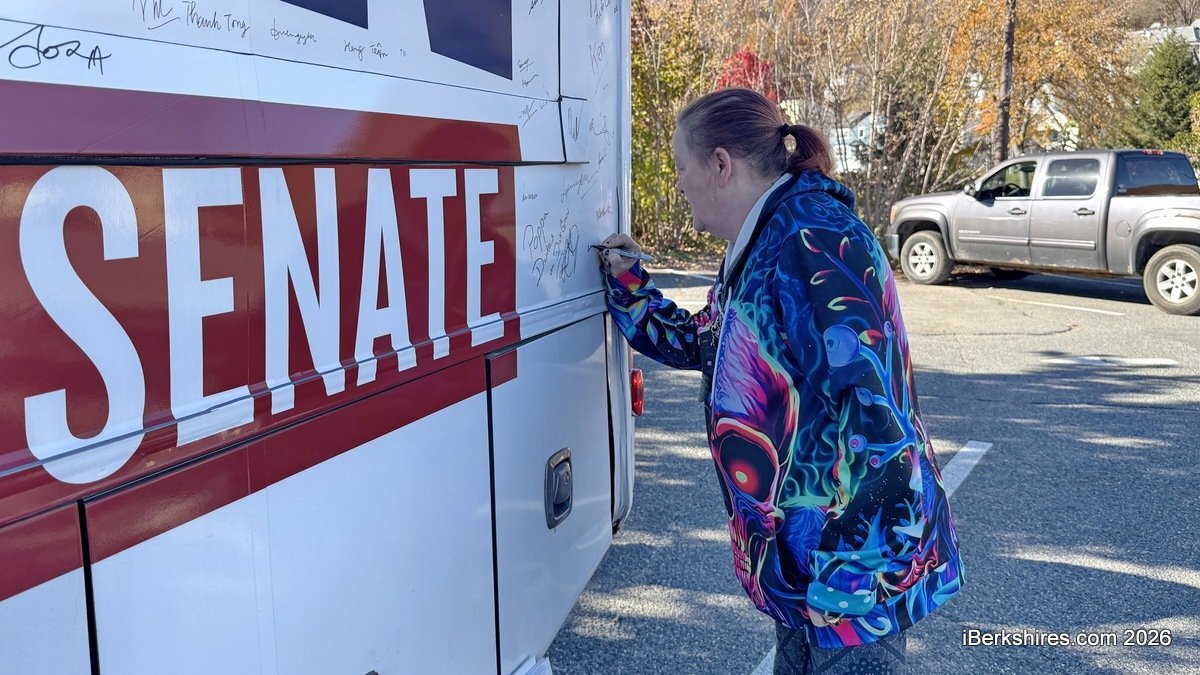
GOP Senatorial Candidate Deaton Pledges Independence in North Adams Campaign Stop
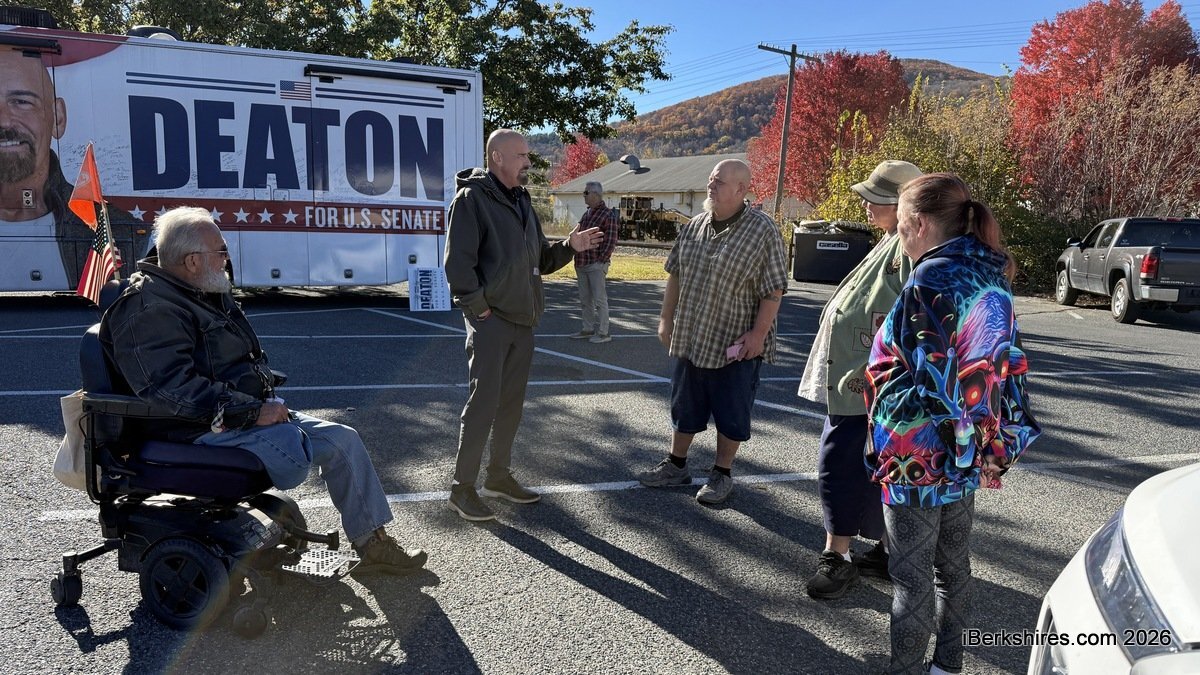
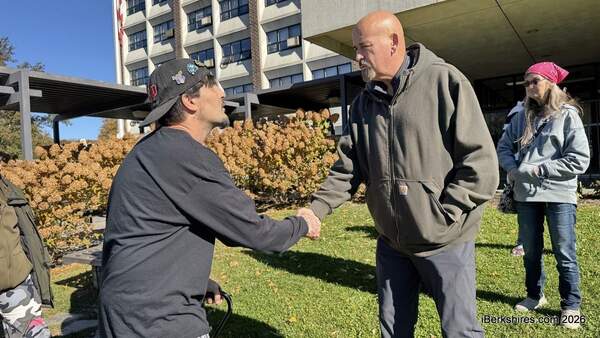
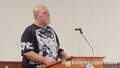
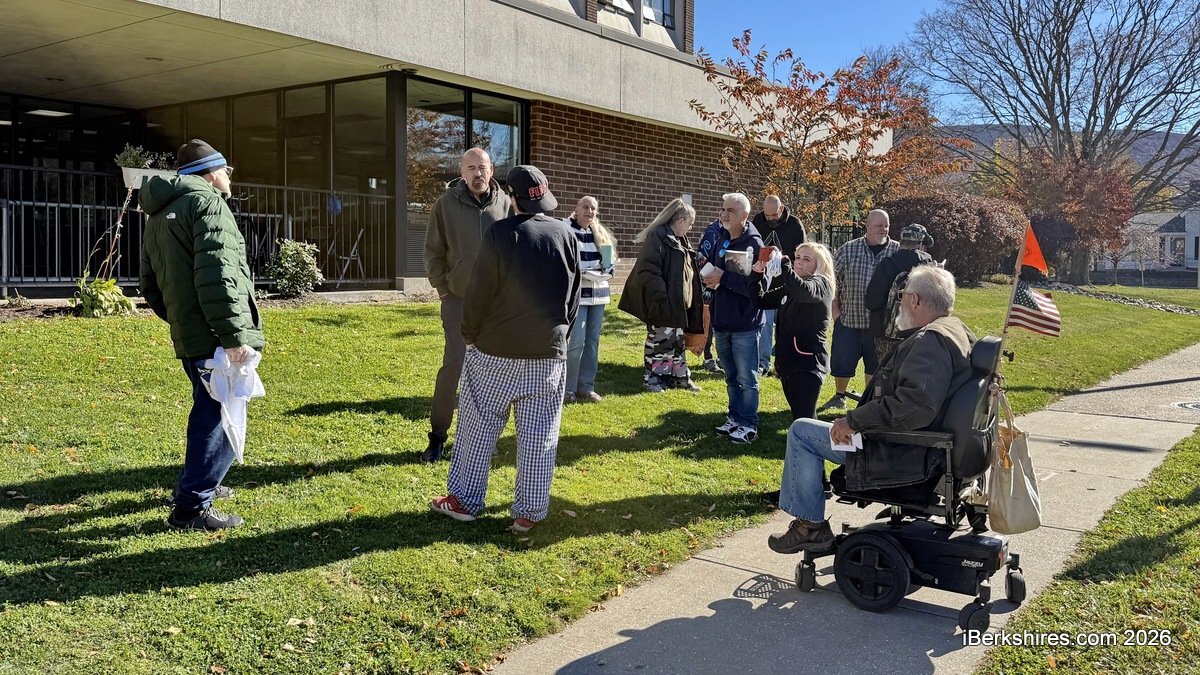
GOP candidate John Deaton speaks to local residents about his positions during a campaign stop on Tuesday. The attorney says he's running on the GOP ticket but his stance is firmly independent.
His tour over a couple days included stops across Western Mass, including Greenfield, Pittsfield, Lee, and South Hadley.
Although Deaton is running as the Republican nominee against longtime Democratic incumbent Edward Markey, he said he identifies as an independent and he chose to run as a "non-Trump" Republican because he saw no viable path to victory as an independent candidate.
The attorney said he reached that conclusion after polling as an independent and finding that the Republican nominee was projected to receive approximately 30 percent of the vote, while the Democratic nominee was expected to receive about 40 percent.
"There's a lot of things we can do if you just put people over politics. I'm not going to be loyal to a person, i.e., President Trump, or anyone else … I'm not going to be loyal to a party. I'm not going to be loyal to a political agenda," he said.
"I'm only going to be loyal to people and if you take that attitude, then you can work with any president. You can work with any party in power … I would just ask people to vote for the best candidate in each race. Don't go by party."
Deaton kicked off his trip to Berkshire County at the North Adams American Legion where he heard from several people, particularly those expressing grievances over the North Adams Housing Authority's high rise on Ashland Street.
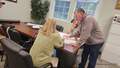
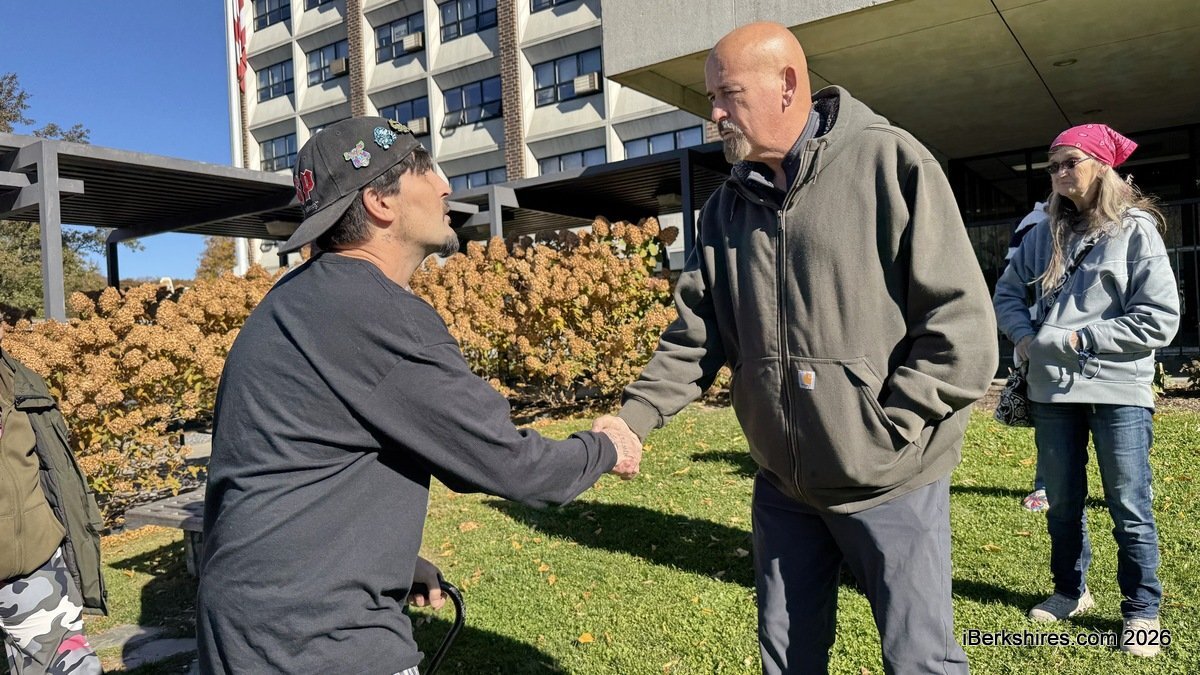
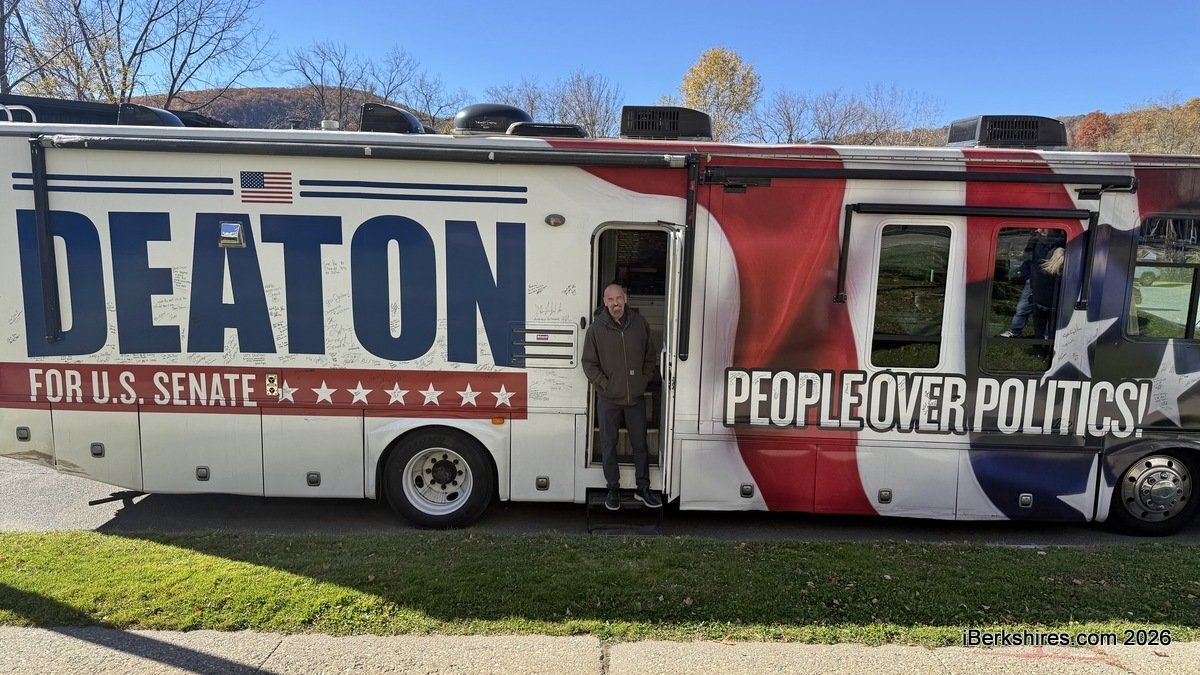
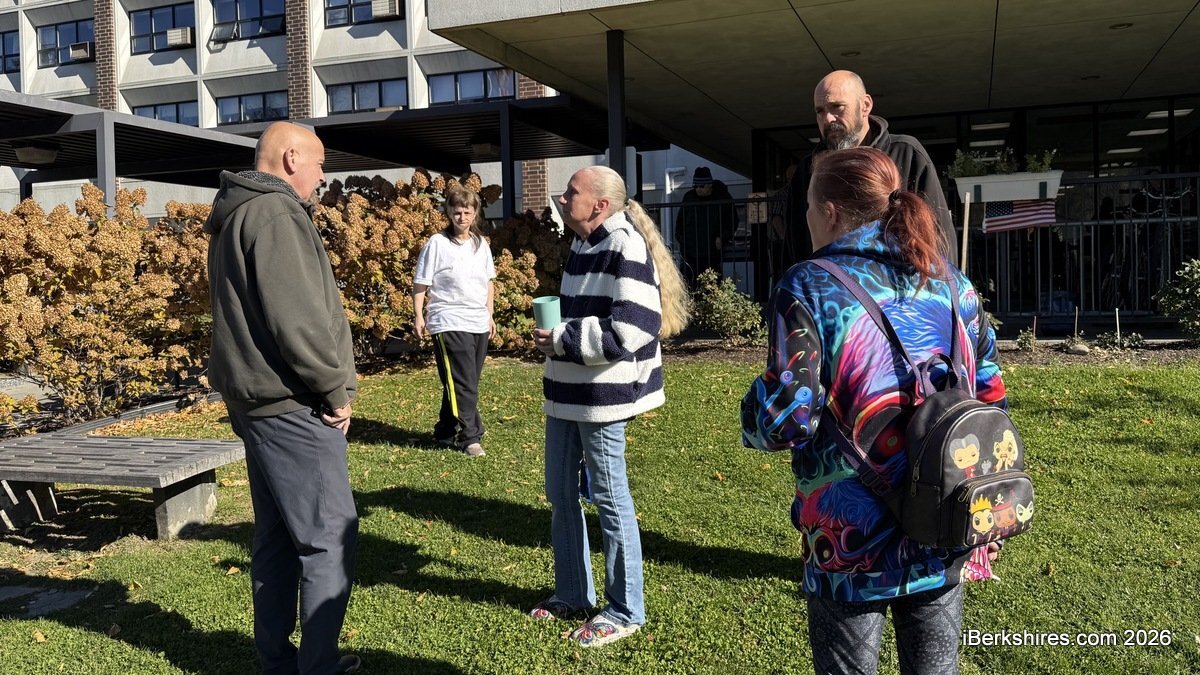
After that conversation, Deaton was compelled to visit the housing complex — boarding his campaign bus and making a spontaneous stop at the building where he spoke to the residents of the U.S. Housing and Urban Development-funded facility.
Several people expressed appreciation for his visit, accepting campaign signs and "Vote Deaton" memorabilia. One resident said he had never voted in an election but, after hearing from Deaton, now plans to cast his first ballot in November.
"It's nice that people are coming out and speaking up," one resident said.
Corey Fortin, president of the Housing Authority's Tenants Association, echoed that sentiment, emphasizing the significance of residents voicing their concerns because many fear retaliation for speaking out.
As Deaton spoke, some people picking up discarded nip bottles, while expressing frustration over conditions at the property and reiterating concerns they had previously raised during public meetings.
Deaton said his decision to run for office was motivated by concerns about the country's future, particularly for his children.
"I'm scared of what the country is going to look like because we have career politicians in both parties that they just go in office and fight for power, and they really don't help people. And life's becoming so unaffordable for regular people," he said.
He pointed to rising housing, energy and healthcare costs as issues that have made life increasingly unaffordable, arguing that political divisions have overshadowed efforts to find solutions.
"So, I'm a nonpartisan person. I don't have loyalty to a person or a party or an agenda," he said. "When you learn my life story, I really am the embodiment of the American dream."
Deaton highlighted his personal background, including growing up in "extreme poverty" with a single mother who relied on welfare and food stamps, overcoming addiction, battling cancer and becoming a small-business owner.
"I think I have the life experience that these career politicians don't in order to represent people," he said.
Deaton first ran for the Senate in 2024 against the state's senior senator, Elizabeth Warren. He said this time he is taking a new approach by making a greater effort to listen to citizens and understand the challenges they face rather than focusing on speaking.
He pointed to his visit to the North Adams Housing Authority as an example, saying he learned about the role federal funding played on the authority, and heard residents' concerns about living conditions and a perceived lack of oversight under both Republican and Democratic administrations.
Hearing firsthand about the daily struggles of Massachusetts residents, Deaton said, provided him with a deeper understanding of issues that would better prepare him to represent residents in Washington, D.C.
If elected, the former Marine said he would advocate for greater accountability by attaching conditions to federal housing funding, including what he described as "transparency riders."
These transparency riders would include requiring authorities to meet certain health and safety standards and undergo random inspections to identify issues such as rodent and cockroach infestations.
Deaton identified healthcare, energy costs and housing as his top three priorities, arguing that addressing those issues would help make life more affordable for Massachusetts residents.
He called for reforms to the nation's healthcare system to address the declining access to care, pointing to hospital closures across the state including Carney Hospital in Dorchester and Nashoba Valley Medical Center in Ayer.
"This community had lost a hospital and had to fight to get care back," Deaton said, referencing the North Adams Regional Hospital, which reopened in 2024.
He advocated for breaking up corporate consolidation in healthcare, claiming that three companies control 95 percent of the nation's healthcare system.
To lower energy costs, Deaton proposed expanding natural gas infrastructure and investing in nuclear power, claiming those measures could cut energy prices in Massachusetts by half.
Berkshire County has especially high electricity costs, Deaton said, claiming rates are higher than those paid by 90 percent of the country.
He advocated for expanding natural gas supplies from New York and Pennsylvania as a way to reduce electricity costs in the short term, while identifying nuclear power as a longer-term solution.
He suggested that a small modular nuclear reactor could potentially supply electricity to all of Berkshire County, describing the technology as a carbon-emission-free alternative to fossil fuels.
He acknowledged that some Massachusetts communities benefit from lower electricity rates through local energy agreements but said residents in North Adams continue to face particularly high costs.
To address the housing shortage, Deaton said he has developed a plan to build 5 million homes nationwide over five years. He also proposed expanding vocational training opportunities beginning in high school to prepare students for careers in skilled trades, including electrical work, plumbing, pipefitting and shipyard workers.
"A senator needs to fight for funding for their state. For example, here in Massachusetts, we are the No. 1 state per capita for federal taxes paid," he said. "There's 7 million people that live in Massachusetts. We pay $22,000 per person in federal taxes, so you need someone to fight for that money to come back for our bridges, for our roads, for low-income housing tax credit."
Deaton criticized Markey for what he described as a lack of attention to Western Massachusetts, claiming the incumbent declined an invitation to participate in a televised debate hosted by Springfield's WWLP Channel 22 and withdrew from a second debate in Boston.
"Western Mass gets ignored by career politicians. So what my message is to people is why not vote for something different? Like give someone else a chance. What do you have to lose because you're being ignored now," he said.
If elected, Deaton said he would aim to hold town halls in each of Massachusetts' 14 counties at least twice a year, offering virtual access so residents can raise concerns, ask questions and hold him accountable.
Read more about John Deaton's platform on his website here.
Tags: campaign event, election 2026, U.S. Senate,