

Local Public-Access Stations Face Funding Challenges in Streaming Era
This is the first article in a series on the changing role and challenges facing local cable television channels in Berkshire County, with the emergence of online internet media.
Local public-access cable television channels have an important role in the media landscape of Berkshire County.
In a region that does not have any local over-the-air broadcast television stations, these non-commercial cable channels are a vital source of community news and communication, local government coverage, live events, interviews, and other homegrown television programming.
However, PEG operators are facing a serious threat to their funding. This is because of fundamental changes in the volatile cable industry and the rapidly evolving new ways that media content is distributed and consumed.
These channels are officially designated as PEG media (public, education, government), which describes their three basic functions. They are carried on specific channels on local cable systems. They have also added streaming of their content online.
The scale and specific structure and policies of individual PEG operations vary. They are usually programmed and operated by independent, community-based non-profit organizations, However, they are primarily funded by a portion of the income that their local cable TV provider earns from traditional subscriptions within their specific municipality.
In the Berkshires, Charter Spectrum serves the county through separate local licensing contracts.
The current problem is that the number of traditional cable TV subscribers has been declining. Viewers are increasingly turning to online streaming services as an alternative to traditional cable TV subscriptions. This includes existing subscribers who decide to "cut the cord" as well as younger people who have grown up using online media on their smart TVs, cell phones and computers instead.
According to a 2021 Pew Research Center survey, the percentage of American adults that reported having a cable or satellite television subscription fell from 76 percent in 2015 to 56 percent in 2021. In 2025 a Pew survey indicated that had declined to only 36 percent.
As a result, the income for PEG stations is shrinking.
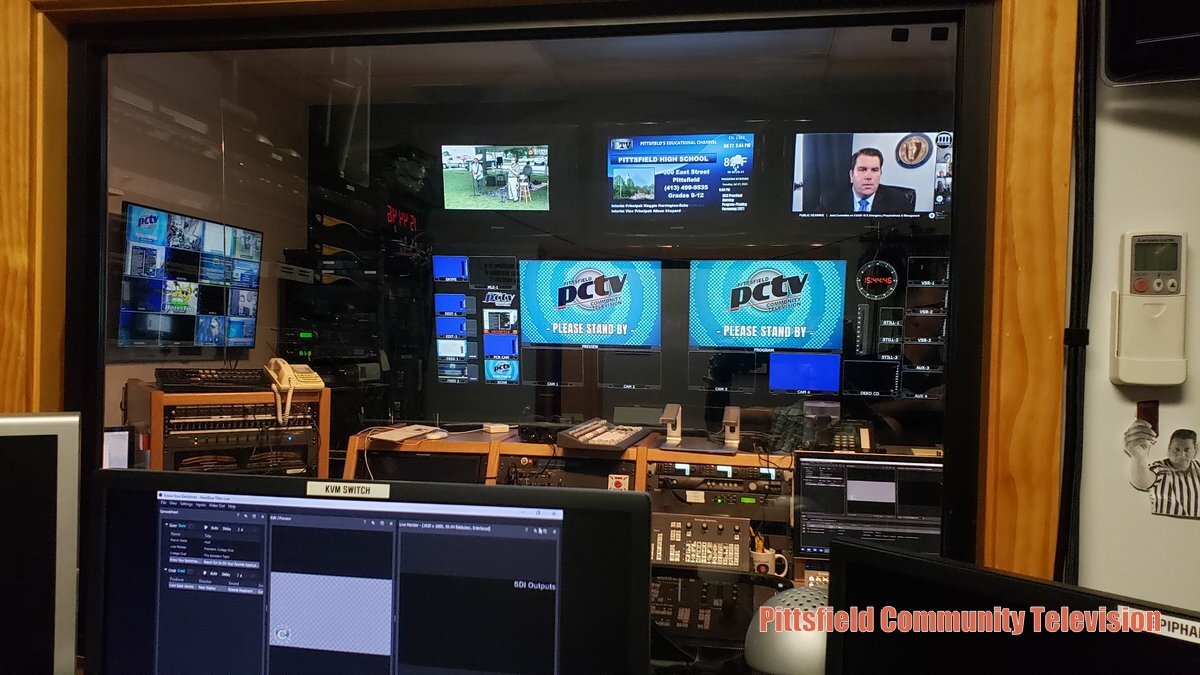
"Media is experiencing disruptions as people shift away from traditional cable," said Shawn Serre, executive director of Pittsfield Community Television (PCTV), a PEG channel in that city. "PEG organizations like us will have to modernize and look for new ways to fund our operations if we are going to continue to serve our communities."
There are more than 5,000 PEG channels nationwide. Berkshire County has several PEG operations covering different communities.
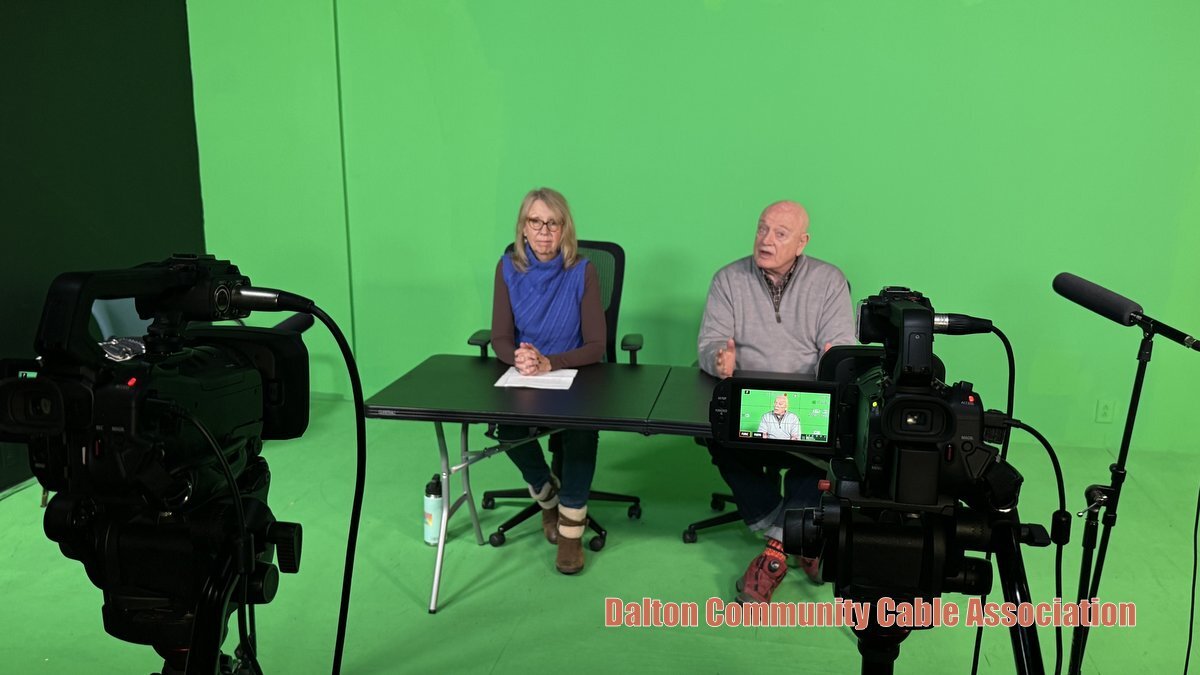
In addition to PCTV, they include Willinet in Williamstown; Gateway Collaborative Media (GCM) which serves North Adams, Adams, Cheshire, and Clarksburg; Dalton Community Cable Association (DCCA); Lanesborough Community Access Television (LCATV), and Community Television for the Southern Berkshires (CTSB) which covers Lee, Lenox, Stockbridge, Great Barrington and Sheffield.
In addition to PCTV, they include Willinet in Williamstown; Gateway Collaborative Media (GCM) which serves North Adams, Adams, Cheshire, and Clarksburg; the Dalton Community Cable Association (DCCA); Lanesborough Community Access Television (LCATV), and Community Television for the Southern Berkshires (CTSB) which covers Lee, Lenox, Stockbridge, Great Barrington and Sheffield.
(PEG is different than Public Broadcasting stations such as WMHT in Schenectady, N.Y., and New England Public Media in Springfield. Those are non-profit, non-commercial broadcast operations that cover large cities and regions. They are funded
by a combination of grants and member subscriptions and underwriting. While they produce some shows, their schedules are primarily national programming from PBS and other sources.)
To better understand the issue and potential solutions, it's helpful to look at the role of PEG and how it fits into the history of cable television and the new world of media, locally and nationwide.
Cable television emerged in the late 1940s and '50s, as broadcast television was being established. Cable's original purpose was straightforward. It provided clear and reliable signals of broadcast TV stations to subscribers who lived in areas where distance or hills and other obstacles prevented them from receiving these signals over-the-air.
Cable companies were usually locally based businesses. They installed powerful antennas on hilltops or other locations that enabled clear reception. These were connected to a network of wires (cables) that carried the signals into subscribers' homes.
Berkshire County was one of the early adopters of cable. Except for one unsuccessful attempt in the early 1950s, the area has been considered too small to justify broadcast television stations of its own. The county was legally designated as part of the Albany/Capital District of New York market, which is the nearest large urban area. However because of the hilly terrain, it was difficult to impossible to receive reliable over-the-air signals from stations there like WTEN or WRGB.
The earliest incarnations of PEG television originated in the 1960s. Originally some cable operators established additional local access channels on their own. Pittsfield, for example, operated a cable channel which provided a limited amount of local programming.
In 1969, the Federal Communications Commission established a requirement that cable systems over a certain size must include at least one channel for local public access. However regulation of cable television has been a gray area, and subject to controversies and legal challenges.
Initially the FCC regulated it, because cable systems were local monopolies and a primary method of delivering broadcast television signals. They also use public infrastructure, such as utility poles and rights-of-way for the cables that distribute their signals. However, the FCC's role in cable was subsequently reduced in a move toward deregulation, and the U.S, Supreme Court struck down the requirement for local-access channels.
In 1984, Congress passed the Cable Communications Act, which established a new regulatory framework for cable that reduced the federal government's role. Instead, it gave state or municipal governments the authority to negotiate the terms of franchise contracts with cable providers, often for 10-year periods.
In Massachusetts, franchise agreements are referred to as licenses and are under the authority of either the mayor or the select boards of towns and cities. The municipalities may delegate this to authorized local boards. Localities could also
negotiate licenses collaboratively.
The 1984 Cable Act did not federally require PEG channels. Instead it gave municipal franchising authorities the option to require them in contract negotiations and allocate up to 5 percent of the cable companies subscription revenues for them, plus equipment. Cable companies passed along those costs in subscription fees.
This is why Berkshire County is a patchwork of PEG channels and organizations.
Some PEG channels, such as Willinet, serve individual towns or cities. Others like Gateway Collaborative Media, formerly Northern Berkshire Community Television Corp., serve several adjacent towns and cities. Other towns chose not to have any PEG operations.
Economic factors and technology also impacted the cable industry and PEG.
Like many industries, cable became consolidated. Local cable companies were swallowed up by large corporations like Time Warner Cable, which later became part of Charter Spectrum, which now covers the entire county.
The basic role of the cable industry also expanded. Besides carrying broadcast stations, they began to include nationwide networks distributed by satellite. Home Box Office (HBO) launched in 1972, followed by Ted Turner's Superstation WTBS from Atlanta. In the 1970s and '80s, the number of these cable networks proliferated into the hundreds.
Digital technology and the Internet brought another revolution in the 1990s.
Originally, the internet was connected to residences and businesses over telephone lines by separate dial-up companies such as AOL, which was slow and cumbersome. The development of fiber-optic cables and digital transmission enabled cable companies to expand by offering faster high-speed broadband internet to customers, either as a separate service or add-on bundle. This also opened the door to internet streaming of audio and video content, which led to new sources of online programming such as YouTube and Netflix and countless others.
This was a double-edged sword for cable companies like Spectrum. It became a major new revenue source — but ironically it also created new competition to their own traditional subscription television services. Increasingly, cable systems are also offering their TV services as online streaming, which also takes away from traditional subscriptions.
This digital revolution has also been a mixed blessing for PEG operators. On one hand, the decline of cable subscriptions is reducing their revenue. However, it has also opened up new opportunities to reach and serve broader audiences beyond local cable subscribers.
This ferment has also led to new strategies by PEG organizations. (Continued in Part Two.)
Tags: cable television, deep dive,