Governor Celebrates New Medical Device Safety Law

Print Story | Email Story
BOSTON — Gov. Maura Healey hosted a ceremonial signing at the State House to celebrate a new law that will phase out di (2-ethylhenyl) phthalate, a cancer-linked chemical known as DEHP, that is used to make plastic flexible, from IV bags and tubing sold in Massachusetts. 
 
Healey signed An Act Relative to toxic-free medical devices on July 25. The law will prohibit the manufacture and sale of IV solution containers made with intentionally added DEHP beginning Jan. 1, 2030, followed by IV tubing beginning Jan. 1, 2035. This timeline gives healthcare providers and manufacturers time to transition to safer alternatives that are already in use at hospitals in Massachusetts.
 
"Patients deserve to know that the tools being used to care for them are safe," said Governor Maura Healey. "This law phases out a harmful chemical from IV bags and tubing and moves our health care system toward safer alternatives. Massachusetts will continue to follow the science and put the health and safety of patients, families and health care workers first."
 
DEHP is commonly used to make plastic medical devices more flexible. The chemical can leach from plastic products and has been linked to cancer and other serious health risks. Health advocates and medical professionals have raised concerns about patient exposure, particularly because safer alternatives are already available.
 
The law includes exemptions for certain specialized products, including human blood collection and storage bags and specified apheresis and cell-therapy products. It also permits limited trace amounts of DEHP that are not intentionally added.
 

If you would like to contribute information on this article, contact us at info@iberkshires.com.

Berkshire Museum Explores Ancient Egypt With ‘Soulful Creatures’

By Sabrina DammsiBerkshires Staff
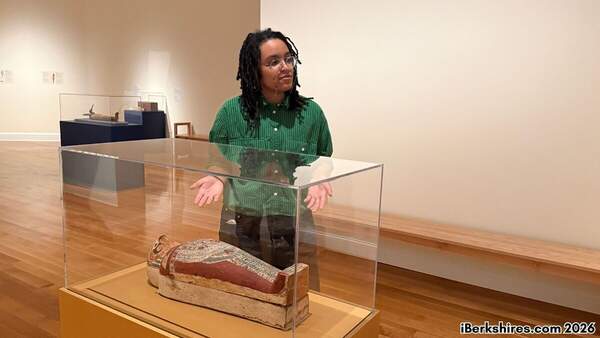
PITTSFIELD, Mass. — Following its multimillion-dollar renovation, the Berkshire Museum is welcoming an exhibition unlike any it has been able to host before.
 
Marking the museum's first major exhibition since its renovation, "Soulful Creatures: Animal Mummies in Ancient Egypt," opening Saturday, Oct. 10, thins the veil between the ever-evolving history of Egyptian culture and society and modern day people. 
 
"The most important thing about history is recognizing people from the past as actual people. Ancient Egyptians are no different than us," said William Dore, the museum's chief curator. "They have different cultures and beliefs and different viewpoints, but you can say the same thing about people today."
 
When audiences experience the exhibit, they will see the humanity in the people of the past, which in turn helps them connect with different views and perspectives around the world today, he said. 
 
Combining archeology with modern scientific imaging, Brooklyn (N.Y.) Museum curators Yekaterina Barbash and Edward Bleiberg designed an exhibit that works to uncover the mysteries behind these objects and the beliefs and rituals that surround them. 
 
"I think something that people kind of misunderstand about history is none of it's ever settled. ... History is a science that is constantly questioned,” Dore said. "It only works if everyone's constantly rethinking things, learning new things ... which is for me super exciting because as much as we know a lot about the ancient Egyptians, there's a lot we don't know.”
 
The installation features dozens of artifacts on loan from the Brooklyn Museum that explores the practice of animal mummification and the role animals played in ancient Egyptian religion. 
 
View Full Story

More Pittsfield Stories