image description
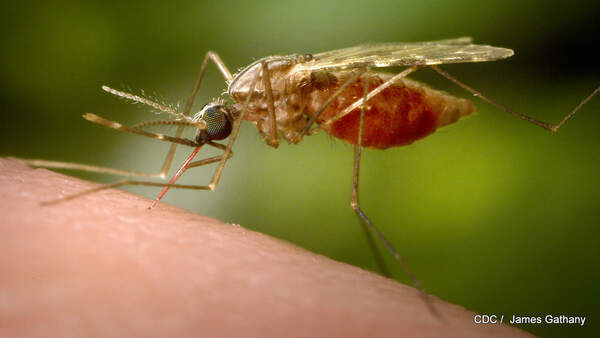
WNV is usually transmitted to humans through the bite of an infected mosquito. There were nine human cases of WNV in 2025, none in Berkshire County, and no human or animal cases of WNV have been detected so far this year.

Season's First West Nile-Positive Mosquitoes Found in Clarksburg

By Brittany PolitoiBerkshires Staff
Print Story | Email Story

CLARKSBURG, Mass.— Northern Berkshire County saw the first West Nile virus-infected mosquitoes of the season in Massachusetts. 

The State Public Health Laboratory confirmed WNV in a mosquito sample collected in Clarksburg on June 16.  On Monday, the public was notified of the detection on the town’s website. 

"Recommended public health measures include raising awareness among residents, reminding residents to use mosquito repellents with an EPA-registered active ingredient and observing peak mosquito activity at dusk and dawn," a notice reads. 

"MDPH will continue enhanced surveillance activities in this region." 

According to a risk map provided by the Department of Public Health, Berkshire County remains at low risk for WNV and Eastern Equine Encephalitis. 

WNV is usually transmitted to humans through the bite of an infected mosquito. There were nine human cases of WNV in 2025, none in Berkshire County, and no human or animal cases of WNV have been detected so far this year. 

No evidence of EEE has been found so far this season, and there were no human cases of EEE in 2025.

While WNV can infect people of all ages, people over the age of 50 are at higher risk for severe disease. Most people infected with WNV will have no symptoms, but when present, WNV symptoms tend to include fever and flu-like illness, and in rare cases, more severe illness can occur.

The state recommends people avoid mosquito bites by applying insect repellent with an EPA-registered ingredient when outdoors, wearing long sleeves and pants, and being aware of peak mosquito hours throughout the night. 


Residents can also mosquito-proof their homes with screening, by draining standing water mosquitoes breed in, and by checking rain gutters and drains. 

"Animal owners should reduce potential mosquito breeding sites on their property by eliminating standing water from containers such as buckets, tires, and wading pools – especially after heavy rains. Water troughs provide excellent mosquito breeding habitats and should be flushed out at least once a week during the summer months to reduce mosquitoes near paddock areas," the DPH wrote in a press release last week. 

"Horse owners should keep horses in indoor stalls at night to reduce their risk of exposure to mosquitoes. Owners should also speak with their veterinarian about mosquito repellents approved for use in animals and vaccinations to prevent WNV and EEE." 

If an animal is suspected of having either disease, owners are required to report to the Department of Agricultural Resources, Division of Animal Health, by calling 617-626-1795, and to the Department of Public Health by calling 617-983-6800.

More information can be found on the Arbovirus Surveillance Information web page that is updated daily, or by calling the DPH Division of Epidemiology at 617-983-6800.


Tags: EEE,   mosquito,   West Nile,   

If you would like to contribute information on this article, contact us at info@iberkshires.com.

Dalton Voters Nix Mobile Tiny Homes, Approve Clean Air Funds

By Sabrina Damms

DALTON, Mass.— The two-year-long effort to implement movable tiny homes in the town's bylaws failed during a special town meeting on Monday. 

Fifty-seven voters approved only four of the six articles on the warrant during the meeting that lasted a little more than an hour. 

The articles on the movable tiny houses, articles 5 and 6, failed 20-41, following an amendment and a discussion that lasted a little over half an hour. This topic was one of the most anticipated prior to the meeting. 

For more than two years, Amy Turnbull has been advocating to amend the bylaw, but has met obstacles delaying the effort.  She took the situation into her own hands by spearheading a citizens' petition to put it on a town meeting warrant after the discussion was tabled during multiple Planning Board meetings.

During her presentation, she reiterated arguments she made during previous meetings, specifically how moveable tiny houses are a more affordable option in addressing the housing crisis and align with the town's master plan. 

Although the state has made accessory dwelling units allowed by right to help address the housing crisis, ADUs now cost more than $300,000 to build. Movable tiny homes offer a lower cost way to add a dwelling unit on a lot, she said. 

"Originally, I wanted this bylaw to be an ADU bylaw, but because I felt like it was important to put a special permit into it," Turnbull told iBerkshires. 

"[However,] the attorney's office confirmed that that was not possible to do because an ADU is a by-right use, so at the 11th hour we had to move the language into a different category, which is accessory use."

This "muddled" communication between Turnbull, as a citizen's petition, and the town's attorney made it challenging to develop language to accurately represent the goal of the article, she said. 

In a follow-up with iBerkshires, Turnbull explained she was not surprised by the result. 

"I think there's probably a history that petition articles fail, and having the support of the planning board is paramount, but when you've got people on the planning board that use their personal opinions and bias, and keep tabling meetings. It's difficult to make change," she said. 

The Planning Board voted to neither recommend nor oppose the articles on movable tiny houses following a public hearing that was requested during the annual town meeting, where the topic was "tabled." 

Those against the article argued that it was too vague and incomplete and lacked clear limits on the number of units, placement rules, and detailed standards for height, design, and utilities. 

During her presentation, Turnbull said that tiny homes could be designed to match the architecture of the neighborhood. 

Opponents of the articles said requirements to have the unit align with the neighborhood design were not delineated in the proposed bylaw, so it was not a guarantee.  They also raised concerns about the neighborhood impacts and town finances, specifically how it should be taxed and the impact it may have on property values. 

With the failure of the articles, Turnbull said she was not sure how to proceed, whether it's moving to Great Barrington, where movable tiny homes are permitted, advocating for state legislation, specifically Bill 1474, or looking into buying "a really big, ugly trailer" to put on her property. 

In a follow-up, Town Manager Eric Anderson said that if voters choose to, they can "resurrect" the item at a future town meeting via citizens' petition, whether it's with the same or alternative language. 

View Full Story

More State Stories