image description
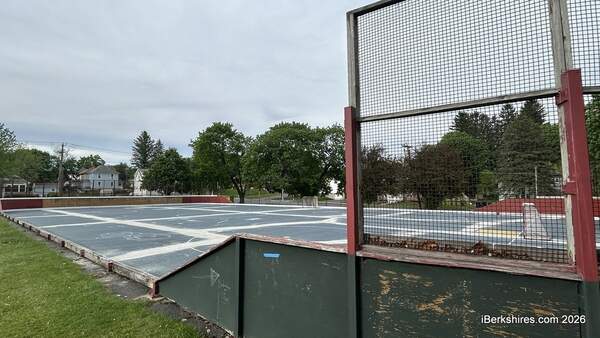
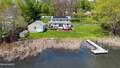
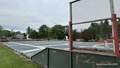
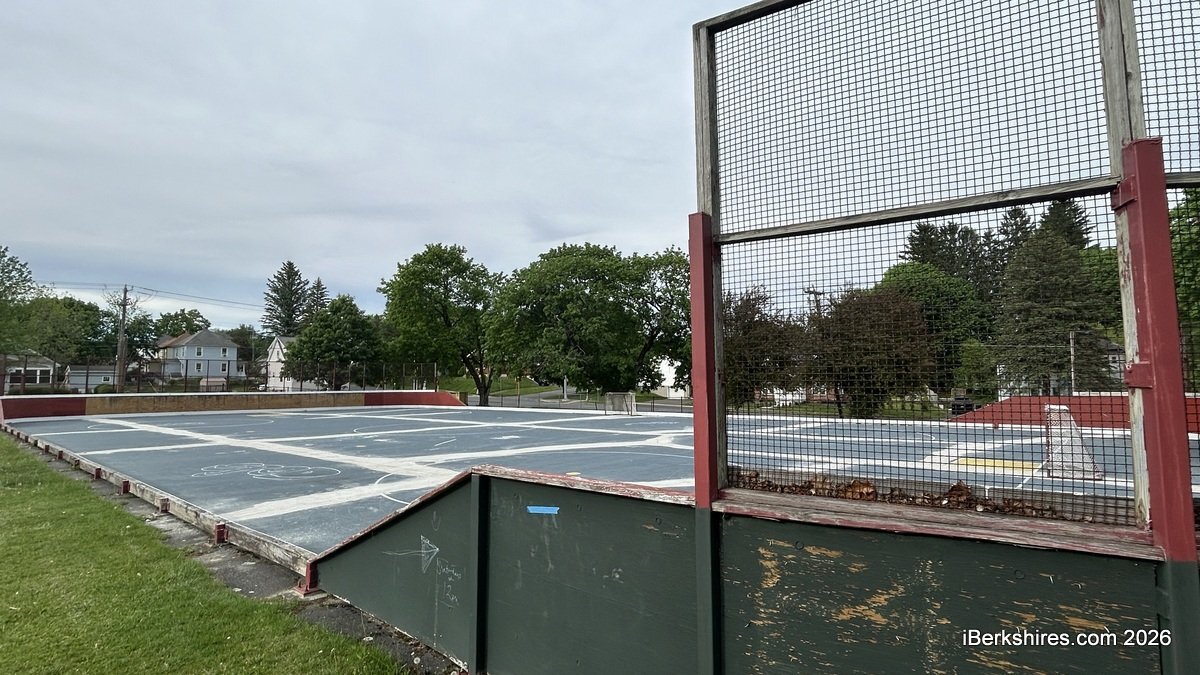
The U.S. Soccer Foundation would locate the mini pitch on the cracked rink at Crane Park.

Pittsfield Plans to Add Soccer to Crane Park
By Brittany PolitoiBerkshires Staff
Print Story | Email Story

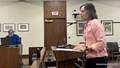
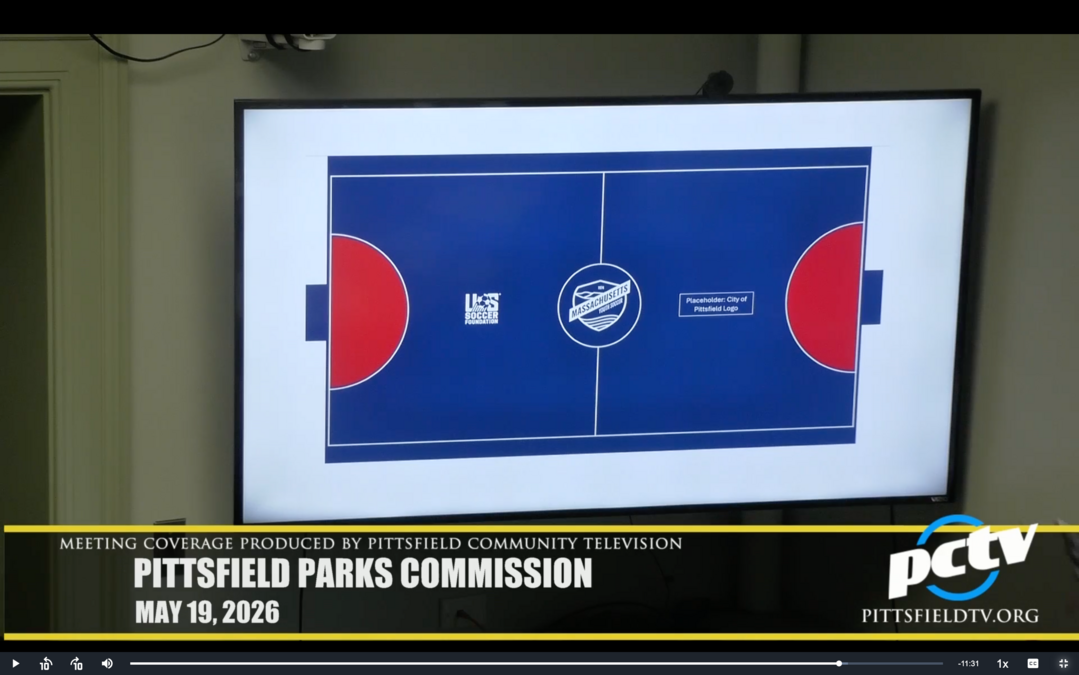
What the pitch would look like in this screenshot from PCTV.

PITTSFIELD, Mass. — Crane Park may be in for an upgrade from the U.S. Soccer Foundation.

Last week, the Parks Commission endorsed a project to place a mini pitch over the aging, cracked concrete surface of the park's rink. Commissioners decided to speak with the surrounding neighborhood before a proposal is made to the City Council. 

A mini pitch is a compact, modular field typically used for soccer, and it can also accommodate inline skates. 

Parks, Open Space, and Natural Resources Manager James McGrath reported he is in the early stages of a grant approval with the U.S. Soccer Foundation, which is looking to install 20 mini-pitch facilities across Massachusetts in anticipation of the World Cup. The award is worth over $100,000 in materials and labor. 

"If we get the grant, and I'm pretty certain that we're going to get the grant if we want it, U.S. Soccer really likes the site, and they really want to site one in Western Massachusetts, they would come in, and they would build a 60 by 120 [foot] facility," he said. 

The facility would have a galvanized steel border with built-in goals and a rubber plastic surface that is clicked together. It is regarded as a way to breathe life back into underutilized space, and U.S. Soccer plans to build them in the late summer and early fall. 

Crane Park sits at the corner of Springside Avenue and Benedict Road. 

McGrath said the inline street hockey rink has served the neighborhood well for about three decades, although it is not used for that sport so much anymore.   It recently had to be crack repaired due to safety concerns. 

"It's really showing its wear," he said. 


"The board system that bounds the rink is often tagged, and it's been painted 100 times, and portions of it are rotting. It's showing its age." 

There would be some costs associated with site preparation, about $10,000, as U.S Soccer provides the system and labor for installation, which takes a few days, and leaves it in Pittsfield's ownership.  McGrath has been in contact with a local funder who is excited about the project, and he is confident that the costs can be covered through philanthropy. 

"So, what this means for the commission, what this means for the city, is that this is a project that costs us nothing," he said. 

Draft grant and donation agreements have been reviewed by U.S. Soccer and the city's attorney, releasing liability to Pittsfield once it is built, and reserving the right for U.S. Soccer to use the mini pitch once a year if they choose. 

The benefits, McGrath said, are to retire the rink's wooden boards that are showing age, to upgrade the surface of the facility, and meet a direct action in the Open Space and Recreation Plan. He pointed out that the urban soccer facility can also be used for inline hockey. 

The commission discussed engaging nearby stakeholders with the project before it reaches the City Council through a community meeting in cooperation with the ward councilor. 

To advance the proposal, it would be brought to the City Council as a gift to be accepted, and the city would work to schedule the installation and have a ribbon-cutting. 

"It's kind of a straightforward project, and it doesn't radically change what we're doing at Crane Park," McGrath said. 


Tags: parks commission,   public parks,   youth soccer,   
If you would like to contribute information on this article, contact us at info@iberkshires.com.

Lanesborough Officials Take Road District Dissolution Off Warrant

By Breanna SteeleiBerkshires Staff

LANESBOROUGH, Mass. — The Select Board has removed a town meeting warrant article regarding the dissolution of the Baker Hill Road District.

JMJ Holdings development consultant Tim Grogan spoke in public comment saying the Berkshire Mall owner is currently has purchase-and-sale agreement for the mall. 

Back in February, the Select Board settled a tax dispute with JMJ Holdings by agreeing to move forward in dissolving the district if the company paid $1.1 million to the town. JMJ Holdings had to provide a signed development-and-purchase agreement 30 days before the town meeting. 

JMJ holdings did not submit a payment to be made by May 9. Because of that, the Select Board voted to take the article of the warrant to be voted at the annual town meeting.

Meanwhile, the Baker Hill Road District presented a slideshow defending the district and explaining what it does.

The district currently provides a non-resident-funded revenue stream of around $500,000 per year. These funds help pay for police cars and officer salaries, dump trucks, fire trucks, and more for the town.

"Dissolution would mean the district's three commercial property owners would no longer have to pay for upkeep of the Route Seven/Eight connector road. As a result, the BHRD annual contribution of more than $500,000 to Lanesborough would disappear permanently, since the services and maintenance costs associated with the Route Seven and Eight connector road would still remain," said Tom Caraccioli, PR consultant with AH&M Inc. "Lanesborough would have to absorb these costs and continue to provide emergency services to the mall and Target. The financial burden for these remaining expenses would then fall on Lanesborough taxpayers through higher taxes or the reduction of other important town services."

The proposal with JMJ would affect the town in a negative way Caraccioli claimed. 

"JMJ is proposing a one-time payment of $1.1 million to Lanesborough in exchange, JMJ would never pay BHRD taxes again. The decision to dissolve the BHRD by accepting this proposed $1.1 million would be a permanent choice that would have irreversible consequences," he said. "There will be no official system in place to cover recurring costs once the money from this single payment is spent. Therefore, the proposed one-time payment is not a long-term solution for the town of Lanesborough."

JMJ's dispute was that the Berkshire Mall no longer exists as a functioning entity and it should not be on the hook for protection and maintenance that had been based on the mall's operation in its heyday. The company is seeking to redevelop the site as senior housing and town officials were asking the state to take over the Connector Road. 

District officials said it's not guaranteed that the state would take over the road linking Routes 7 and 8, built to service the mall back in the '80s, and that the state Department of Transportation had historically discouraged the town from asking. Even if it happened, it could take three to five years, during which no BHRD funds would be collected if the district is dissolved. The state would not replace the revenue they support, and they argued the state is facing its own budget issues making it unlikely they would want to take over.

The road district was created by an act of the Legislature and would require another act to dissolve it. The town meeting article asked for voter support for a home-rule petition to start that process.  

After the presentation, it was asked what the current financial status of the BHRD, given that JMJ hasn’t paid in a long time and if the district actually has the money or if it is dependent on the mall sale.

Mark Siegars, attorney for BHRD, reminded the room that the mall is under a purchase and sale agreement and if the sale closes, the district expects to receive more than a million dollars because of the lawsuit and lien, but does not have that cash yet. If the sale does not go through, BHRD will take the mall and sell it. The district still gets payments from Target, which is separate from the mall. 

There were also some questions on the district's history, with Select Board member Jason Breault asking if the mall did not have a high tax rate from the district, would it still be solvent. The exchange became heated between Siegars and BHRD Chair Bill Prendergast.

View Full Story

More Pittsfield Stories