North Adams Airport Commission Discusses Damaged Hangar
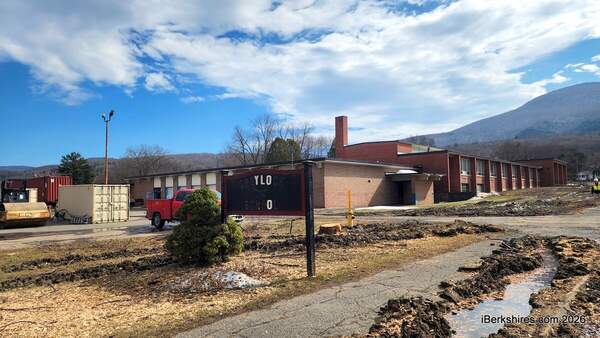
NORTH ADAMS, Mass. — The Airport Commission discussed what to do with the now-closed, city-owned Shamrock Hangar on Tuesday.
Chairman James Haskins said that after pipes burst in the hangar last winter, the Shamrock has basically been sitting empty.
"Pipes were frozen in the walls and broke," he said. "It was shut down a year ago. The pipes are still broken, and the city did fix a broken pipe outside that led up to the building a few weeks ago, but we have to make a decision on what to do with that space and make a plan."
The city purchased the hangar in 2017 with Federal Aviation Administration (FAA) funds. It was subsequently renovated and opened as a public space. Commissioner Dean Bullett expressed disappointment that the building was never winterized.
"This is something that should have never happened in the first place," Bullett said.
Haskins clarified that the city intended to winterize the property, but due to "overlap," officials could not get to the hangar quickly enough to do so properly. He noted that although some work has been done to repair the hangar, the project needs to be completed.
Airport user and former commissioner Trevor Gilman said that when it was open, the Greylock Soaring Club leased space in the hangar. The city waived the lease fee, and in exchange, the club maintained and cleaned the area.
"It was a little hangout in exchange for the city allowing us to be there free of rent," Gilman said.
Gilman explained that because the hangar was funded with state and federal money, it had to remain open to the public. He said this was problematic because any organization that wanted to lease part of the space would be unable to secure it privately. He noted that only one classroom space was left untouched and unrenovated; because no federal or state funds were used there, that single space could be locked and used privately.
Gilman said the Greylock Soaring Club eventually was asked to leave because another organization agreed to lease the space, although they never actually moved in. Now that the airport has an administrative building, there is little need for additional public space.
At a past meeting, the commission discussed selling the property. To do this, or to simply convert the space from public to private, the city would have to make an exchange with the FAA. Engineer Peter Enzien of Stantec said the FAA is open to this, and a value exchange of $45,000 to $50,000 would suffice. He clarified that the city would not cut the FAA a check; instead, the value would be credited against future airport project funding.
The commission motioned to table the issue.
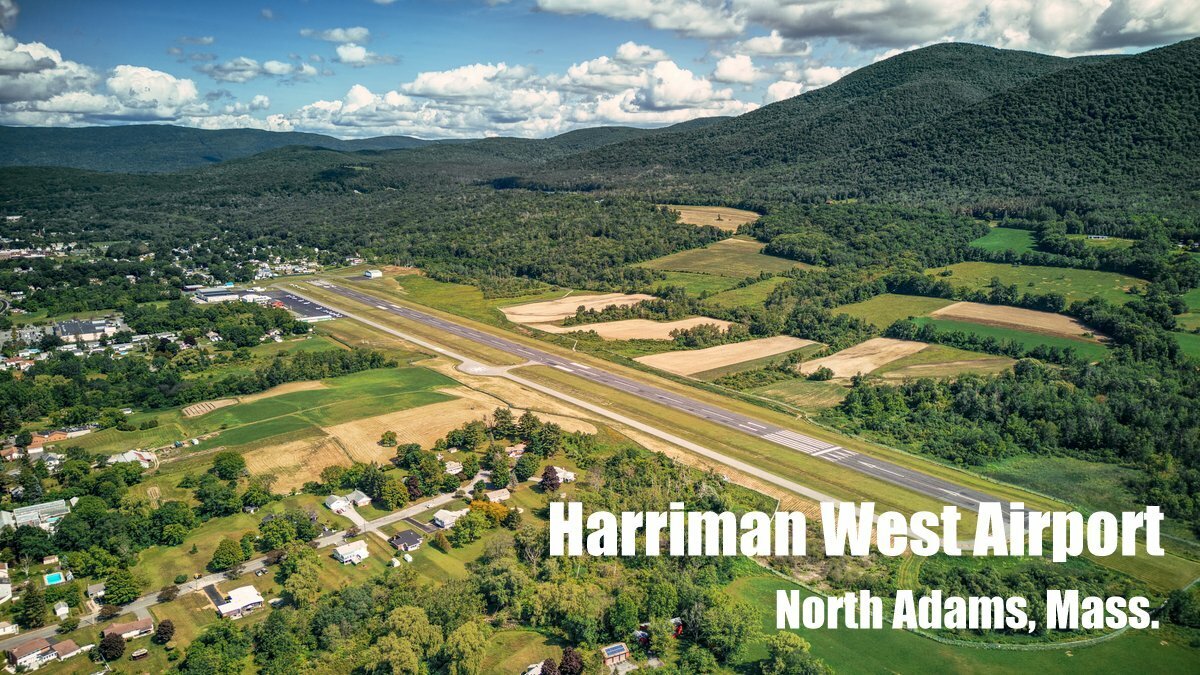
In other business, Enzien provided an update on the new hangar project currently underway. He said the design work is nearing completion.
"It is a pretty basic hangar building," he said. "We went through a few different scenarios just in terms of layout."
Based on similar projects, Enzien estimates the project will cost $1.088 million in total.
"We feel pretty good with that number," he said. "Obviously, we won't know until it comes out."
He said they are working out a way to bring electrical service to the structure, which will require the placement of another utility pole, though much of the equipment will be placed underground. He added that the additional pole will be useful to support future projects on the airport campus.
Enzien also touched on the geotech survey, stating that although the ground is not optimal, the problematic clay is deep enough that it won't cause issues for the foundation.
"The soil is suitable for a shallow foundation system … the soil out here in general is just poor. Lots of clay, but it has been filled in the past, so there is anywhere between 8 to 15 feet of fill before you get to the native clay."
The project includes an alternative that will address the aforementioned Shamrock Hangar roof. Enzien said if bids come in at a decent price, the FAA will contribute. If prices are high, he was confident MassDOT would substantially fund the project.
The RFP is scheduled to be released in April, with bids opened in May. Enzien said construction would start after Labor Day and resume the following spring.
"They go out to get most of the site work done, and then it sits over the winter," he said. "... The building goes up very quickly."
The commission then read a letter from a cellular company Diamond regarding the proposed tower the commission approved for the airport. Survey work has been completed and Diamond is now working on zoning documents. Haskins added it will have to go before the Conservation Commission.
"It is moving forward, but slowly," Haskins said.
In 2024, the commission accepted Diamond's bid of $30,000 a year, with a scheduled 2.5 percent yearly increase, to install the tower.
The commission also tabled a decision to approve commission bylaws and policies. City Councilor Andrew Fitch, who briefly served as an interim commissioner, overhauled the documents using other airports as templates.
The commission asked Fitch to change language that would codify a yearly celebration at the airport. While not opposed to the event, the commission was wary of making it a hard rule. They also asked to change wording that would mandate commissioners report conversations they have with airport users outside of open meetings, noting it might not foster open communication between users and individual commissioners.
Tags: airport commission,