Stockbridge-Munsee Leader to Speak at MCLA
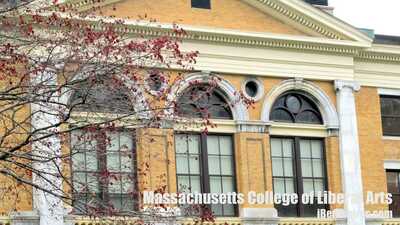 |
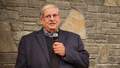
NORTH ADAMS, Mass — Bonney Hartley, Tribal Historic Preservation Manager for the Stockbridge-Munsee Community, will present "Tribal Historic Preservation in the Stockbridge-Munsee Ancestral Homeland" as part of Massachusetts College of Liberal Arts' Green Living Seminar Series on Wednesday, Feb. 25, at 5:30 p.m.
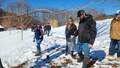
Hartley's presentation will discuss the Community's ongoing work to protect Mohican and Munsee cultural sites and repatriate sacred items and ancestral remains. She will highlight landmark achievements including the 2021 return of Papscanee Island, a 156-acre nature preserve along the Hudson River that served as the center of Mohican life for thousands of years, and the 2024 acquisition of 372 acres at Monument Mountain in the Berkshires, returning ancestral homelands to tribal stewardship.
For ten years, Hartley has served the historic preservation interests of the Stockbridge-Munsee Community from an extension office in the tribe's homelands in Massachusetts. An enrolled member of the Community, she leads the work to protect Mohican and Munsee (Lenape) cultural sites and repatriate cultural items, often serving to transform museums' understanding of tribal cultural patrimony.
Hartley holds a Master of Social Science degree in International Relations from the University of Cape Town, South Africa, and a Master of Fine Arts degree in Creative Writing from the Institute of American Indian Arts. She serves on the board of the Erie Canalway National Heritage Corridor and the National NAGPRA Community of Practice Steering Committee. She is a founding member of the Mohican Writers Circle and 2025 Forge Project Fellow.
The Stockbridge-Munsee Community's ancestral homelands span the Hudson and Housatonic River valleys. Today, the federally recognized tribe is based on a reservation in Wisconsin, where approximately half of its 1,500 members live.
All presentations take place Wednesdays at 5:30 p.m. in MCLA's Feigenbaum Center for Science and Innovation, Room 121 and will be recorded as podcasts available at mcla.edu/greenliving.
The event is free and open to the public.
MCLA's Green Living Seminar Series brings environmental experts to campus throughout the academic year to engage students and community members in conversations about sustainability, climate change, and ecological responsibility.
For more information, contact Dr. Elena Traister at elena.traister@mcla.edu or (413) 662-5303.
Tags: MCLA,