North Adams School Project Awards $51M Bid
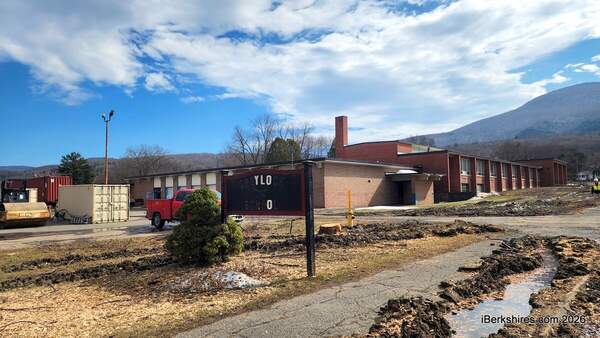
NORTH ADAMS, Mass. — The School Building Committee has awarded the Greylock School project to Fontaine Bros. Inc. of Springfield.
Mayor Jennifer Macksey said she could "breathe a little better" with a bid contract that comes in nearly $2 million under budget.
The committee approved a bid of $50,498,544 on Thursday night that includes two alternates — the rebuild of the Appalachian Trail kiosk and the relocation and reconstruction of the baseball field.
"I will say, all in all, for us to have overall the number of bidders that we had interested in our project, and especially to receive the GC bids that we did, the team Colliers and TSKP certainly did a good job attracting people to us," she said. "But this project ... really shows the testament of the good work that Colliers and TSKP and all of you have been doing throughout this process."
Fontaine had the low bid between Brait Builders of Marshfield and J&J Contractors Inc. of North Billerica.
The project had been bid out at $52,250,000 with three alternates: moving the ballfield, the kiosk and vertical geothermal wells.
Committee members asked Timothy Alix of Collier's International, the owner's project manager, about his impressions of the bidders. He was most familiar with Fontaine, having worked with the company on a half-dozen school projects and noted it was the contractor on the Mountain View Elementary School in Easthampton that the Massachusetts School Building Authority has held up as an example school. He also had some of his colleagues call on projects that he had not personally worked on.
"They're a quality firm. They do a good job. The changes are reasonable and fair," he said. "If they have an issue, they'll work with you, and with an open dialog, I have only good things to say about that."
He has not worked with J&J but it came through the prequalification process with no red flags and Brait he'd worked with as well, and considered it the type to push to keep things moving on a project. As to the subbidders, Colliers has worked with many of them and they, too, went through the prequalification process.
The geothermal heating system, being pushed by the state, is expected to be partially funded by the federal government. Initial estimates for a vertical system came in almost double the $2.4 million earmarked in federal funding from the Inflation Reduction Act.
A year ago, the building committee switched to a horizontal system that will be 20 to 30 feet under the new parking lot at an estimated at $1.5 million. The vertical system was kept as an alternate in bidding at about an extra $226,000.
"We did include an alternate for a vertical system to kind of check, because the horizontal system was something that we haven't done before," said Jesse Saylor of TSKP Studio, the project designer. "It's a little bit newer technology for geothermal, and we weren't sure we were going to encounter bidders and a favorable pricing, even though our research was showing that it should be less expensive for this site."
He said the difference was in the drilling technology; rather than drilling down, the drilling will be horizontal and not disturb the surface.
Committee members Benjamin Lamb and David Moresi questioned the efficacy of the horizontal system, asking if that had been followed up on.
"We want the system to last a really long time, we want it to be able to accommodate the full buildings operations. Is there an efficiency issue from one to another?" asked Lamb.
Moresi asked if Saylor had worked on any similar projects and if it had been vetted.
"From our perspective, the systems are providing equivalent performance to North Adams and have similar longevity," Saylor said, adding they have been used extensively in Canada.
"We were more concerned about the number of bidders that you'd have, because there's a pretty large market of vertical well drillers at this point in the state, but there aren't as many horizontal drillers," he said.
Moresi wasn't convinced, saying there had been a lot of issues with bigger projects in the area that have implemented new technologies.
"I mean, there's another project recently, and I asked the OPM to maybe make some phone calls and do a little due diligence," he said. "I really feel that things like this need to be vetted, because the last thing the school wants to deal with his issues."
Saylor said he could reach out to Williams College, which is also putting in a geothermal system for the new art museum and ran into the same problems with the aquifer that Greylock had.
The vote for the bid approval included a statement for more research into the horizontal system and a recognition that a rebid of the electrical required a change order.
The vote was unanimous and followed by applause, with Moresi abstaining because of his relationship to subbidder Adams Plumbing and Heating.
Alix said some process issues with the bidding, including the rebid of the electric, pushed out the deadline slightly. Work is expected to start at the end of the month with completion in July 2027.
Tags: bidding, Greylock School Project,