Curious Festival of Unfinished Works At the Adams Theater
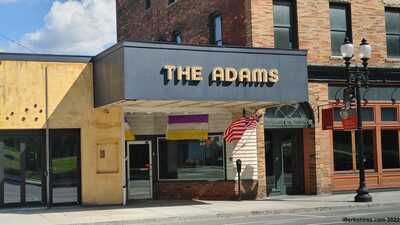 |
ADAMS, Mass. — On Feb. 21, eight puppeteers and object performers will present work they've spent time developing at the Adams Theater.
The inaugural Curious Festival of Unfinished Works, created by New England Puppet Arts in collaboration with the Adams Theater, has artists in residency working with a team of mentors to develop their ideas for the stage.
These developments will be shown on stage on Feb. 21, starting at 7 pm.
Tickets are available at https://www.adamstheater.org/
"I love this part of making theater," said David Lane, the theater maker and artist who is working with the Adams Theater to present this curious festival, which will include textiles, shadow puppetry, and abstract work. "At the early stage, when things start to click, is when it can get really exciting."
Lane, an old-guard puppet artist who has presented extensively across the U.S. and Canada, also teaches a puppetry intensive at MASS MoCA and said he frequently gets requests for a residency program focusing on unfinished work. Some artists will develop dramaturgy, some will be fabricating, and all will get to give and receive feedback on story, sets, props, and other elements. Artists are staying at the nearby Trail and Revival House hotels and walking over to the Adams to work.
"This is how theater is made," Lane said. "When you see a piece of theater in New York, it's gone through years of readings, workshops, rewrites. It feels like it's unfolding for the first time in front of your eyes, but there's always a process behind it. Giving artists access to share their work in a venue and for an audience is an important part of the process."
Artists include Pia Banzhaf, Karen Cantor, Guy Meilleur, Kimberly Cotter-Lemus, Madison J. Cripps, Genna Beth Davidson, Sarah McNair, and Junli Song. Their mentors will be Lane, Sandglass Theater's Shoshana Bass, theater designer Sydney Maresca, and director, writer, performer, and Williams College assistant professor Erica Terpening-Romeo. The project is funded by a grant from the Massachusetts Cultural Council.
Lane said he appreciates the theater's approach to showing new work and hosting artists developing it.
"They're super generous about supporting art that might otherwise not have a place to flourish," he said. "Residencies are complicated. In puppetry it can be doubly complicated, because you need space to put the performance together, and to fabricate. This is only possible through a partnership like what we have in Adams."
The Adams Theater participates in Mass Cultural Council's Card to Culture program, in collaboration with the Department of Transitional Assistance, the Women, Infants & Children Nutrition Program, and the Mass Health Connector.
EBT, WIC, and ConnectorCare cardholders receive free admission to our shows and events by presenting their cards at our Box Office. See the complete list of participating organizations offering EBT, WIC, and ConnectorCare discounts.