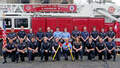
Adams Fire District Officials Make Case for Full-Time Chief, Appointed Clerk
ADAMS, Mass. — If Adams Fire Chief John Panescchi had his choice, the town would continue to run as an entirely call/volunteer operation indefinitely, but that is not realistic.
"We have less and less firefighters, less and less people around during the day," he told the audience at an information session on Wednesday afternoon. "In August, we had a garage fire. And we had two people to respond: myself and my driver, who is 72 years old.
"It's nowhere near the department I joined where a call came in and everyone responded. It's scary."
Panescchi appeared with the three members of the Prudential Committee that oversees the district to explain their reasons why the chief's position should be made full-time and the district's clerk/treasurer should be changed from an elected to an appointed position.
Both questions will be put to residents at a special fire district meeting, likely to be held in February.
If approved by the meeting, both decisions would need to then go to a ballot vote – likely this May for the clerk/treasurer question and spring of 2027 for the fire chief decision.
The timing of the ballot votes is slightly different in part because Panescchi's current part-time position, to which he is elected, is up for re-election this May. Officials think it would be confusing to hold a ballot vote on changing the position's nature in the same election where voters would be asked to choose someone to fill the position.
But change – in the form of professionalizing the clerk/treasurer spot and appointing a full-time fire chief – is needed, the Prudential Committee agrees.
A ballot measure to make those changes failed last May on an 81-85 vote.
Among the questions from the 20 or so attendees at Wednesday's session: Why ask the same questions again so soon?
"Five years ago, we put it out there," Panescchi said. "My argument was the same as it is today. Things have gotten worse."
Increased rules and regulations, increased training requirements, increased demand for inspections and a nationwide trend of decreased volunteerism all have aligned to make the post of Adams Fire Chief a full-time job, Panescchi explained.
In 2024 and '25, Panescchi worked more than 1,950 hours over the course of a year, nearly the equivalent of a 40-hour work week (2,080 hours), according to a slide show presented at the meeting.
The Adams department's call volume rose by 63 percent – from 265 to 433 – from 2004 to 2025.
"Medical responses, motor vehicle accidents, fire alarms activated, sprinklers activated, carbon monoxide detectors activated," Panescchi said, ticking off some of the non-fire calls that account for most of that volume.
Most of the questions about the full-time fire chief proposal centered on the cost and whether the change would bring about any increases that officials had not thought about related to benefits or pension expenses.
"I've been in the pension system for 30-plus years," Panescchi said, referring to his day job. "You can only collect one pension. Any money I paid into the pension system up to now would be transferred to the Adams system [if he was hired as a full-time chief]."
District bookkeeper Victoria Lassonde explained that an employee would need to be in the system for 10 years in order to collect a pension, and the benefit would be based on the years served.
Although the only proposal before voters this year is whether to make the chief a full-time position, Panescchi indicated that the day could be coming when towns of Adams' size, given the lack of volunteer firefighters, will have to think beyond one full-time employee.
"The reality is you're going to see a two- or three-man fire department across the country in small communities like this," he said. "Whether that happens next year or 10 years down the road, I can't tell you. But it's coming."
Along with the move to the full-time chief position, the Prudential Committee is asking residents this winter to make the clerk/treasurer an appointed position. The benefits, they say, include ensuring that the person in the position is professionally qualified and can be required to pass a drug and CORI – none of which is possible for an elected official.
The panel did get some pushback on the idea of making the change for the clerk/treasurer.
One resident argued that having an elected treasurer ensures that person in the position is independent and not beholden to the members of the Prudential Committee.
"What happens if you get a person elected who is not qualified?" Prudential Committee Chair Thomas Satko asked rhetorically.
"We elect a lot of people who aren't qualified for the job," another attendee said, drawing chuckles from the crowd. "I'm not naming names."
The Prudential Committee has yet to set a date for the special district meeting on the fire chief and clerk/treasurer questions. On Wednesday, the committee members said they were considering Feb. 19.
Tags: fire district,