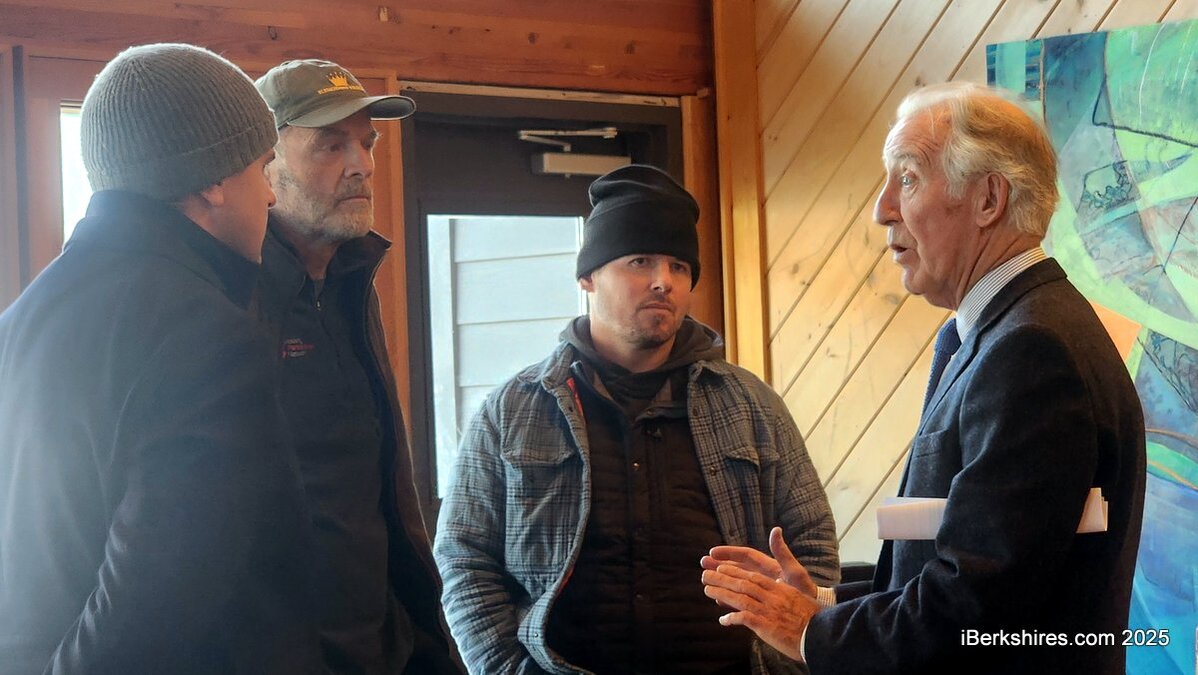
Congressman Neal Highlights Successes of Pandemic Legislation
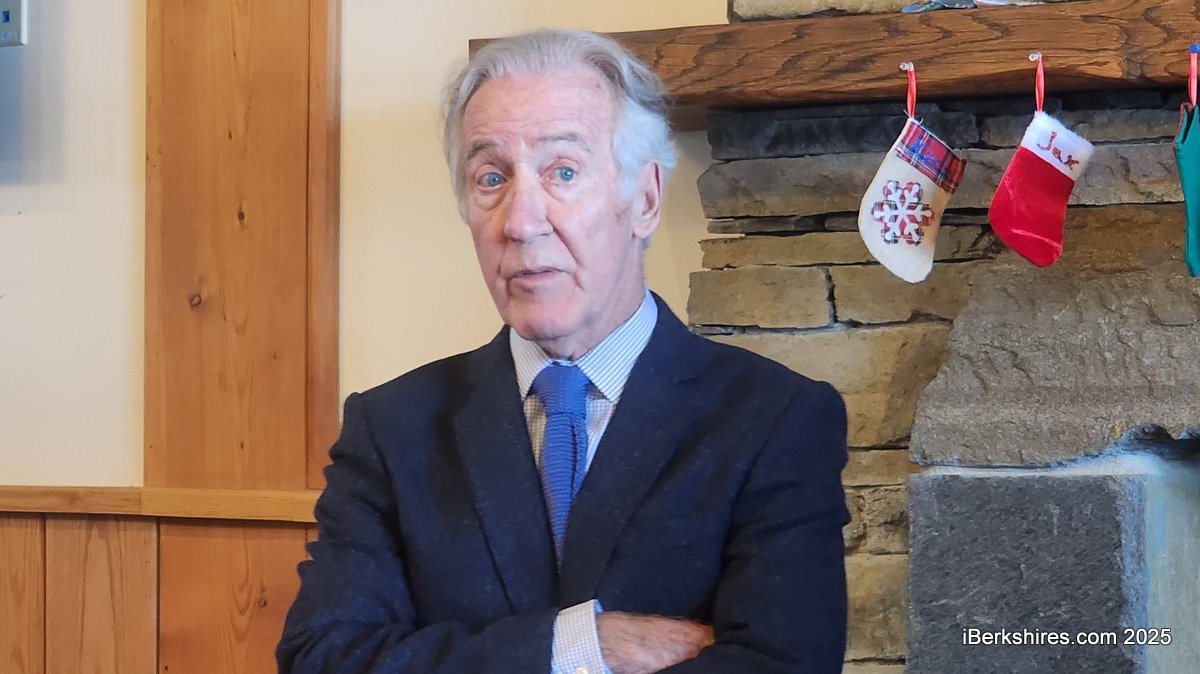
Congressman Neal was chair of the powerful Ways and Means Committee when the legislation was implemented. He says he will continue to advocate for funding for businesses, science, education and medicine.
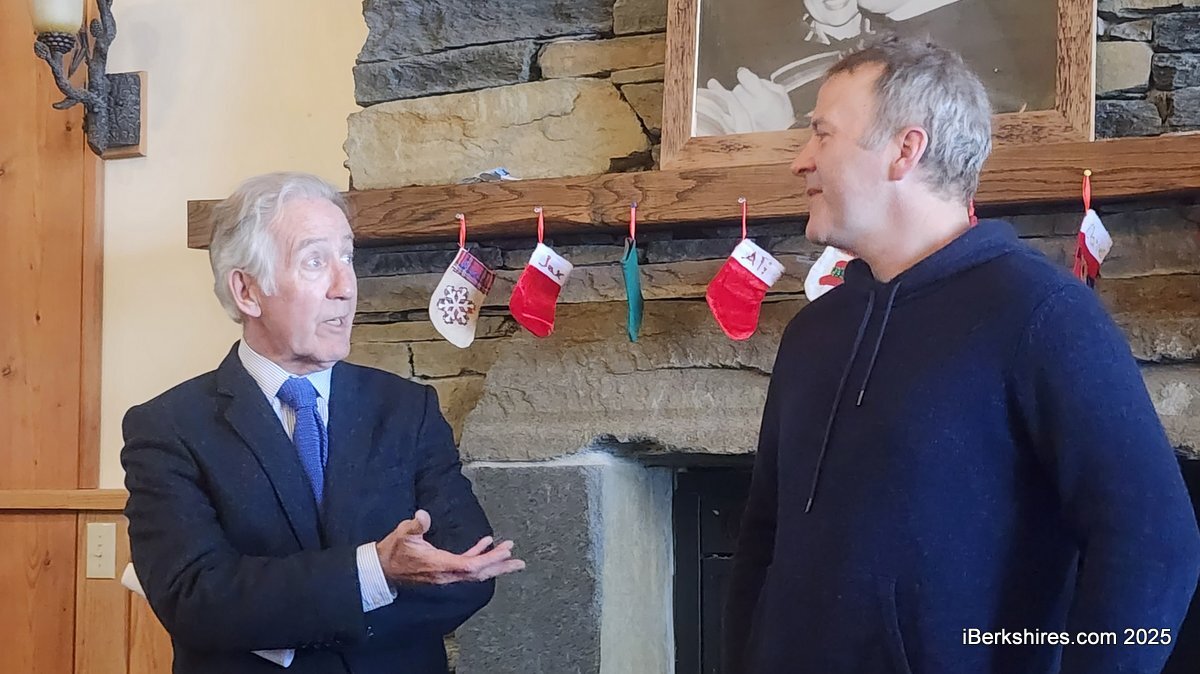
"Every single one of those programs, whether it was PPP, Employee Retention Tax Credit, played an integral role in Berkshire East, keeping it going," said owner Jon Schaefer. "And it was a panic at times."
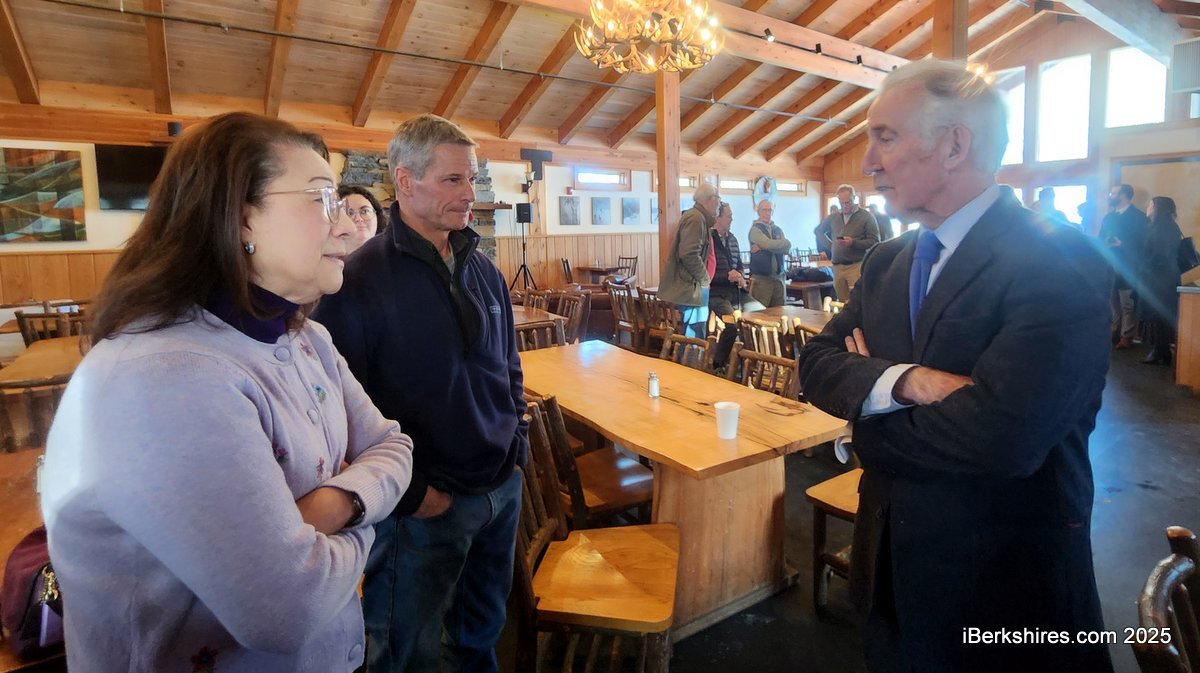
U.S. Rep. Richie Neal, standing next to Schaefer in the main lodge at the ski resort on Monday, said he wanted to remind people of the successful interventions like the Paycheck Protection Program and Employee Retention Tax Credit that saved local businesses. The congressman also touted the Bipartisan Infrastructure Act, the American Rescue Plan Act and the $2.2 trillion Coronavirus Aid, Relief, and Economic Security (CARES) Act.
"So on an overall basis, consider the way that America rebounded from the pandemic so much better than the rest of the world," said Neal, who was chair of the powerful Ways & Means Committee when these programs were implemented under Democratic leadership.
"Really large employers or people at the top of the income strata in America, they were able to hold on what they had. The challenge that we had was getting the cash flow for people who really needed it, and the immediacy of it was essential for the work that we've done."
Many of these programs have sunset, but claims on the Retention Tax Credit are ongoing.
The Schaefer family has owned and operated Berkshire East since 1976; they also own Zoar Outdoor, and Catamount Mountain Resort in South Egremont. Jon Schaefer said the company employs close to a thousand full and part-time seasonal people, and about 400 at each ski area during the winter.
Schaefer said he was reading the legislation at midnight as changes were being made, looking for what to do.
When PPP came out, he called an emergency meeting with the town aboard about building a snow-making pond. when officials asked what the emergency was, he said, "it's jobs. People have to work, we have all this money that's available to us if we put people at work."
The congressman pointed out the Schaefers have been in business for a long time, and employs hundreds of people.
"You might say to yourself where might this all have been if there had not been that federal partnership," he asked. "Sometimes there are esoteric arguments in our lives. But when you're literally trying to keep the lights on and keep people working, as you said, not getting any sleep, concerned about where the next hammer might fall, and so thanks to you, what you did was stayed through it."
Most of these direct payment programs have ended, but the claims for the Employee Retention Tax Credit are ongoing. The tax credit was open to eligible businesses and tax-exempt organizations that kept employees on payroll during the COVID-19 pandemic, and can still be retroactively applied to for qualifying periods.
"We looked at what the Europeans were doing, and they were just sending out money. We decided our initiatives that if you would keep your employees on the job, we would reward you. That was the whole plan," Neal said. "And we didn't say you just get a check not to do anything. We said, keep them going, keep them working, and we will reward you in the tax code."
The congressman credited his staff for working nights and weekends, and hand in glove with the IRS, to get this money out to businesses. He didn't think there will be an arbitrary cutoff to these programs, after speaking with the IRS commissioner, but acknowledged "they're being scrutinized with great attention."
The programs were successful because of speed — distributing the funds without delay. He said with the current political polarization, "it's hard to get media and others to concentrate on exactly what was accomplished and the rebound in the American economy in short order."
He did say the current administration is making some "short-sighted" and "ill-considered" decisions, particularly pointing to energy projects in the Northeast, and rollbacks in medicine, science and education that are tentpoles of the state's innovation economy.
The Trump administration cut nearly $8 billion in grant funding for clean energy projects this fall, including $466 million in Massachusetts and stopped work on the off-shore Revolution Wind project of Rhode Island that's 80 percent complete. The wind project would have provided more than 700 megawatts of power to Rhode Island and Connecticut.
Neal did think that the U.S. Supreme Court will find that Congress determines tariffs, which are taxes on the consumer. He said he sat in to listen to the arguments of the case.
"The tariff argument's falling flat," he said, noting the average is now 19 percent. "We can't say we're going to impose arbitrary tariffs without any thought going into them. ...
"Today, it's well, we're going to get relief out to farmers. Well, the tariffs caused the problem ...
"Not this president, or any president, gets the determine what are taxes. ... presidents can give you all the advice they want, but ... taxing is a responsibility for Congress."
Tags: federal funds, Neal,