image description
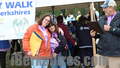
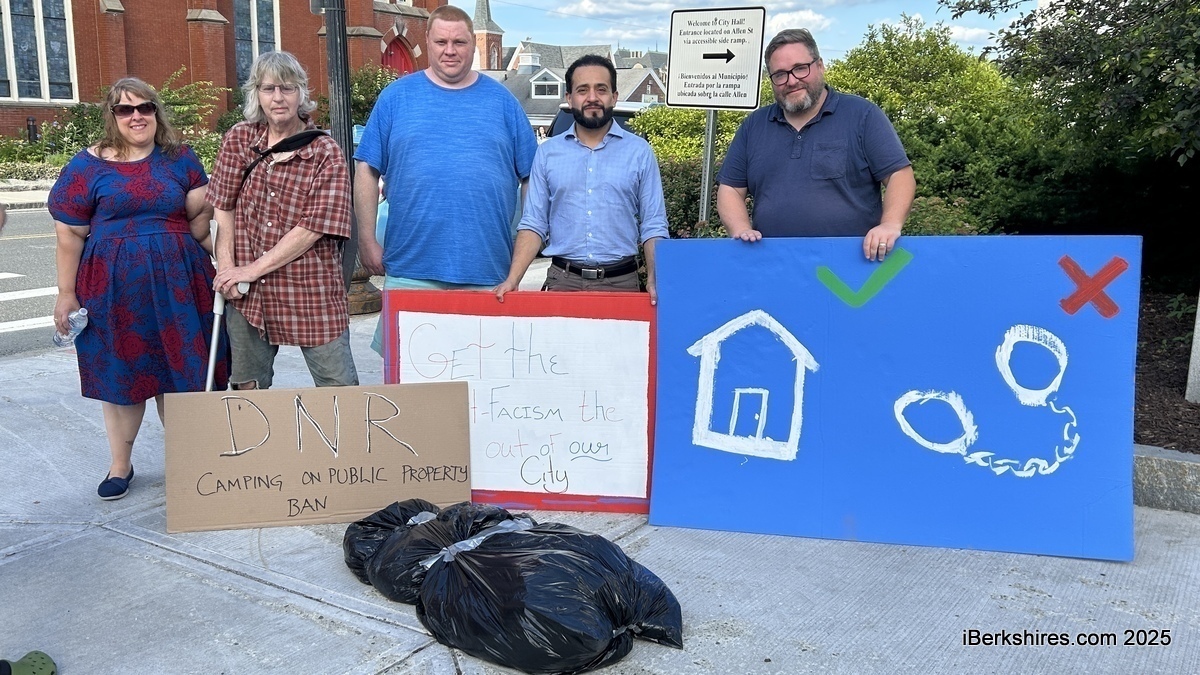
"Homes Not Handcuffs" protesters before a past council meeting

Pittsfield Health Board Mulls Camping Ordinance

By Brittany PolitoiBerkshires Staff
Print Story | Email Story

PITTSFIELD, Mass.— The Board of Health wants to apply its expertise to the proposed public camping ordinance and curb negative effects on unhoused community members. 

Later this month, the board will give its input to the City Council after requesting that it be included in the conversation. 

"We have a mandate. It is a public health issue, and in that, I think we also can do some real good," Chair Roberta Elliott said during last week's BOH meeting. 

The ordinance has sparked hours of public comment since it was brought forward months ago, and has been amended to remove criminalization language, change the fine structure, and add exceptions for people sleeping in cars or escaping danger.  

Last month, councilors referred it to the board at its request.  Health officials expect to provide regular communications at City Council meetings.  They first spoke to Erin Forbush, ServiceNet's director of shelter and housing. 

"I can put myself in the shoes of a business owner, and obviously have them be concerned. It's fair. I can also, because of the people I work with, know how they feel and what they're going through, and as the shelter provider, I also know what my limitations are, what I can do. So I think everybody has a role in this and can be upset by it," Forbush said. 

She strongly opposed the previous criminalization language, "Because this is a community problem. This is a cultural problem." 

"Capitalism is a part of our culture, and it has not worked for everybody," she explained. 

"I'm not saying that we're going to change any of that, but there are pieces that are put in line that can keep people in disadvantaged spaces, and with rents going up, and less subsidies, that is keeping people in these spaces that they can't move from." 

Forbush pointed out that some people sleep in the downtown area because it is near people and first responders, making them feel safer.  She said it has become clear that the bad behaviors being cited in conversations about the ordinance are coming from a "very small" handful of people. 

"They're causing issues for other people that are outside sleeping. Those folks aren't happy about some of the behavior either, but it's a small number, but we tend to make that everybody," she said. 

Speaking to reports of people defecating in the downtown, she said the Health Department would be cleaning all day if every unhoused person were using the bathroom in public spaces. 

"And part of it is, we don't have public restrooms, and specifically more so at night," she added. 

ServiceNet operates The Pearl, where they cohabitate with the First United Methodist Church, two congregate family shelters, as well as some apartments that are used for sheltering.  While the agency can accommodate more people than in the past, housing insecurity is increasing. 

"It is a shelter that is full more than not," Forbush said about The Pearl, which has 40 beds. 


It has a waitlist typically the same size as its capacity, plus more people who will need a place to stay in the winter.  Forbush said she begins to panic about winter in August every year, especially around funding. 

The past couple of years, ServiceNet has operated a warming center at The Pearl from 10 p.m. to 8 a.m.

"I'm just feeling like there are so many wonderful people working on lots of pieces of this, and the problem is just going to get bigger and bigger," Elliott said. 

"We don't have enough beds. We can't fix the bed situation, but we can fix a conversation that the community can have about coming together and looking at what we can do if we can't put people in houses." 

Forbush said people in Pittsfield are "very open," and it has been the easiest community to work in.  

"We put a lot of energy into the ordinance, right? And the amount of energy we put there, if we put it to maybe either being more aware, being more open, and accepting, because this is a hard thing for people to accept," she said. 

"We are not wired to watch suffering, so we just want to not watch it. So we just turn our backs to it, or governments have ordinances and laws, and that's the problem-solving." 

When talking to shelter guests, she found that they widely don't feel accepted by the community, pointing to pushback when the project was being permitted around 2020. 

Dr. Jeffrey Leppo observed that the camping issue is like "the nail sticking out of the floorboard." 

"I really think that what I'm hearing is that one of the things that we can think about is, how can we, as the Board of Health, work at better trying to coordinate community action to make it a better way to try to address a clear community problem," he said. 

Before its next meeting, a couple of members of the board will visit the Division of Community Care in Northampton to get a sense of what other communities are doing.  Elliott, who previously spoke to a representative from the program, described it as "actually probably one of the most positive things I had heard in a while." 

"The Division of Community Care (DCC) is a pioneering public health-led initiative to provide an additional response for community members who need immediate help with personal challenges," its website reads. 

"The DCC operates with a person-centered and trauma-informed approach to provide emotional support, de-escalation, collaborative problem solving, advocacy, and resource connection for individuals experiencing homelessness, emotional distress, difficulty meeting basic needs, struggles with substance use, and conflict within the City of Northampton." 
 

If you would like to contribute information on this article, contact us at info@iberkshires.com.

New Pittsfield Therapy Office Offers Support to All Ages

By Breanna SteeleiBerkshires Staff

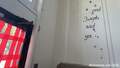
Words of inspiration at Berkshire Heart &  Mind. 

PITTSFIELD, Mass. — A new therapy office has opened in the downtown area helping people of all ages.

Berkshire Heart and Mind Therapy cut the ribbon Thursday for the new office on at 34 Depot St., Suite 303.

Executive Director Colleen Passetto has been a therapist a little over 10 years and recently decided to go into private practice.

"I went and became a private practice clinician after working for years at a community mental health clinic. That was amazing," she said. "That was amazing to me, but then decided a little over a year ago, that I was going to expand, and I slowly started working on becoming a group practice."

Berkshire Heart and Mind Therapy is a group private practice for all ages and Passetto wants everyone to feel welcome there. 

"My group practice is basically designed to welcome everybody in, from ages like 4 or 5 up that need therapy through elders. So no matter who they are, what they're carrying, we welcome them," Passetto said. "We don't discriminate, we don't judge. We like everybody to feel like when they come here, that you know, they're welcomed, that everything they have that is strengths, skills, history, experiences, is valued and is used as part of their healing and treatment."

The practice provides in-person therapy in Berkshire County and telehealth services throughout Massachusetts. The organization also offers individual therapy sessions and ADHD (attention-deficit/hyperactivity disorder) consultants.

Passetto wanted to create a space for people to come together and help each other. Through a recent diagnosis, she was was able to bring a different perspective to the practice in terms of trauma care and neurodivergence.

"We work with clients to help meet them where they're at, but we also do it from the lens of neurodivergent affirming, because I am a neurodivergent therapist who has AuDHD lately diagnosed, but I've had it for a long time," she said, using a term now used for autism/ADHD. "It's just as we women get older, some of us are now getting diagnosed because it was overlooked when we were younger. So it's a practice that I developed so we could actually come together and be able to help our communities.

"It's really needing mental health therapy. It needs additional support, but trying to find ones that you know, where everybody can come no matter what."

Passetto said her diagnosis helps her understand and be empathetic to others.

"It's kind of turned into my superpower, so to speak. I use it, I'm very creative, I'm very empathic. I'm able to think outside the box and be creative about different solutions, but I also can understand where others are coming from from my own trauma history as a child, I'm able to pretty much kind of understand where they're coming from," she said. "So I'm able to see it from a whole new different angle and lens as well."

Passetto said she got help from organizations including Common Capital, 1Berkshire and others, plus a grant from the city to open her office.

She hopes to slowly expand and progress her business as they grow. She is currently hiring clinicians and would like to start out with at least three. 

"Our goal is over five years to slowly expand to about between five and 10 clinicians. But to start this year, our goal is to have about at least two to three. Obviously, as we have more clinicians apply, we have the available funding from working capital that we're working with, Common Capital, and the more need of people that are needing services, then we can slowly start adding on more commissions as we need them," she said. "So we don't over grow too quickly, but we can grow with the community as it's needed, and this way we can make sure that we are successful in here for a long time."

She is also hoping to expand her therapy groups and open up different areas of expertise, to offer "a wide range and eclectic kind of types of therapy groups that are needed."

"Obviously, we're going to eventually be adding stuff like grief support groups. We're going to be adding groups for like different things like anxiety and depression for all ages," Passetto added.

She said she is looking into a program in which clients can play a games with others to help them with their anxiety. One therapy group uses Dungeons and Dragons for adolescents and adults who have like social anxiety, anxiety, depression, even maybe trauma, as way for them to engage with community. 

People who are struggling with these mental health issues often feel they are not listened and are unfairly stigmatized.  

"For example, those that have ADHD, ADD, stuff like that, bipolar, other diagnosis, some people in the community may tell them that they're lazy or, they bring things onto themselves, but they don't. They're just going through the same thing other people are, but in a different way.," she said. "And they kind of think and feel that they're broken, but they don't need to be fixed.

"They need to be nurtured, supported, help them to grow, to heal in ways that they have their own strengths and individualities and personalities they can use to do that so they're not forgetting who they are, and others can start seeing who they are with positive support."

Berkshire Heart and Mind Therapy accepts most insurances and Passetto is currently working on getting Medicare credentials.

The office is open weekdays from 9 a.m. to 5 p.m. More information can be found on the website.

"It's kind of like a family atmosphere. Even though we do therapy, we don't want them feeling like they're in a clinical atmosphere. We want them to be able to sit down like they're at home, become grounded, but comfortable."

 
View Full Story

More Pittsfield Stories