MCLA Maintains Top 10 Public Liberal Arts College Ranking
NORTH ADAMS, Mass. — Massachusetts College of Liberal Arts (MCLA) has maintained its position as the No. 6 Top Public Liberal Arts School in the nation according to U.S. News & World Report's 2026 rankings.
This marks 11 consecutive years in the top ten.
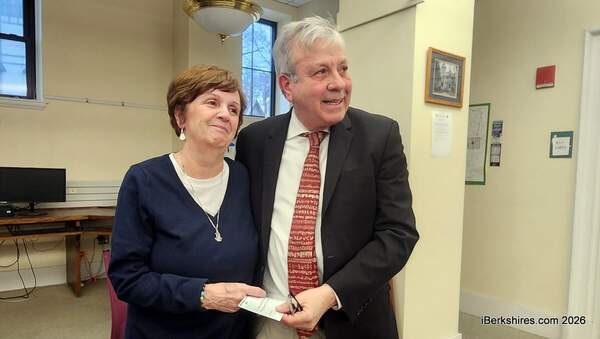
"Eleven years of top-ten recognition is a testament to our faculty, staff, and the entire MCLA community's dedication to student success," said President James F. Birge, Ph.D. "This consistency in rankings reflects our core mission: providing an affordable, transformative liberal arts education that empowers students from all backgrounds to achieve their goals and make meaningful contributions to society."
More than 41 percent of MCLA undergraduate students receive Pell Grants, and 49 percent are the first in their families to attend college. Overall, 95 percent of MCLA students receive some form of financial aid, stated a press release.
"MCLA's sustained excellence in the rankings reflects its unwavering commitment to providing accessible, high-quality education," said Buffy D. Lord, Esq., chair of the MCLA Board of Trustees. "While some institutions may steeply discount their programs to attract students, MCLA uses an affordability model rather than a financial leveraging approach. The result is that MCLA graduates have the lowest student loan debt of any four-year public institution in Massachusetts, and 22 percent of graduates have no student loan debt at all."
The college reported that their focus on individual attention and experiential learning continues to set it apart. Classes are taught by educators who prioritize teaching excellence and student development.
"At MCLA, we strike a balance between our strong identity rooted in practical education and our forward-looking approach," Birge continued. "We understand the demanding expectations of today's students, and we are committed to meeting their needs. This is why we have introduced new programs, such as Nursing, Radiologic Technology, Global Studies, Environmental Studies, and Music, Industry, and Production."
MCLA also touted its Essential Needs Center (ENC), which addresses the hardships outside of academics that can become obstacles to student achievement and overall wellbeing. This space offers food, essential items, housing and transportation assistance, seasonal clothes, SNAP applications, and more. The ENC is run by students.
"Our additional student support staff enables us to quickly and efficiently customize academic success plans, allowing students to focus on their classes without being sidelined by other stressors," Birge added. "At MCLA, students don't just have a plan for their continued growth and success; they have the name of an MCLA mentor who is there from start to finish."
According to a press release, the College's ability to maintain both high rankings and accessibility demonstrates that quality education doesn't have to come at an unaffordable price.
"These rankings provide further validation that MCLA remains true to its 130-year commitment to public education and effectively prepares students for success in an increasingly complex world," Lord concluded. "The liberal arts model is just as valuable now as it ever was, and we’re pleased to see our continued strengths highlighted in this way."
U.S. News ranks colleges based on indicators including financial strength, faculty expertise, and educational outcomes.
Tags: MCLA,