Williamstown Fire Officials Call on Residents to Properly Mark Addresses
WILLIAMSTOWN, Mass. — Since being installed, first-year Fire Chief Jeffrey Dias has been getting to know the community.
It should not be as hard as it is to get to know the town of 7,400.
"As an outsider trying to find a street address, I have had some heartfelt discussions with some people," Dias told the Prudential Committee at Wednesday's monthly meeting. "I don't know that a certain family has lived in a house for 150 years."
Committee member John Notsley raised the issue, telling his colleagues that the lack of proper numbering on homes had been bothering him.
"There are more houses in town that aren't numbered than are," Notsley said. "It's a mess."
Dias told the committee that he would fail homes when inspected for smoke alarms and carbon monoxide detectors at the time of sale. But that is the only time numbers are formally reviewed.
Too often, deficient numbering is discovered when first responders are looking for an address during an emergency.
"When it's life-threatening stuff, every second counts," Dias said.
"Consistency helps. Some people do [numbers] on the garage. Some people do it on the front door. The reflective thing is huge, too. People will put these nice, ornate, black, iron numbers on a dark brown house. It's a challenge. It's something we'll continue to work on."
Massachusetts General Law spells out how addresses should be displayed at a property.
According to a flyer from the commonwealth's Department of Fire Services:
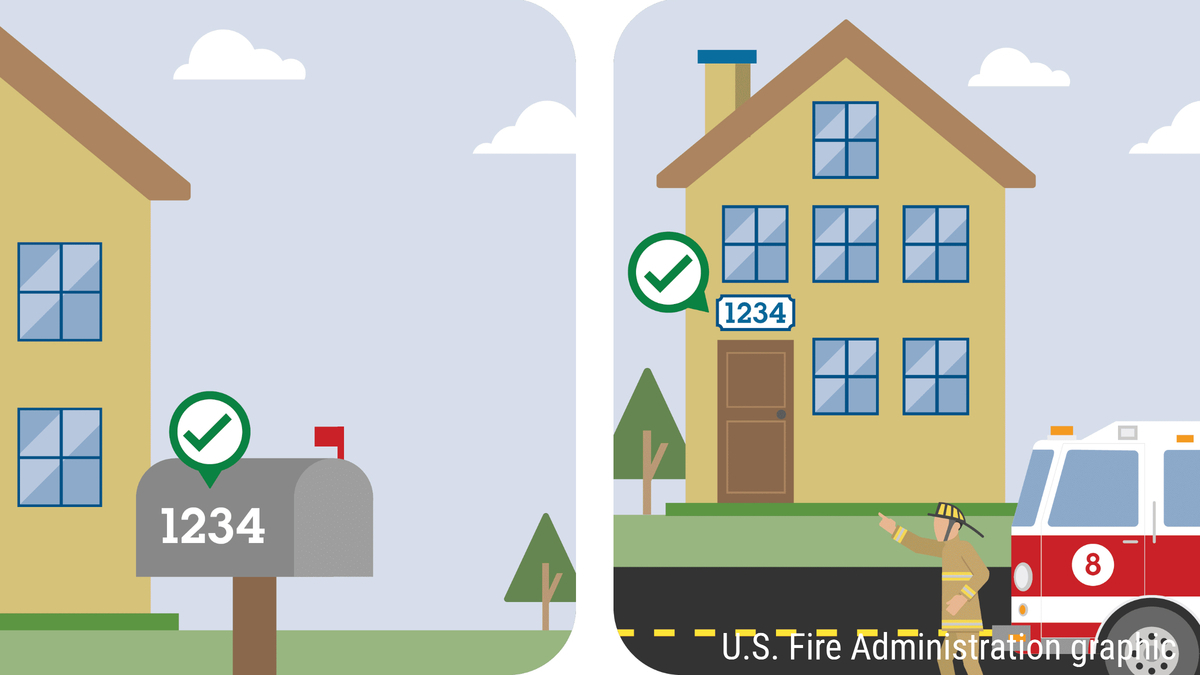
• Numbers need to be at least 4 inches tall and face the street.
• Numbers need to be under lighting and have a "contrasting background" so they are visible at night.
• Homes with long driveways should have the number on both sides of a mailbox or sign pole near the road.
• Vegetation should be trimmed to keep numbers visible.
Dias told the committee that if he is able to establish a summer internship for college students next summer, one good project for that group will be to canvas neighborhoods and leave literature explaining the legal requirements.
One problem in rural communities like Williamstown is that many residences are not visible from the road. In some places, they share a driveway, and, while multiple house numbers may be posted at the roadside, sometimes there is no indication which fork to take from the common driveway to find a particular address.
"It's great if you have reflective numbers on your house, but if you have a 600-foot driveway, I can't see [the house numbers]," Dias said. "People say, 'I had one, but a snowplow knocked it down.' Well, put it back up.
"Street signs are another big one for me. As an outsider, when streets don't have a sign, that's a problem."
Dias did not identify particular streets that lack adequate signage. Williamstown has a mixture of town-owned and private roads.
Tags: address, signage,