Guest Column: Finding Its Rightful Place
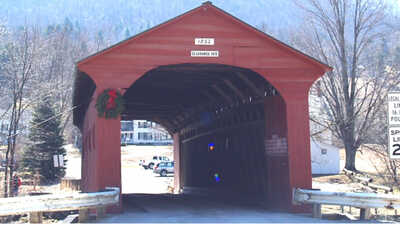 |
| (provided photo) The bridge spans the Batten Kill River site. It was constructed of wood and was built in 1852. |
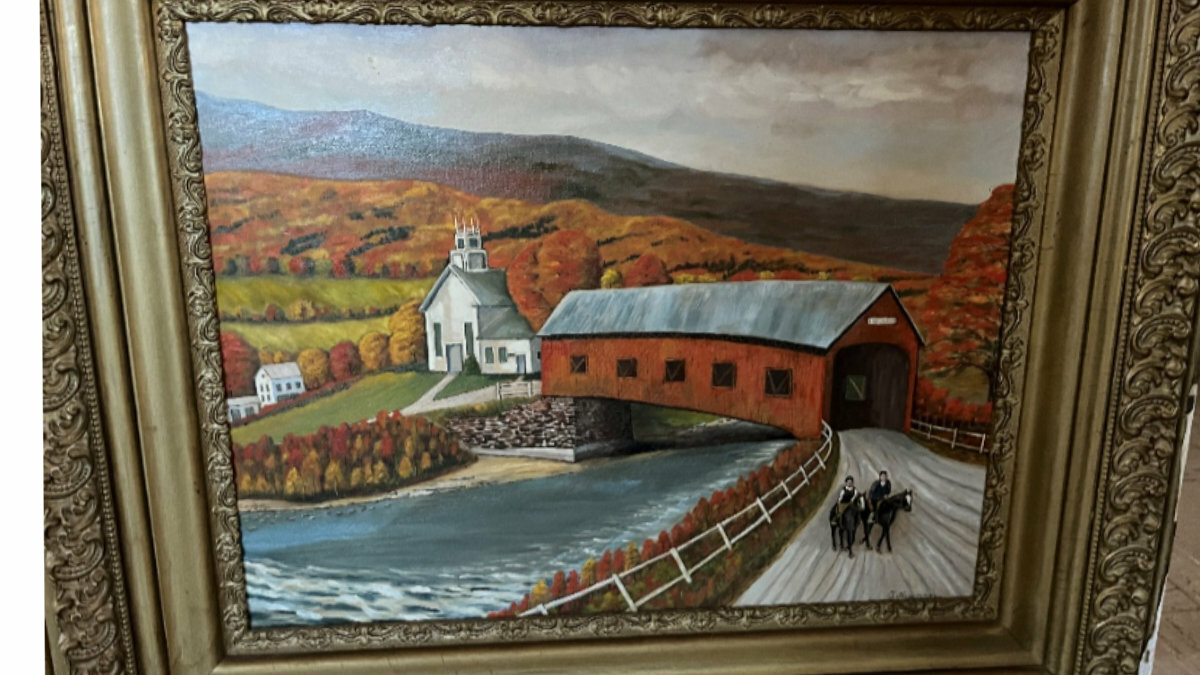
CHESHIRE, Mass. — In early July of last year a woman from Conway, Joy Kipperling Holhut, contacted the Cheshire Historical Commission regarding a painting of a covered bridge she thought had been made by a Cheshire resident.
The large painting was in a relative's house (last name Zipperling) who had just died. Mrs. Holhut wanted to give
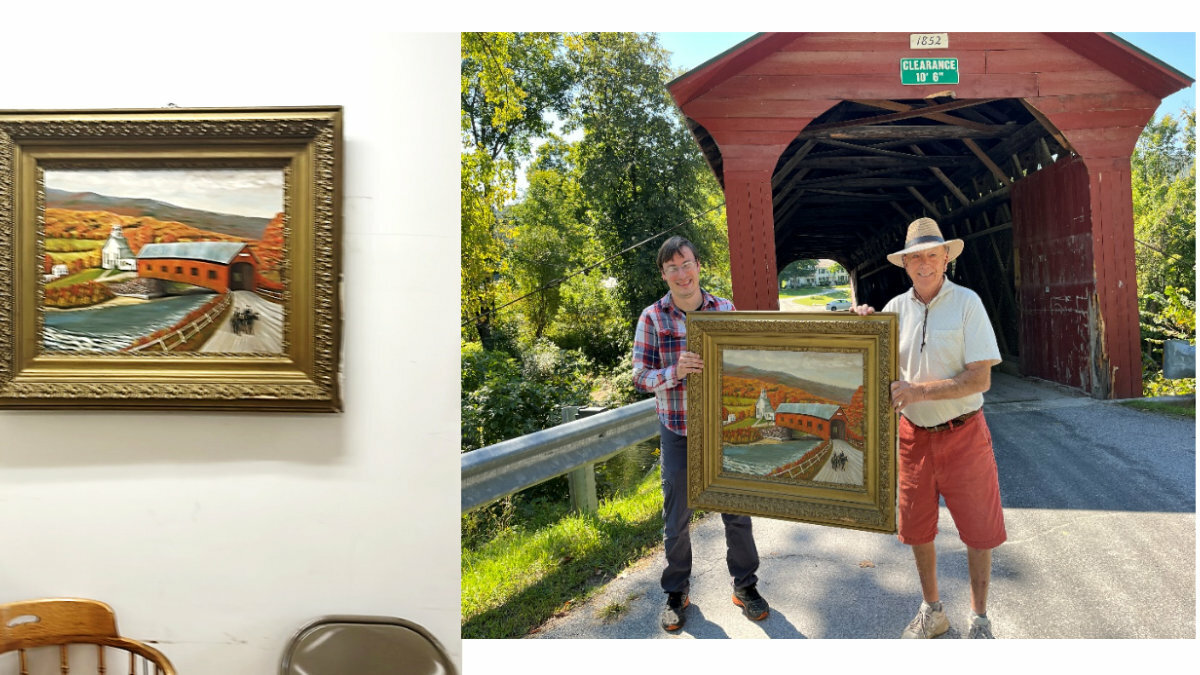
the painting to someplace with a connection to it or the scene although she did not know where the bridge was located. The Historical Commission accepted the painting and I volunteered to try and determine where the bridge was located.
The painting is signed F. Neuman so my first task was to identify "Neuman" and determine where he lived. It turns out that Frank Neuman was not a Cheshire resident. He died in 1969 and his obituary stated that he worked as a butcher but that he also was a champion wrestler and his hobby was painting.
The next step was to search for the location of the bridge. There are hundreds of covered bridges in New England, but the key element that helped with my search was the nearby white church adjacent to the bridge. I soon found these photographs which gave the location as Arlington, Vt. (it is actually West Arlington).
The Historical Commission decided that the painting rightly belonged in Arlington. Mrs. Holhut was happy to learn of the location and agreed with giving it to Arlington. I contacted the town manager of Arlington and was told West Arlington, where the bridge is located, is not a separate community. The town manager, Nick Zaiac, also mentioned they did not have a painting of the bridge and would be delighted to have one to hang in their town hall.
The bridge spans the Batten Kill River, famous as a great fly- fishing site. It was constructed of wood and was built in 1852.
Covered bridges kept rain and snow off the timbers to extend the life of the structure. It is still open to car traffic, though only one car at a time can pass over the narrow bridge.
By the way, the white church predates the bridge by almost 50 years. It was built in 1804. As a side note, the white house seen beyond the bridge was once the home of Norman Rockwell. He lived there from 1931 to 1953 and during that time he painted several of his most famous paintings, including "Home Coming Marine," "The Gossip," "The Four Freedoms," and "Tattoo Artist."
Cheshire town historian Barry Emery has written eight books on the town's history and has created a digital archive of more than 23,000 historical photographs and documents.
Tags: painting,