Governor Files Bill to Modernize Public Higher Education Campuses
BRIDGEWATER, Mass. — Representing the largest proposed infrastructure investments in Massachusetts' public higher education system in decades, Governor Maura Healey filed historic investments to transform and modernize the UMass system, state universities, and community colleges.
The investments were announced as part of a bond bill filed today – An Act to Build Resilient Infrastructure to Generate Higher Education Transformation (the BRIGHT Act) – that will leverage Fair Share surtax to unlock significant new funding for capital improvements. The investments will help modernize campuses, including new labs, classrooms and improved mental health facilities – to ensure Massachusetts' public higher education system can best serve students and keep the state economically competitive. The bill will also create approximately 15,000 construction-related jobs.
Governor Healey made the announcement at Bridgewater State University after touring their Cyber Range, where students learn in-demand cybersecurity skills. The Governor pointed to the Cyber Range as an example of the state-of-the-technology and facilities that this bill will support at colleges and universities across the state.
"Our public university and college campuses have suffered from historic underinvestment since they were built in the 1970s. We refuse to kick the can down the road any longer when it comes to educating our kids and training our workers of tomorrow," said Governor Maura Healey. "With these transformative infrastructure investments, we will give students a cutting-edge education in our affordable public universities and colleges, create thousands of good-paying jobs for our workers and keep our state economically competitive for years to come." ??
Among the improvements the investments will make include:
Infusing new resources into proven programs that address deferred maintenance, modernize and decarbonize facilities, and construct major capital projects.
Creating labs, classrooms and training facilities that meet the needs of today's research and applied learning methods, such as web development, robotics and automation, advanced manufacturing, construction management and building trades, and more.
Improving facilities for student health, mental health, wellness, and safety.
Encouraging regional secondary and higher education partnerships that strengthen our workforce.
Incentivizing technology capital projects, such as improvements in online or hybrid workspaces.
Continuing the successful Workforce Skills Capital Grants program.
Supporting housing development by providing for higher education institutions' costs associated with the disposition of land and buildings.
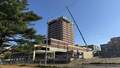
Much of the infrastructure on public higher education campuses in Massachusetts was built in the 1970s and is increasingly unable to meet the evolving needs of students. Yet addressing this aging infrastructure is increasingly expensive given rising construction costs, decarbonization mandates, regulatory requirements, labor shortages and material price increases. As a result, campus infrastructure needs are growing well above what traditional capital funding sources can accommodate.
Governor Healey's forthcoming House 1 budget proposes to leverage $125 million in Fair Share revenues from Fiscal Year 2026 to support an estimated $2.5 billion in new borrowing for higher education infrastructure over the next 10 years. The BRIGHT Act works in tandem with this proposal, authorizing up to $3 billion in investments for campuses, ensuring the administration has the authorization and flexibility it needs to address public higher education capital needs.
The BRIGHT Act is informed by a report from the Higher Education Capital Working Group that was established in Massachusetts's Fiscal Year 2025 Budget. The report, which is being released in tandem with the filing of the BRIGHT Act, summarizes the capital needs of the public higher education institutions and confirms the viability of leveraging Fair Share revenue to unlock new capital dollars.?The report, and additional information on the BRIGHT Act can be found here.
Under this administration, Massachusetts has doubled state spending on financial aid, adding over $200 million in two years to make community college free and public four-year colleges and universities more affordable for working families. Massachusetts now has one of the most accessible, equitable and comprehensive free community college programs in the country for full-time and part-time students, regardless of income. This has led to a projected 14% increase in community college enrollment this fall. Further, the administration made four-year colleges and universities tuition- and fee-free for Pell-eligible students, while halving out-of-pocket costs for middle-income students. Enrollment at public four-year colleges in Massachusetts increased for the first time in over a decade this year.