Landowners Play Vital Role Creating Habitat for Declining Native Wildlife
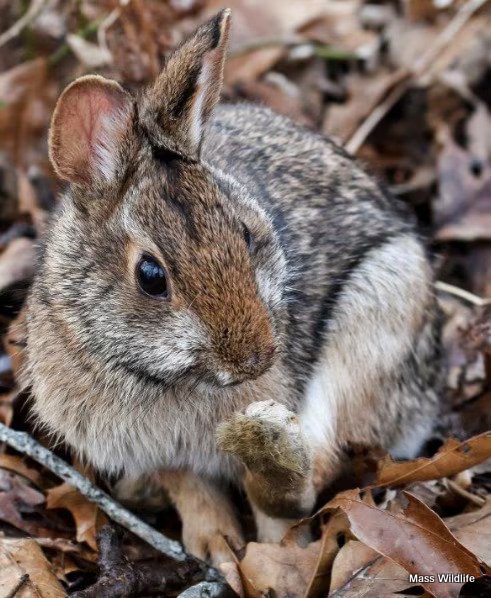
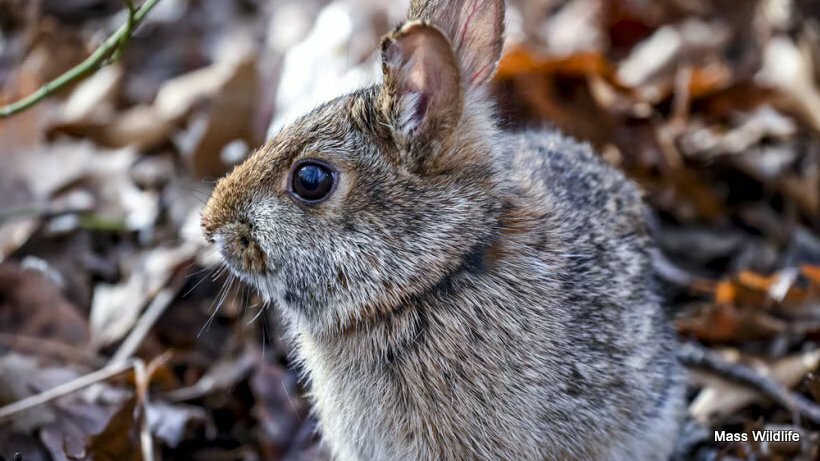
Mass Wildlife is partnering with private landowners to create habitats for the native species, which is found in South Berkshire.
However, this habitat is disappearing across Massachusetts, Maine, New Hampshire, Rhode Island, Connecticut, and eastern New York, putting the species at risk. Young forest habitats are areas of dense clusters of tree saplings and sprouts that provide abundant food and shelter for a wide range of wildlife including the New England cottontail.
New England cottontails are found in only a few areas including the Southern Berkshires, Cape Cod, and Nantucket, where thick areas of dense young trees and shrubs are more common.
MassWildlife, along with state and federal agencies, conservation groups, land trusts, universities, and private landowners, is working to preserve and create these vital habitats to bolster New England cottontail populations.
Across New England cottontail range, state biologists and other natural resource professionals work to benefit these rabbits by planning projects and connecting private landowners with financial resources and technical support. Since 2011, more than 17,000 acres of habitat have been managed to benefit New England cottontails across the region on both private and public land.
Thirty landowners have conducted habitat projects on 700 acres, primarily in the Southern Berkshires. By creating patches of young forest, landowners in Becket, Otis, Monterey, New Marlborough and Sandisfield, and in nearby Granville and Tolland in Hampden County, have made a significant contribution to the conservation effort.
Through the New England Cottontail Technical Committee, partners conduct research, manage land, and raise awareness about the rabbit's challenges. The Technical Committee has set ambitious habitat goals for 2030, but achieving them depends on continued collaboration with private landowners to manage their properties to maintain young forest habitats. Within the cottontail's range, more than 75 percent of land is in private, land trust, conservation organization, municipal, or tribal ownership.
The young forest habitat on which the rabbits depend rapidly grows back into more mature trees that shade out the shrubs. After approximately 20 years, these growing forests no longer provide the essential cover from predators or buds and twigs for food. While it is no longer suitable for rabbits, these maturing trees become valuable habitat for other species. Therefore, young forest habitat must continually be created in different locations so rabbits and other wildlife that use it have a new place to call home.
New England cottontails, along with other native wildlife, are making homes in these managed habitats that are now about 10 years old. Young forest habitats provide optimal cottontail cover from about 10 and 15 years after creation, meaning new patches must be established nearby for the cottontails to survive, as they don’t travel far.
MassWildlife biologists monitor New England cottontails and engage with landowners in prime cottontail country. By linking landowners with financial and technical support, MassWildlife can help landowners plan habitat management activities that bolster cottontail and other native wildlife that thrive in young forest areas.
Landowners living in New England cottontail range can contact Marianne Piché at marianne.piche@mass.gov to learn about options for habitat creation on their property.
Did you know? A wide variety of wildlife rely on the dense cover and abundant food provided by young forest habitats — American woodcock, ruffed grouse, white-throated sparrow, wood turtles, bobcats, and a variety of pollinating insects, to name just a few.
Tags: MassWildlife, rabbits, wildlife,