image description
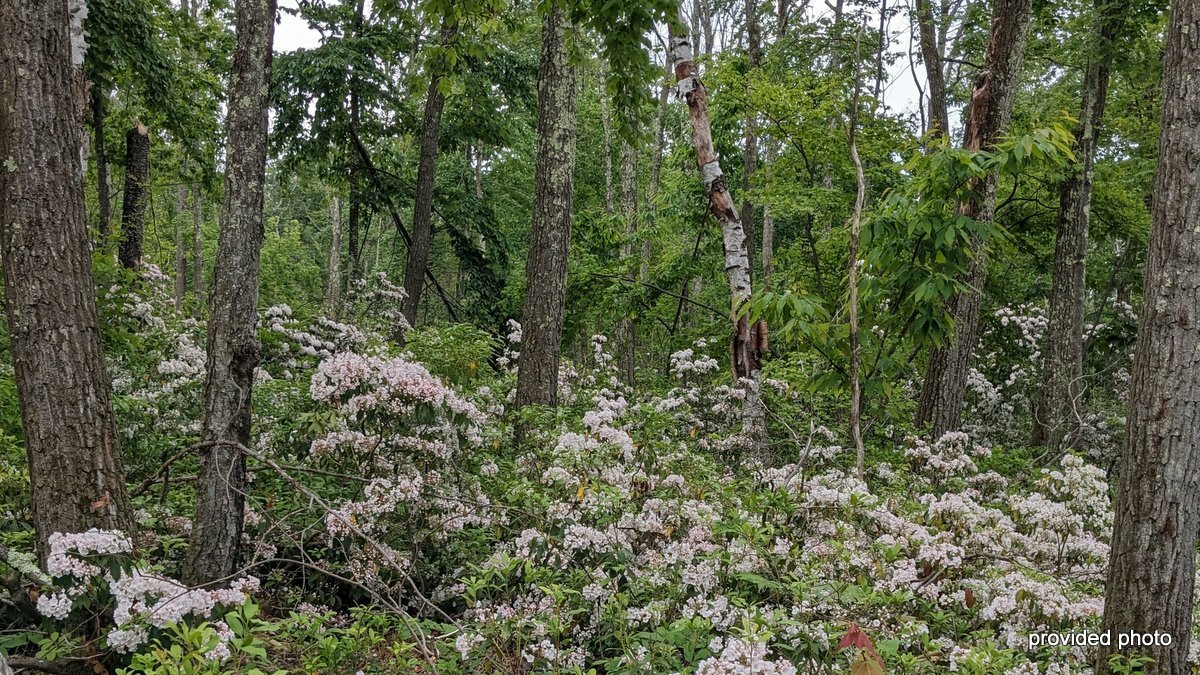
Mountain laurel in bloom along Blue Hill Road. Some 66 acres of woodland is being conserved by BNRC through public and private funding.

BNRC Conserves 66 Acres Along Great Barrington's Blue Hill Road

Print Story | Email Story
GREAT BARRINGTON, Mass. — Berkshire Natural Resources Council has conserved 66 acres of woodland on the western slope of Three Mile Hill, enhancing the region's natural beauty and bolstering climate resilience. 
 
With support from the Thieriot Foundation and private foundations, Mass Audubon, and the Massachusetts Executive Office of Energy and Environmental Affairs' Acquisitions for Forest Reserves Grants Program, BNRC's Blue Hill Road property will safeguard vital wildlife habitat and create new opportunities for people to connect with nature. 
 
Mass Audubon contributed $125,000 toward this acquisition through its 30x30 Catalyst Fund. The fund is a $75 million private initiative dedicated to accelerating the pace of land conservation in Massachusetts. 
 
"The Catalyst Fund is tailor-made to assist with land projects like this. It was Mass Audubon's pleasure to work with our partner, BNRC, to secure this property as it exemplifies the goals of the Catalyst Fund, which are to protect Massachusetts' most bio-diverse, carbon rich lands" said Mass Audubon's President and CEO David O'Neill. 
 
BNRC's Assistant Director of Conservation Nick Pitel, said, "The Blue Hill Road property protects critical forest habitat and prevents further fragmentation in an area facing increased development. By securing this land, BNRC conserves the ecological health and connectivity of Three Mile Hill for future generations." 
 
Located next to BNRC's Thomas and Palmer Brook Reserve, the property is home to diverse natural features, including mountain laurel at higher elevations, quartzite boulders along the ridgeline, and the iconic "Whale Rock." 
 
A portion of the land is designated as Critical Natural Landscape and Priority Habitat of Rare Species by Massachusetts Natural Heritage and Endangered Species Program, emphasizing its ecological importance. The land features rich soils that support healthy forests and is part of an area identified by The Nature Conservancy for recognized biodiversity and as a resilient habitat — better able to adapt to the changing climate.
 
The forest includes multiple species of oak and hickory, tulip poplar, American chestnut, and other native trees, providing essential habitat for wildlife. BNRC's stewardship plan designates the property as a Forest Reserve, ensuring its biodiversity and role in carbon sequestration are maintained. 
 
With its connection to BNRC's popular Thomas and Palmer Brook Reserve, the property offers exciting possibilities for expanded recreational access. Eventual plans include a secondary trailhead location to access Whale Rock and the larger trail network at Thomas and Palmer Brook Reserve and providing community engagement and education around forest management and climate adaptation. 
 
"This conservation success reflects BNRC's mission to care for Berkshire lands, waters, and wildlife while offering more ways for people to connect to the outdoors," said Jenny Hansell, BNRC's president. "The Blue Hill Road property expands a key BNRC reserve while protecting important habitat and increases access for nearby communities." 
 
The forest block along Three Mile Hill is within the Berkshire Wildlife Linkage, a vital corridor in the Berkshire-Taconics landscape of the Appalachian Mountain range that connects the Green Mountains in Vermont to the Hudson Highlands in New York. This regional connectivity is key for wildlife and recreation, supporting BNRC's goals of ecological resilience and equitable access to nature. 
 
Established in 1967, Berkshire Natural Resources Council is a nationally accredited land trust that protects and preserves the natural resources of the Berkshires for public use.

Tags: BNRC,   conserved land,   forestland,   
If you would like to contribute information on this article, contact us at info@iberkshires.com.

Pryor & Peacock's Whimsical Furniture Environmentally Friendly

By Breanna SteeleiBerkshires Staff
 

The company uses digital printing to create the upholstery fabric, saving water and saving vintage furniture from ending up in landfills.

STOCKBRIDGE, Mass. — A unique furniture store has popped up on Elm Street this month.

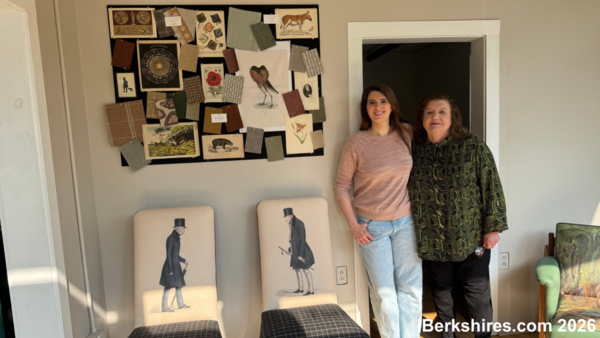
Mom-and-daughter store Pryor & Peacock is hosting the pop-up storefront from Aug. 13 to Aug. 25 at 6 Elm. The New Marlborough business is co-founded by Rosalina Wright and Luca Shapiro, who is also the creative director. 

Their online shop was created in 2024 but they wanted people to see the pieces in person, so they're renting the space for a limited time before a long-term tenant moves in.

The store sources prints to create unique fabrics and reimagines vintage and antique furniture acquired at auctions, local shops, and online.

"We source prints from all over the world that date from the late 1600s up through mid-20th century, and Luca turns those prints into fabric by manipulating them, scanning them, oftentimes has to add or subtract things, and then we manufacture the fabric using only digital printing, which is very environmentally friendly, unlike traditional textile printing," Wright said.

Upholstering the furniture can take weeks of work. Shapiro looks for the perfect design for each piece and, if need be, uses Adobe Photoshop to extend the art work to fit or enhance the print.

"One of the most difficult parts comes in marrying the fabric to a piece of furniture because we only use antique and vintage frames also to be earth friendly, and they're also more beautiful and durable than new furniture," Wright said. "So the image has to go with the furniture, so that takes a lot of work."

One of Pryor & Peacock's missions is to be environmentally friendly. Digital printing doesn't use the same amount of water as traditional textile productions do nor does it contaminate water with ink according to their website.

Not only are they saving water, but they are saving furniture from going into the landfill while also using more durable furniture that doesn't break as easily as current pieces. They started their business to create something unique and to help the environment together.

"It's creating something nobody else is doing. People can't continue to buy throwaway furniture. Six percent of American landfills is furniture, and digital printing not only opens up the possibility of being able to put unique images on a piece of furniture, but it also is, as I said, environmentally friendly. So, for us, the excitement is to take an old East Lake settee that somebody's going to store in their barn and forget about, and make it something completely new and surprising," Wright said.

They hope their furniture helps bring a pop of fun to someone's home.

"We think our furniture is very whimsical and surprising, and most furniture today is oatmeal colored couches and gray neutral chairs, and it's boring," she said.

The two named their business after their mothers' maiden names to honor them and believe the name reflects their pieces.

Shapiro works in interior design outside of the business and the two liked working together and thought it would be great to start a business together. Shapiro says they can work well together and that her and her mother, Wright, has flipped houses before and have the same eye for design.

"So it's very easy for us to work together. When we see something, generally we agree on whether it works or doesn't work on a piece. We agree on the color schemes and that sort of thing. So it's very fun and fulfilling to work together," Shapiro said. 

View Full Story

More South Berkshire Stories