MassWildlife: What happens to wildlife during a fire?
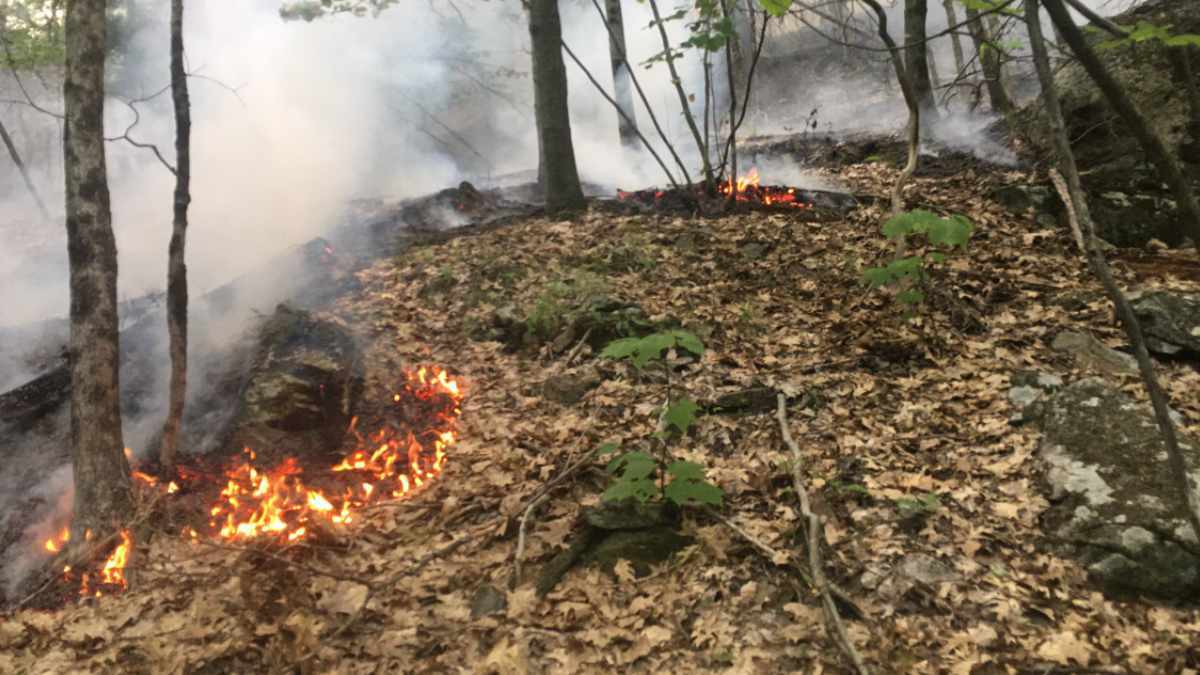
With well over 600 wildfires occurring throughout Massachusetts this past October and November, many people are wondering about the impacts to wildlife. The answer is more complex than you might imagine. The ability of animals to survive fire depends on their mobility and on the uniformity, severity, size, and duration of the fire. Most landscapes are quite variable, with hills, valleys, and wetlands, all of which burn at different rates and intensities, leaving patches where animals can take refuge. Occasionally, individual animals may be hurt or killed by fast moving flames and heat. Yet, fire is and has been a natural part of the Massachusetts landscape and can bring a variety of benefits to habitats that in turn, benefit wildlife.
What do animals do during a fire?
Most animals can readily smell smoke and move away from oncoming flames and heat. The impacts of a particular fire can vary greatly depending on windiness, the flammability of vegetation, the speed and intensity of a flaming front, or the severity of ground fire burning into organic soils. Our native wildlife have evolved strategies to escape and avoid the brunt of the flames and heat.
Birds fly up and away from the burning area or high up into the tree canopy. Larger mammals like deer, black bears, and bobcats readily move to areas of forest not impacted by fire. Smaller mammals like mice and voles retreat to underground burrows, while climbers like fishers and porcupines take refuge in treetops. Native rabbits may seek shelter in nearby wetlands. Amphibians and reptiles find safety by moving to wet areas or burrowing under the ground, logs, or rocks. Soil often provides insulation from the heat of fast-moving, lower-intensity fires. While some individual animals likely perished in the recent wildfires in Massachusetts, overall populations of wildlife are unlikely to be affected.
What do animals do after a fire?
The timeframe for animals returning to a burned area depends on the severity of the fire, the habitat, the season, and the type of animal. Certain beetles and other insects are the first to return as they are attracted to burn sites and use infrared sensors to quickly find burning stumps and other vegetation. Other animals return to a burned area within hours, days, or weeks after a fire. Owls, crows, turkeys, woodpeckers, whip-poor-wills, and other birds often return quickly to eat insects and acorns. Opportunists like foxes and hawks may return quickly to eat small animals that didn’t escape the flames.
Areas that have experienced fire will warm up quicker the following spring, and green up before the surrounding forests. White-tailed deer often come into recently burned areas for ash, minerals, fresh herbs, and tree sprouts. It takes longer for small mammals like New England cottontail to return. They often wait a few years for more cover to develop, but the shrubs and young saplings emerging after fire provide nutrient-packed food for these mammals.
Long-term benefits of fire
Periodic fires have been a part of the New England landscape for thousands of years. In fact, fires play an important role in rejuvenating vegetation and soils. In the months and years following a fire, many forest, woodland, shrubland, and grassland habitats undergo changes to the structure and composition of vegetation growing there. The result is a more diverse collection of native plants and improved habitat for wildlife. For example, fires can encourage vigorous growth of diverse native wildflowers, which in turn benefit a variety of native bees and butterflies.
Prescribed fire is a tool used by many agencies and organizations across the country to unlock the natural regenerative powers of fire. MassWildlife uses prescribed fire to bring forth the ecological benefits of fire without the dangers of unplanned, uncontrolled wildfires which pose risks to firefighters, people, and property. Wildfires can sometimes burn for days, weeks, or months and are known to generate long periods of harmful smoke. Periodic prescribed fires can reduce fuel build up in an ecologically sustainable way, as well as control and limit smoke production to a short window. Prescribed fires are carefully planned to meet natural resource objectives, provide for safety of the burn crew and the public, and minimize impacts to wildlife. Specially trained fire crews apply fire in pre-planned locations and sequences to ensure wildlife have escape routes and safety zones.