Pittsfield Adopts Surveillance Tech Oversight Ordinance
PITTSFIELD, Mass.— After two years of preparation, the City Council has adopted a surveillance technology ordinance regarding police body cameras and other equipment.
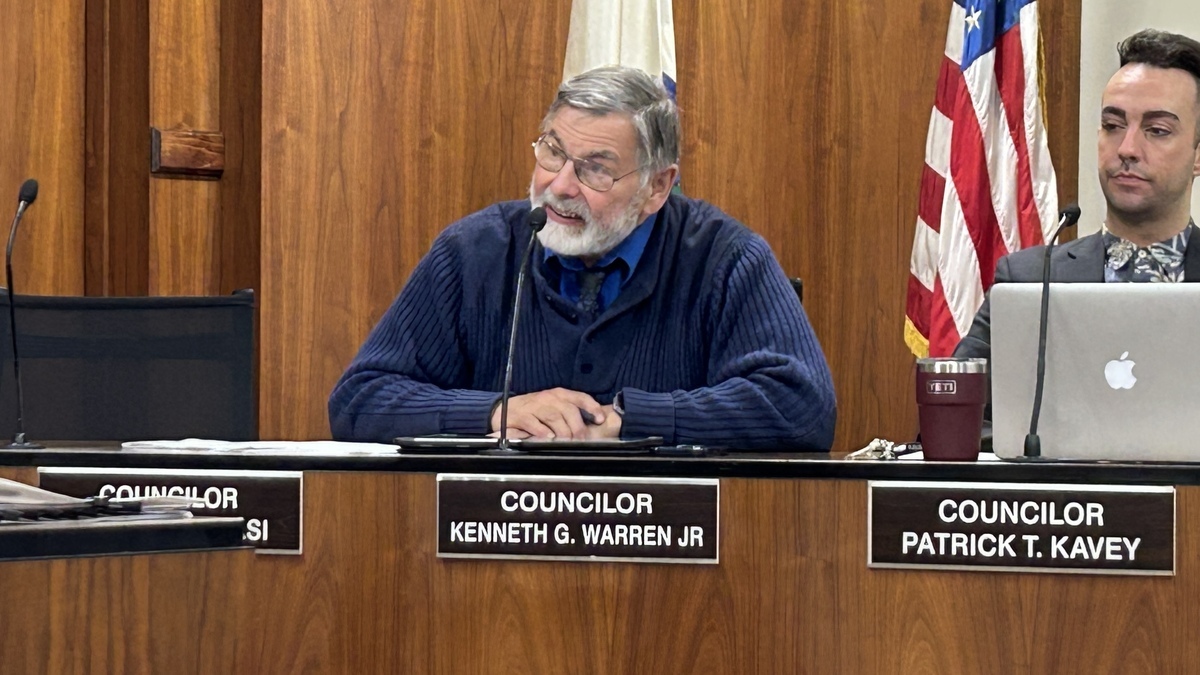
On Tuesday, a petition from Ward 1 Councilor Kenneth Warren amending the City Code by adding Chapter 18 ½, Surveillance Technology Oversight, was approved. Warren has championed this effort since 2022— before a five-year contract with body and dash cams was approved.
The ordinance will take effect 180 days after its adoption.
It is based on the Town of Amherst's modified version of the City of Cambridge Ordinance that uses an American Civil Liberties Union model for community control surveillance technology.
"This has been an issue that lots of communities have been looking at, both in Massachusetts and outside of Massachusetts, dealing with software that has some surveillance capability that could possibly have some negative impact on our citizens," Warren said.
The purpose of the ordinance is to provide regulations for surveillance technology acquisition, use by the city, or the use of the surveillance data it provides to safeguard the right of individuals' privacy balanced with the need to promote and provide safety and security.
It aims to avoid marginalized communities being disproportionately affected by the use of this technology. Warren would not be surprised if this were encompassed in a statue for statewide standards.
"Police body cameras have the potential to serve as a much-needed police oversight tool at a time of a growing recognition that the United States has a real problem with police violence. But if the technology is to be effective at providing oversight, reducing police abuses, and increasing community trust, it is vital that they be deployed with good policies to ensure they accomplish those goals," the ACLU explains on its website.
"Without good policies, they risk becoming just another police surveillance device—and one with very real potential to invade privacy. Especially important are policies governing when the cameras are turned on, and who has access to the footage and under what conditions."
Pittsfield's new ordinance provides definitions for necessary terms such as "disparate impact," "exigent circumstances," and "marginalized communities," requires approval from the council for surveillance technology use, and mandates continued review and reporting on the technology's impact.
"I certainly don't want any control over the cameras. If we need the cameras or we need footage from the cameras, surely that would be through a search warrant, through the courts.
So I'm not opposed to it at all," Chief Thomas Dawley said.
"My ask is during criminal investigations, if such arise, that the case won't be compromised by that. That's all."
Warren assured that it would not impede on investigations and is not designed to.
He looked at Amherst as a model because they are more comparable in size than Cambridge.
"There was some work on it initially but as as all of you know, we have multiple priorities and priorities come up every other day on certain things so it was put on the back burner for a while, then it was brought back up," he said.
He reported that City Solicitor Stephen Pagnotta did a great deal of work in contacting communities and department heads were consulted.
According to the ordinance, surveillance technology includes but is not limited to:
- International Mobile Subscriber Identity ("IMSI") catchers and other cell site simulators
- Automatic license plate readers
- Electronic toll readers
- Closed-circuit television cameras except as otherwise provided herein
- Biometric Surveillance Technology, including facial, voice, iris, and gait-recognition software and databases
- Mobile DNA capture technology
- Gunshot detection and location hardware and services
- X-ray vans
- Video and audio monitoring and/or recording technology, such as surveillance cameras, vehicle cameras, and wearable body cameras
- Tools, including software and hardware, used to gain unauthorized access to a computer, computer service, or computer network
- Social media monitoring software
- Radio-frequency identification (RFID) scanner
- Software designed to integrate or analyze data from Surveillance Technology, including surveillance target tracking and predictive policing software
The 14-page document stipulates that the City Council should approve a surveillance use policy before acquiring or borrowing new surveillance technology, using new or existing surveillance technology in a manner or location that is not previously approved, and entering into an agreement with a non-city entity to acquire, share, or use surveillance data.
A city department surveillance report must be published for each surveillance technology used and every year, a community equity impact assessment and policy guidance should be produced.
"I think this is really important for residents to understand all the effort that went into this," Councilor At Large Alisa Costa said, recognizing the length of time and deliberation that went into it.