image description
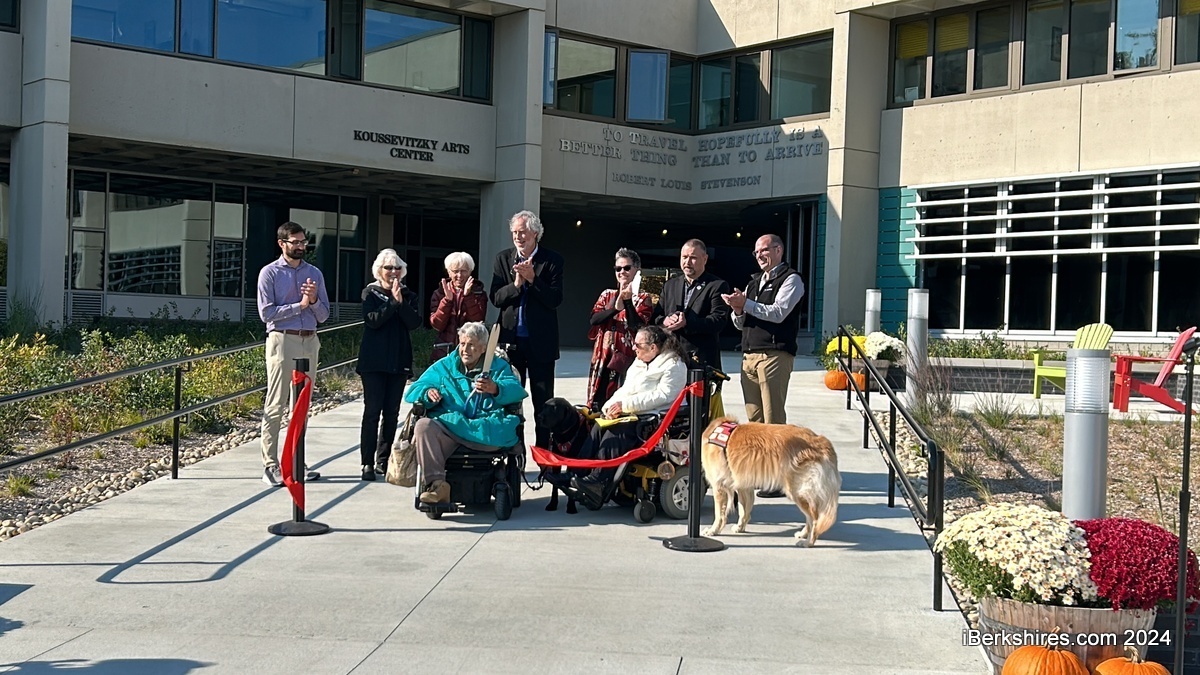
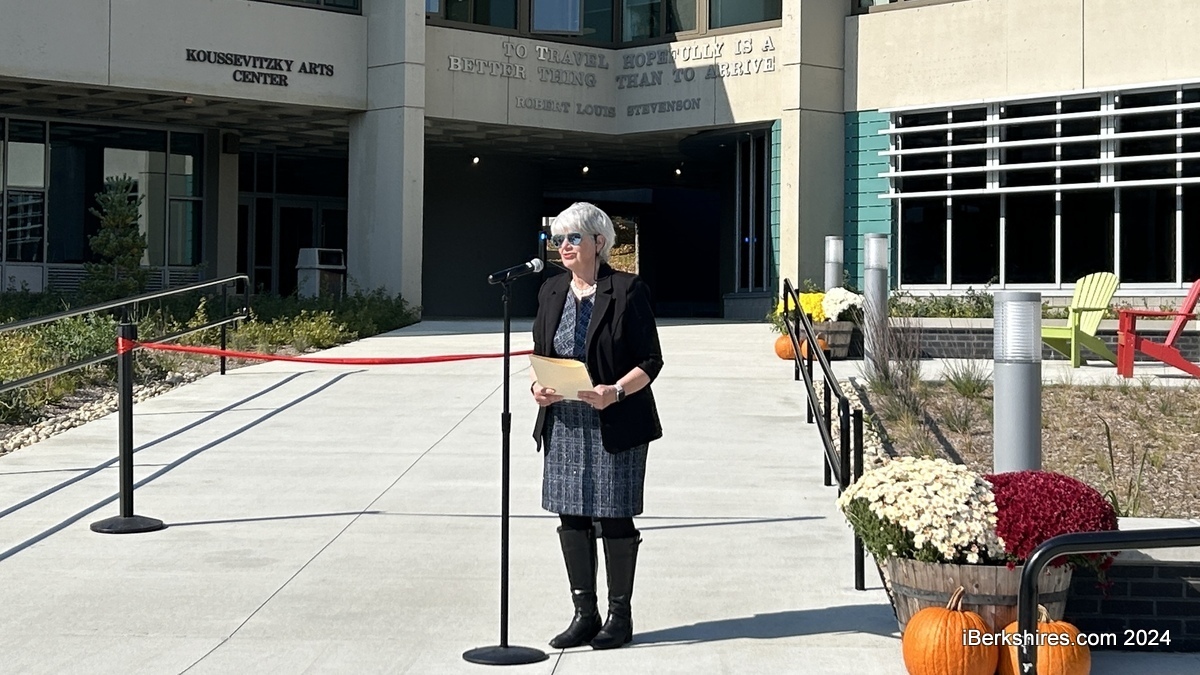
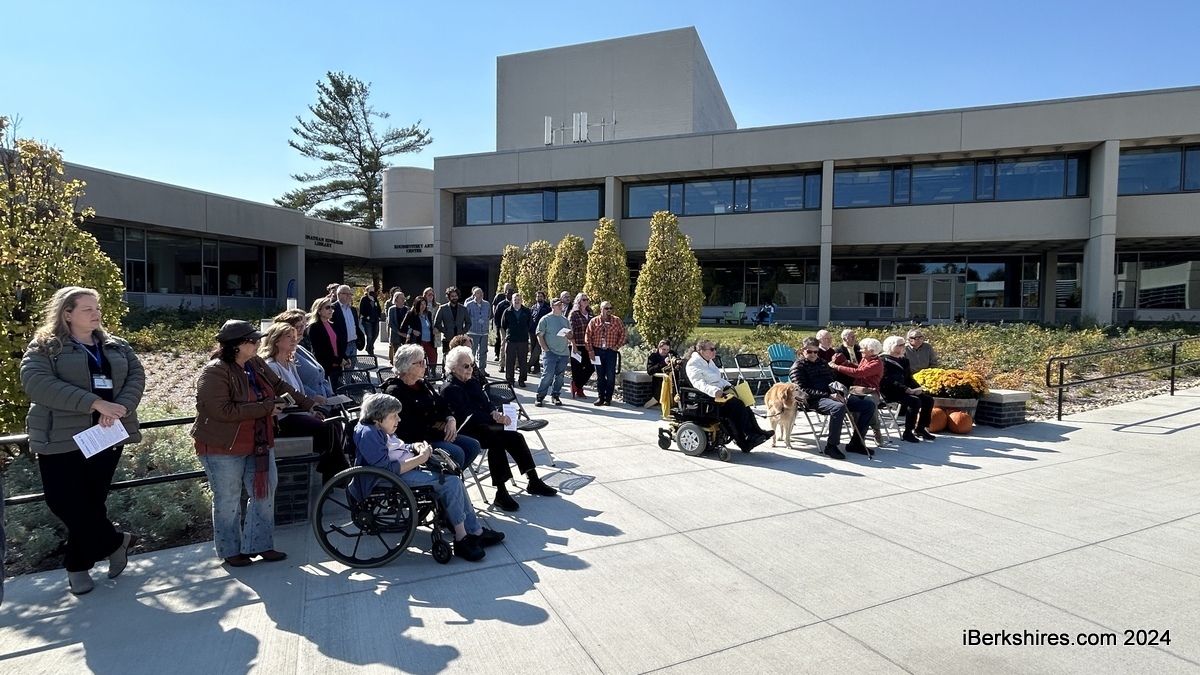
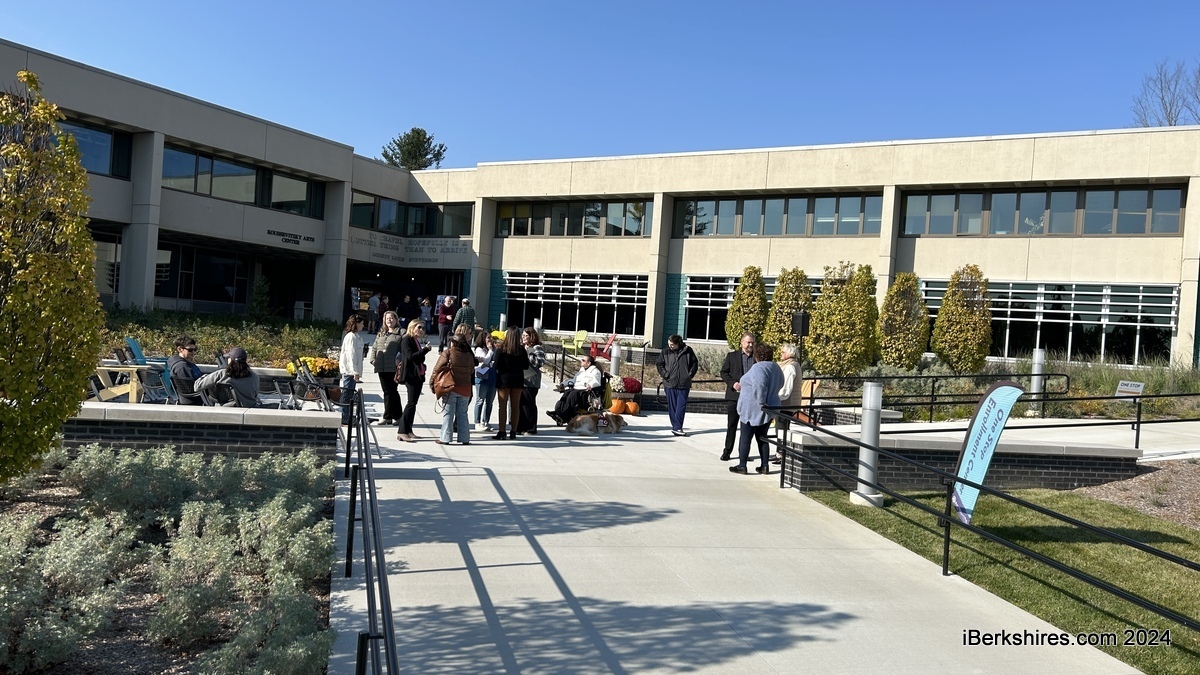
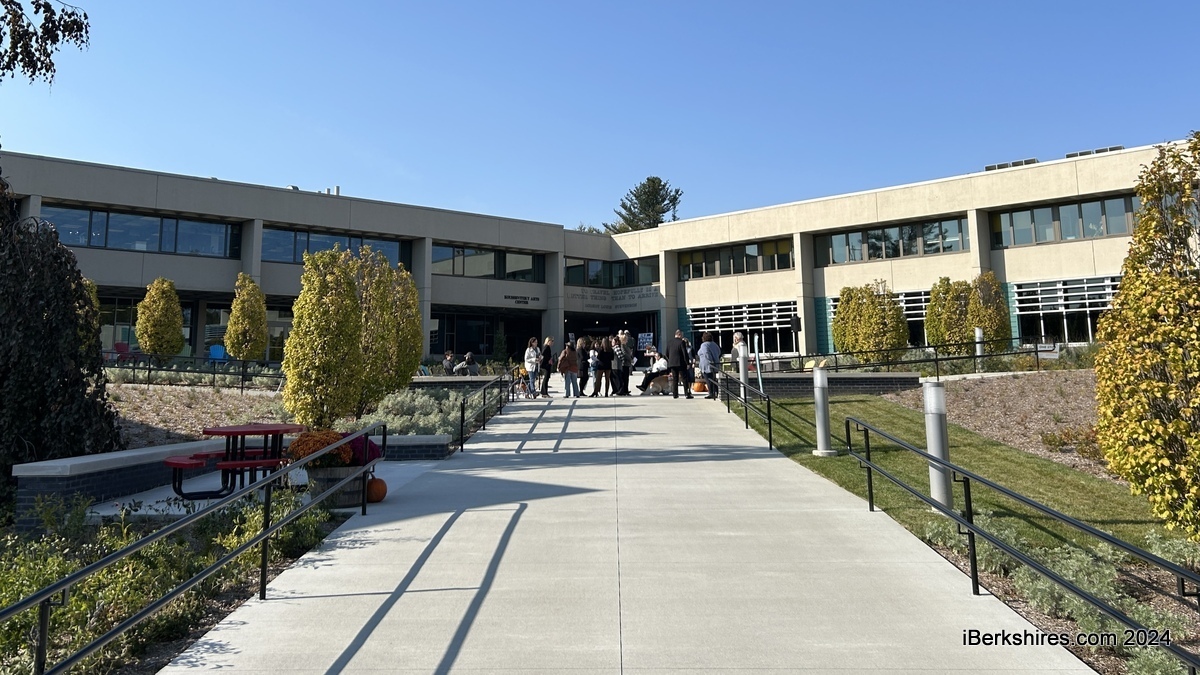
More than a year of construction on the BCC campus to make it more accessible was marked with a ribbon-cutting on Friday.
image description
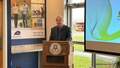
College President Ellen Kennedy says architects weren't thinking about accessibility when the campus was built in the 1970s.
image description
Most of the buildings are two stories but the campus as a whole covers nine levels on the hillside, making it difficult for some students to access buildings.
image description
image description
image description
image description
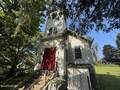
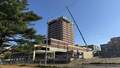
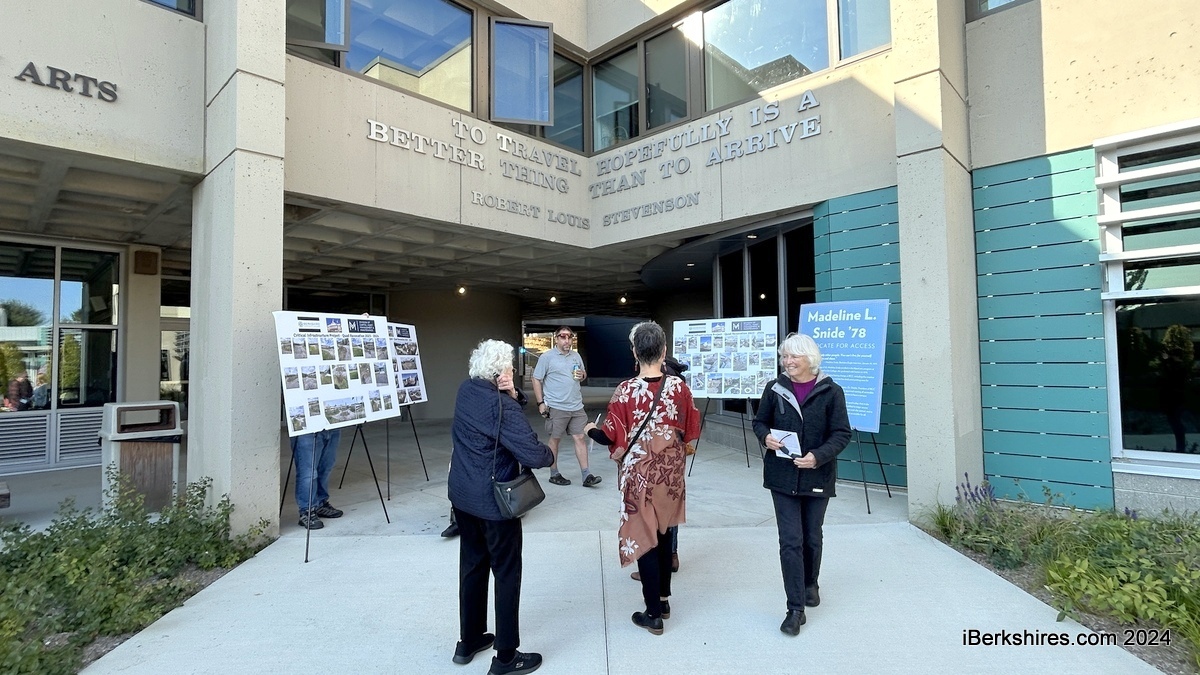
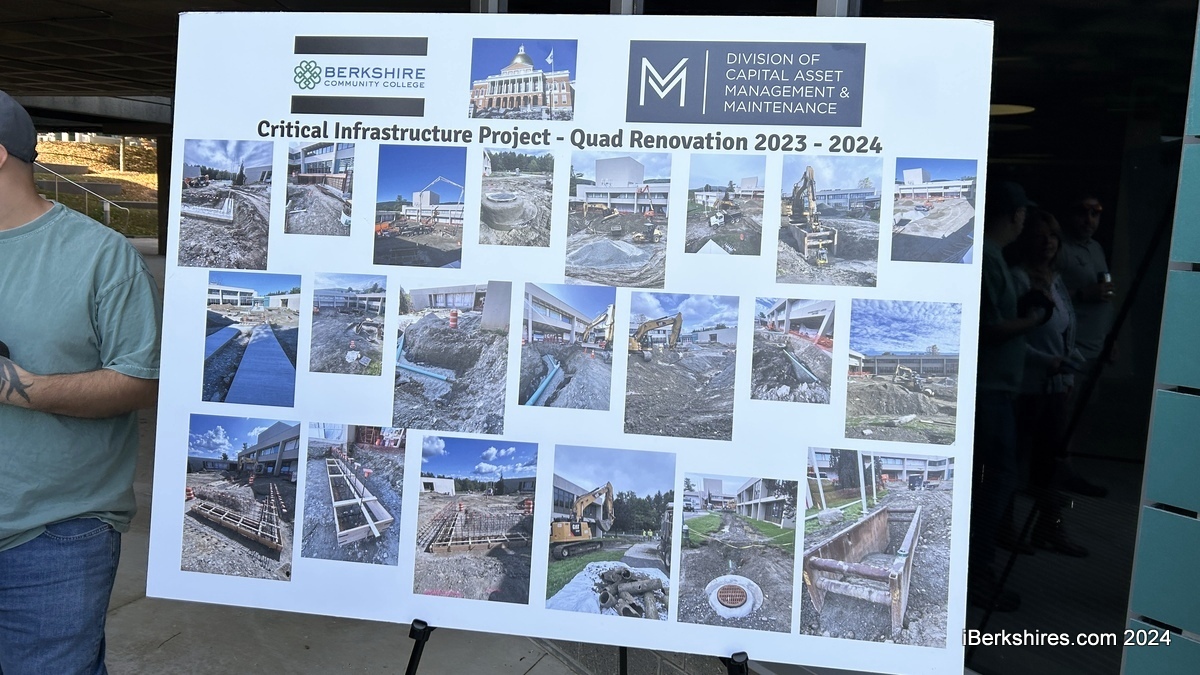
Photos of the extensive construction around the campus buildings.

BCC Cuts Ribbon on Accessible Quad
By Brittany PolitoiBerkshires Staff
Print Story | Email Story

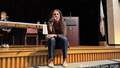
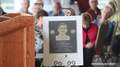
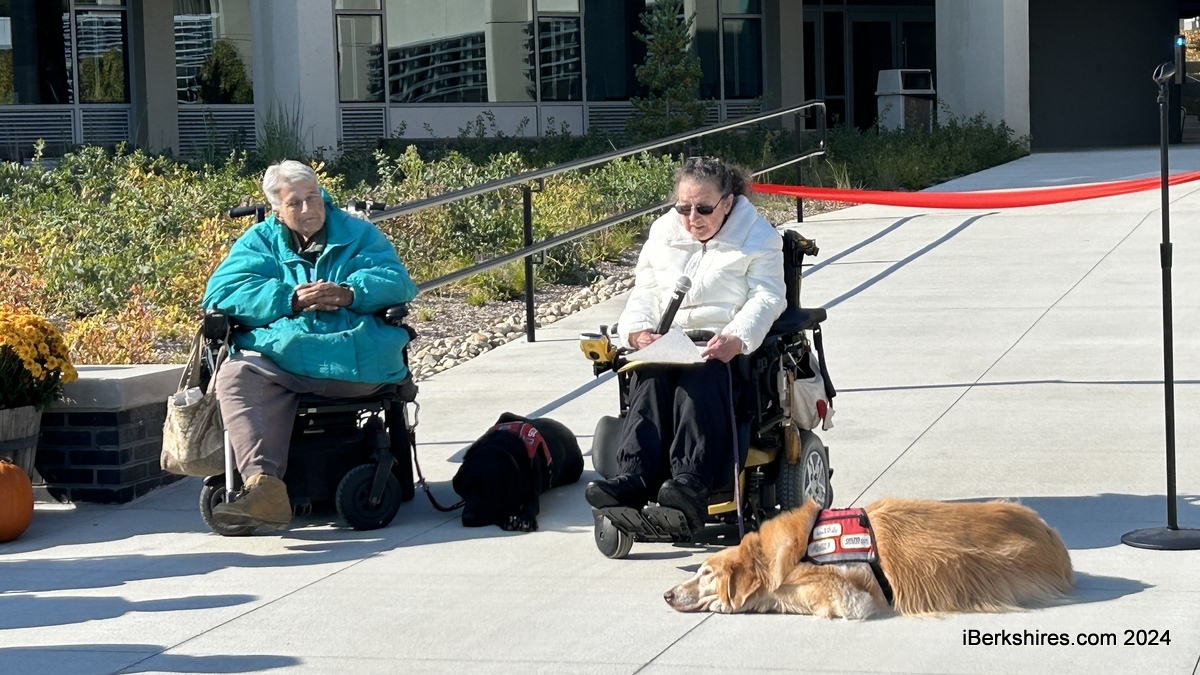
Pat Sheely, a BCC alum and UCP board member, and disability rights activist Merle Ferber speak at the opening about Madeline Snide, a another BCC alum who used a wheelchair and worked to inspire change on campus. 

PITTSFIELD, Mass. — Whether you are on foot, using a mobility aid, or pushing a baby stroller, the Berkshire Community College quad is now navigable.

On Friday, the college community cut the ribbon on its new, accessible quad. It honors Madeline Snide, a 1978 graduate and the first paraplegic to enroll at the BCC who is credited for inspiring change on campus.

"Madeline did not live long enough to see all her hard work come to fruition but I know she feels it," said Merle Ferber, a disability rights activist who worked along Snide.

Pat Sheely, a BCC alum and board member of United Cerebral Palsy, explained that she was "miserable" to be around the first two years she had her disability.  

"Madeline is one of three people who taught me that there is life after a disability," she said, adding that Snide's achievements were overwhelming.

The overhaul included removing cracked concrete, leveling steep areas, and adding railings and other ADA elements. The quad cost about $4 million and was part of a $10 million critical infrastructure improvement project funded by the Baker-Polito administration.

President Ellen Kennedy pointed to the campus' brutalist architecture, which was popular in the early 1970s when it was built. While the stylistic choice was loved by some and disliked by others, its difficulty for those using a wheelchair or mobility aid was undisputed.

"It was at a time when — and this is no aspersion to anyone who was working in architecture or anyone who was doing anything in life at that time — when ableism was running rampant," she explained.

"When people were not thinking at all about accessibility and how to make places universally accessible to all."

No buildings are officially more than two stories but the hillside campus is on nine levels. Kennedy said the accessibility improvements are ongoing, as there are still doors and other aspects that do not meet everyone's needs.

"Although we have come a long way and we're really proud of that, we have a long way to go," she said.

"So we're grateful for everything we've done but I want to be very clear, we know we have more work to do."

As a student in the early 2000s, City Council President Peter White worked to get an elevator installed in the Jonathan Edwards Library. His peers had to navigate through a utility closet to get to the library, which was unsafe and not dignified.

White and other students were able to secure $250,000 from then Gov. Jane Swift for the elevator and this was White's first experience with government. He credits this experience for sparking his long-lasting interest in local politics.


"Being here today, knowing that the college is in such great hands with all of you who make this place what it is and knowing that students don't have to fight for accessibility rights anymore, that's huge and you all deserve a round of applause for that," he said.

"This is more than what I could have imagined after seeing this place in the construction. Looking at it, the rise and the run looks good, all things that I had to learn throughout the process of getting the elevator put in."

Snide passed away in 1986 at age 57 but her impact on the campus lives on through wider, paved pathways, elevator installations, and the first dedicated parking area for vehicles used by or transporting disabled individuals. The $500,000 parking lot was completed in 1983 with federal funding.

Kevin Drumm, a 1976 graduate, worked with Snide on the college paper and described her as a "joyous icon." Etched into his mind is an image of her husband, Arthur, assisting her around campus.

"She shared that spirit all the time, making those around her simply feel good about being around her," he said.

"If she ever saw her physical immobility or her chair as a burden, you'd never know it by interacting with her day-to-day. She's just about the most positive person I have ever met."

Drumm described his "Norman Rockwell" life growing up in Lee and how Snide opened his eyes to a world he had not previously known, just as his experience at BCC did. Before this, he didn't know anyone permanently assigned to a wheelchair.

"Knowing her made me a better person, a more appreciative person, a more positive person, and a better student life professional and community college president concerned with access," he said.

"Because through knowing her, I could put myself in other shoes to help all students in their college endeavors. Through my work at a number of different colleges over the course of my career, I often tried to put myself in her shoes and that helped me to be a better person."

Disability Resource Center coordinator Pam Farron looked around at the infrastructure and said, "We've come a long way." She has been advocating for BCC students since 1995 and detailed earlier accommodations.

"We moved classes to accommodate students who could not climb stairs. We purchased special furniture, desks, tables, and chairs to be moved every semester to every class that that student had. We offered alternative classes when students' preferred course selection was inaccessible and it was unable to be moved. I remember thinking of the student who really wanted to take photography, but the darkroom was inaccessible and we had no other offer so she had to take a different class," she said.

"We spent hours in our testing center, reading exams to students who are blind or have low vision or were dyslexic, sitting right by them the whole time, them getting more and more anxious as we're waiting for them to give us their answers. We scribed for students who had limited to no use of their hands and we hired peer note takers in their classes because some of our students weren't able to take notes for lots of different reasons."

Farron said that today, BCC students with disabilities can fully participate in their education and can do it with dignity and independence. She described additional accessibility improvements the college has made and ongoing efforts to improve its website.

"This is so important," she said.

Snide joined the liberal arts program at BCC at age 45, determined to fulfill her dream of becoming a journalist. In 1978, she graduated with honors, earning her associate of arts degree.  An accessibility fund has been established in her honor.


Tags: accessibility,   BCC,   
If you would like to contribute information on this article, contact us at info@iberkshires.com.

New Pittsfield Therapy Office Offers Support to All Ages

By Breanna SteeleiBerkshires Staff

Words of inspiration at Berkshire Heart &  Mind. 

PITTSFIELD, Mass. — A new therapy office has opened in the downtown area helping people of all ages.

Berkshire Heart and Mind Therapy cut the ribbon Thursday for the new office on at 34 Depot St., Suite 303.

Executive Director Colleen Passetto has been a therapist a little over 10 years and recently decided to go into private practice.

"I went and became a private practice clinician after working for years at a community mental health clinic. That was amazing," she said. "That was amazing to me, but then decided a little over a year ago, that I was going to expand, and I slowly started working on becoming a group practice."

Berkshire Heart and Mind Therapy is a group private practice for all ages and Passetto wants everyone to feel welcome there. 

"My group practice is basically designed to welcome everybody in, from ages like 4 or 5 up that need therapy through elders. So no matter who they are, what they're carrying, we welcome them," Passetto said. "We don't discriminate, we don't judge. We like everybody to feel like when they come here, that you know, they're welcomed, that everything they have that is strengths, skills, history, experiences, is valued and is used as part of their healing and treatment."

The practice provides in-person therapy in Berkshire County and telehealth services throughout Massachusetts. The organization also offers individual therapy sessions and ADHD (attention-deficit/hyperactivity disorder) consultants.

Passetto wanted to create a space for people to come together and help each other. Through a recent diagnosis, she was was able to bring a different perspective to the practice in terms of trauma care and neurodivergence.

"We work with clients to help meet them where they're at, but we also do it from the lens of neurodivergent affirming, because I am a neurodivergent therapist who has AuDHD lately diagnosed, but I've had it for a long time," she said, using a term now used for autism/ADHD. "It's just as we women get older, some of us are now getting diagnosed because it was overlooked when we were younger. So it's a practice that I developed so we could actually come together and be able to help our communities.

"It's really needing mental health therapy. It needs additional support, but trying to find ones that you know, where everybody can come no matter what."

Passetto said her diagnosis helps her understand and be empathetic to others.

"It's kind of turned into my superpower, so to speak. I use it, I'm very creative, I'm very empathic. I'm able to think outside the box and be creative about different solutions, but I also can understand where others are coming from from my own trauma history as a child, I'm able to pretty much kind of understand where they're coming from," she said. "So I'm able to see it from a whole new different angle and lens as well."

Passetto said she got help from organizations including Common Capital, 1Berkshire and others, plus a grant from the city to open her office.

She hopes to slowly expand and progress her business as they grow. She is currently hiring clinicians and would like to start out with at least three. 

"Our goal is over five years to slowly expand to about between five and 10 clinicians. But to start this year, our goal is to have about at least two to three. Obviously, as we have more clinicians apply, we have the available funding from working capital that we're working with, Common Capital, and the more need of people that are needing services, then we can slowly start adding on more commissions as we need them," she said. "So we don't over grow too quickly, but we can grow with the community as it's needed, and this way we can make sure that we are successful in here for a long time."

She is also hoping to expand her therapy groups and open up different areas of expertise, to offer "a wide range and eclectic kind of types of therapy groups that are needed."

"Obviously, we're going to eventually be adding stuff like grief support groups. We're going to be adding groups for like different things like anxiety and depression for all ages," Passetto added.

She said she is looking into a program in which clients can play a games with others to help them with their anxiety. One therapy group uses Dungeons and Dragons for adolescents and adults who have like social anxiety, anxiety, depression, even maybe trauma, as way for them to engage with community. 

People who are struggling with these mental health issues often feel they are not listened and are unfairly stigmatized.  

"For example, those that have ADHD, ADD, stuff like that, bipolar, other diagnosis, some people in the community may tell them that they're lazy or, they bring things onto themselves, but they don't. They're just going through the same thing other people are, but in a different way.," she said. "And they kind of think and feel that they're broken, but they don't need to be fixed.

"They need to be nurtured, supported, help them to grow, to heal in ways that they have their own strengths and individualities and personalities they can use to do that so they're not forgetting who they are, and others can start seeing who they are with positive support."

Berkshire Heart and Mind Therapy accepts most insurances and Passetto is currently working on getting Medicare credentials.

The office is open weekdays from 9 a.m. to 5 p.m. More information can be found on the website.

"It's kind of like a family atmosphere. Even though we do therapy, we don't want them feeling like they're in a clinical atmosphere. We want them to be able to sit down like they're at home, become grounded, but comfortable."

 
View Full Story

More Pittsfield Stories