Brayton Air Quality Report Shows Low Mold Count
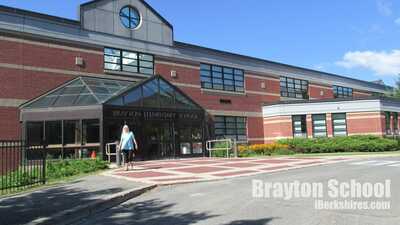 |
NORTH ADAMS, Mass. — North Adams Public Schools received the report of findings regarding the air quality testing of Brayton Elementary School, prepared by GEM Environmental, Inc.
According to a press release released by North Adams Public Schools Thursday:
The visual assessment of Brayton Elementary School did not identify mold growth on walls, flooring, or furniture. The air sample results indicated that all classrooms, including the occupational and physical therapy room, had mold spore counts significantly lower than the outdoor air sample. The only area with an amplified spore count was in the hallways on the lower level south wing, and the amplification was not elevated to chronic or active levels of spores.
Keeping moisture levels low prevents the growth of mold, therefore, GEM Environmental, Inc., also assessed the moisture content of floors, walls, and wooden doors in the affected area. The moisture levels were determined to be "ideal for the prevention of mold growth."
Last month, parents were notified that "due to intense heat and humidity this past summer, we've seen an increase in mildew, especially in one classroom that lacks windows" and that an "aggressive" remediation plan was in place.
This drew concern from parents and community members.
Superintendent Barbara Malkas had explained during a tour of the school, as part of a Greylock project forum, that mold was found in one classroom over the summer. She explained how it was mitigated and later told the School Committee that mildew had also been discovered in another first-floor room earlier in the month.
Further, the report concluded the following:
- Airflow and make-up air are appropriate for the occupied rooms in the lower level of Brayton Elementary School with very low total spore counts in the classrooms.
- Building materials tested showed moisture levels to be ideal for the prevention of mold growth.
- The elevated mold spore counts in the hallway were in the vicinity of items and equipment that was being stored and moved during the indoor air quality testing. The disturbance of these items could have caused the elevated air samples.
Recommendations from the report include:
- Treatment of the hallway and common areas with an EPA-registered disinfectant, including surface application and fogging of spaces.
- Incorporation of air scrubbers to change over the indoor air and clean the air of non-viable mold spores.
- Perform an additional round of air monitoring to assess completed procedures.
The full report can be found at the following link: https://5il.co/2vv4u
There will be a special School Committee meeting on Monday, Sept. 9, 2024, at 6:00 PM at the Brayton Elementary School library, where these results and recommendations will be presented by GEM Environmental, Inc. There will also be a presentation at that same meeting by CTC, Inc., on the school’s automated air handling system. Mitigation strategies completed at Brayton Elementary School and future steps will also be presented to the School Committee at that time.
Air samples were collected using Zefon Air-O-Cell sampling cassettes. These sampling devices are specifically
designed for rapid collection and analysis of a wide range of airborne aerosols. A visual assessment was also conducted. Beyond this baseline testing, North Adams Public Schools also asked for a report identifying any anomalies or irregularities between the indoor air sampled and outdoor air. The U.S. Environmental Protection Agency (EPA) has not set standards or threshold limit values for mold spores concerning indoor air quality; as such, indoor air quality is compared with outdoor air quality as a control when mold spore counts are measured.
Tags: mold, NAPS,