Moresi Companies Settle Discrimination Allegations
NORTH ADAMS, Mass. — A local developer and property management company has agreed to pay $40,000 to settle fair housing complaints on its properties.
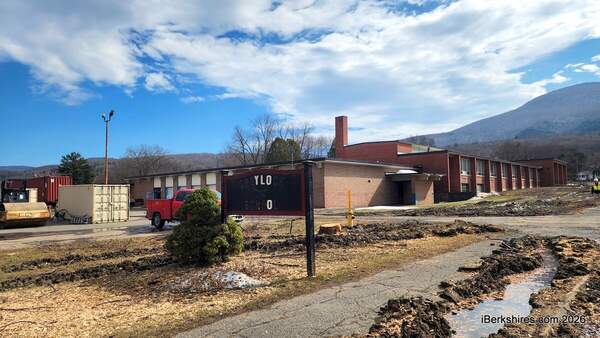
Moresi Commercial Investments LLC and Moresi & Associates Property Management LLC, owned by David Moresi, were alleged to have discriminated against families with children in renting out apartments at 262-268 Ashland St. and 16 and 20 Blackinton St.
The allegations are that the apartments were being advertised as "student housing" and that inquiries from "testers" stating they had children were referred to other apartment listings. Fair housing laws prohibits discrimination, including refusing to rent to families with children or to students.
Moresi has denied the allegations but agreed, according to the agreement, to "enter in this assurance in order to resolve this matter without further costly and time-consuming litigation." The company also agreed to adopt a non-discrimination policy, have employees attend trainings on fair housing rules and to inspect for and abate any lead hazards.
The Ashland Street property was sold last October and the Blackinton buildings last August.
All of the buildings are located in the neighborhood of Massachusetts College of Liberal Arts, which has historically catered to students. That's changed somewhat in recent years, particularly with the well-known Boardman building being converted into recovery housing. An editorial in the college's Beacon newspaper last year lamented the lack of affordable off-campus housing for students and noted Moresi's apartments were no longer available.
The investigation in Moresi's rentals dates to 2018, when the Massachusetts Fair Housing Center conducted three tests. The first tester inquired about a three-bedroom apartment for themselves and roommates and the second for a couple with a 3-year-old child. The second was told the apartment would not be suitable because of college students on the property and was directed to units in Adams and Williamstown.
A third tester asked about an apartment for a couple and two children and was again told it would not be a good fit because of students; a fourth was told a unit was available when they said it would be for themselves and roommates.
Two years later, three more testers — two saying they had children and a third with roommates — received similar responses, according to the Superior Court agreement.