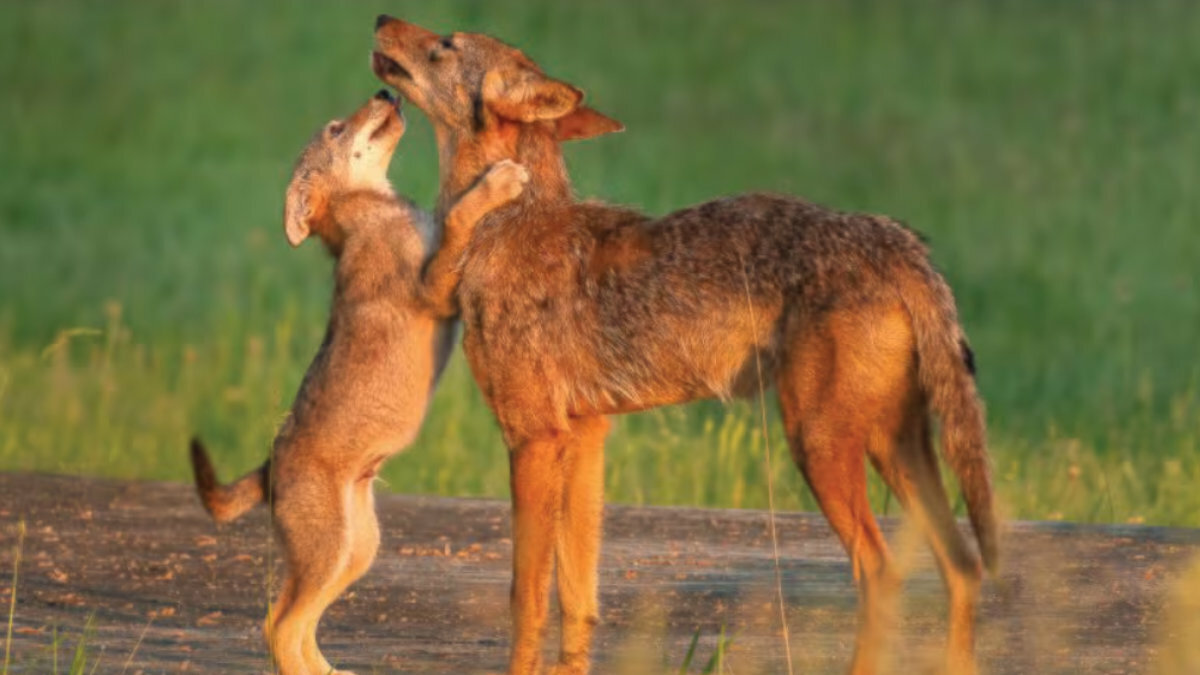
Summer school is in session for young wildlife
June has long been the month when children and adults celebrate a break from the classroom with a summer of adventure and relaxation. But for young wildlife, June is the start of summer school. This is the time of year when coyote pups and fox, skunk, and raccoon kits start to emerge from their dens to join their adults for a crash course on how to be a successful wild animal. With less than one year before leaving their family group, these young animals will have a busy summer learning how to survive on their own.
One important lesson for a young animal is how to hunt and forage for food. Coyotes, foxes, skunks, and raccoons are omnivores, meaning they eat both plants and meat. At first, young will rely on their mother's milk for nutrition. As the pups and kits start to wean, adults will find food and bring it back to their den for the young to eat. When they get a little older, pups and kits will observe the adults hunting and foraging and try to copy that behavior. While raccoon and skunk moms are the sole caretaker for their kits, young coyotes and foxes will learn from both parents and potentially from other family group members too.
In addition to learning how to find food, some wildlife, like coyotes, use the summer to teach their young how to communicate. People often think coyotes howl to announce a kill, but this is not true. Coyotes howl primarily to communicate with other coyotes. Adult coyotes will teach pups how to communicate within their family group or communicate to other coyotes intruding on their territory. So, keep an ear out this summer for a coyote chorus of yips and howls.
June is also when pups and kits become more mobile and visible to people. MassWildlife commonly receives reports about fox kits outside playing or resting. This playful behavior is important to the kits' physical and social development. Luckily, fox activity in residential areas very rarely causes conflict with people and pets, and simply seeing wildlife in your neighborhood—even during the day—is not a cause for concern. The best thing for people to do is to give wildlife space, leash and directly supervise pets whenever they're outside, and never intentionally or unintentionally feed wildlife. If you had a den under your shed or porch this spring, consider installing a barrier, like chicken wire, over the opening after the animals have vacated the site to prevent wildlife from denning there in the future.
Believe it or not, you can be a young wildlife teacher While most wildlife is naturally wary of humans, they can become less cautious if they spend a lot of time around people or regularly feed on human-associated foods, like bird feeders, unsecured trash, or unprotected livestock like backyard chickens. We can make sure adult animals teach their young to search for natural foods by removing and securing all human-associated food sources around our homes. For coyotes, we can also remind them to be cautious around people by effectively hazing them whenever they're on our property.
Just like kids, the lessons young animals learn now are what they'll carry with them as they grow into adults. By giving them the opportunity to learn how to find natural sources of food and shelter, we can prevent current and future wildlife conflict, which is good for people, wild animals, and pets.
Wondering what to do if you find young wildlife without an adult? Never assume a young animal is orphaned or abandoned. Learn why, in most cases, the best thing to do is leave it alone.
Looking for an indoor animal activity for a rainy summer day? Check out these wildlife coloring pages, including a Coexisting with Wildlife activity book made by a local Girl Scout.
Tags: MassWildlife,