image description
The owner of Sibaritas is opening a new restaurant, 'Aura,' in the former Jay Allen's on North Street.

Sibaritas Owner Plans Second Resturaunt at 41 North

By Brittany PolitoiBerkshires Staff
Print Story | Email Story

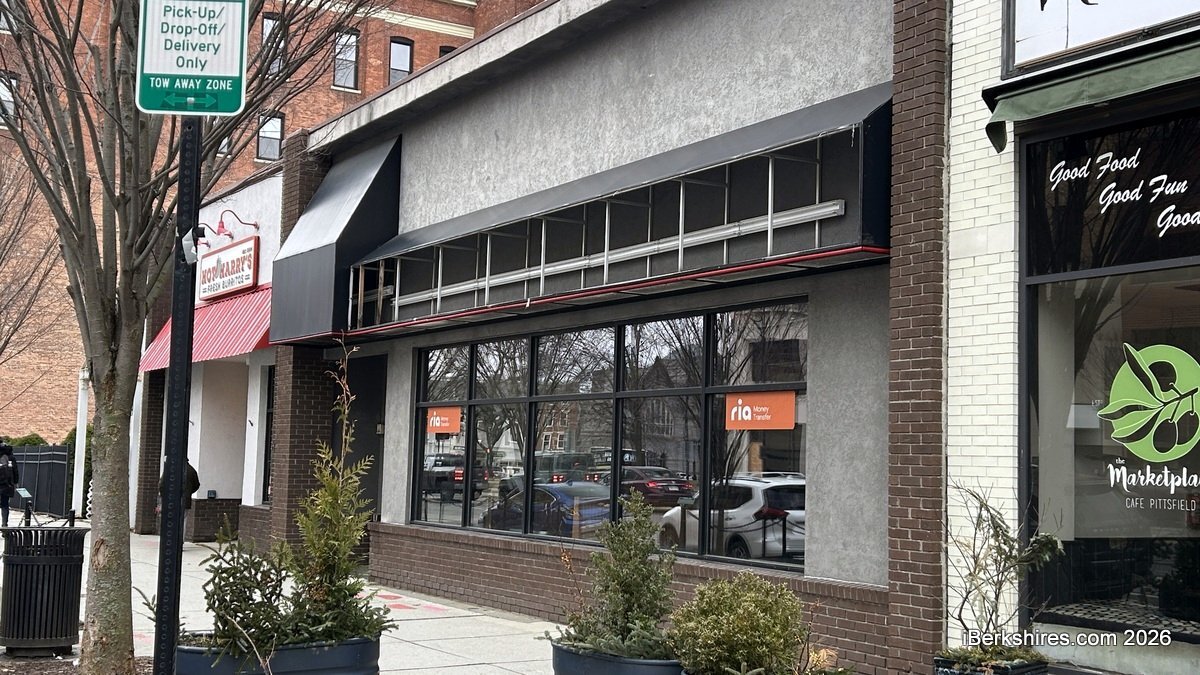
PITTSFIELD, Mass. — The owner of Sibaritas plans to open a new restaurant in the former Jay Allen's Clubhouse Grille. 

On Monday, the Licensing Board approved a change of category, a change of corporate name, a change of corporate structure, and a change of name for 41 North St.  

Attorney Darren Lee, representing the applicant, explained that Sibaritas owner Megan Gomez is opening a second restaurant in the large, empty restaurant space next to Hot Harry's. 

Gomez is now the 100 percent owner of Sibaritas, he reported, as well as the new venture. The "doing business as" name on the application is "Aura." 

The location most recently housed Placita Latina Salvadoran and Mexican Cuisine, which moved to 17 Wendell Ave. Ext. Jay Allen's closed before the pandemic. 

The attorney wasn't able to share much about the upcoming business, but noted that Gomez works "quite a bit" and will be able to balance the nearby eateries.  

Sibaritas, an Italian restaurant with a Chilean flair, opened in 2021 in the former Elizabeth's Restaurant at 1264 East St. In 2024, the Licensing Board approved a new annual downtown all-alcohol restaurant license for the eatery's new location at 27 McKay St., the former Trattoria Rustica. 

Sibaritas remains in that location. 

This left the former beer and wine license active for 1264 East St., and when the eatery owners learned that they could upgrade it to a full liquor license under a new state law, they opted to transfer and upgrade it for 41 North St. 

"That's the reason for the many changes you see on the application, which includes location, type of license, which we just understand is available from the city to convert that," Lee said. 

Next to 41 North Street, the Marketplace Cafe closed last month after 15 years in business. 

While there was positive news about a restaurant space being filled in North Street, that wasn't the case for the former Chili's in Berkshire Crossing. 


The restaurant closed abruptly in August 2024 and has been looking for a buyer for over a year. The current lease agreement goes out to 2029, and the company, Pepper Dining Inc., is looking for another business to carry it out.

Last fall, Chair Thomas Campoli reminded the company that under state law, if a licensee is not operating, the board has to "turn up the heat" to see if the license can be transferred or the venue reopened under a different owner. 

"As far as I'm told, we have nothing new to really add," Director of Northeast Operations Allen Anderson reported. 

"We have no interested buyers, still for sale, but nothing new to report, as far as the status of that restaurant." 

He explained that there were some interested parties early on, but as of that morning, there is no active interest. The company is reportedly doing "very, very" well in other areas, but didn't work out in Pittsfield. 

The update on the status of the shuttered restaurant's all-alcohol license was again continued. 

"Right now, I don't want to do anything with the license, so I think we should just continue this," board member Kathy Amuso said. 

Anderson explained that when one of these restaurants is closed, they look at the volume of guests, how difficult it is to staff, and proximity to other restaurants.  

"This one doesn't have much going for us," he said. 

"No other restaurants around it, super difficult to staff, management was impossible to find." 

Campoli pointed out that if a liquor license is rescinded because of inactivity, the city loses that license.  He pointed out that the license could be sold on its own, apart from the building, so it remains available for another business. 

The board also asked that a representative from Chili's legal or real estate department update the board on the progress of the sale and if the liquor license could be put on the market. 


Tags: license board,   alcohol license,   restaurants,   
If you would like to contribute information on this article, contact us at info@iberkshires.com.

Pittsfield Man Creates Device to Clear Lakes of Algae Blooms

By Breanna SteeleiBerkshires Staff

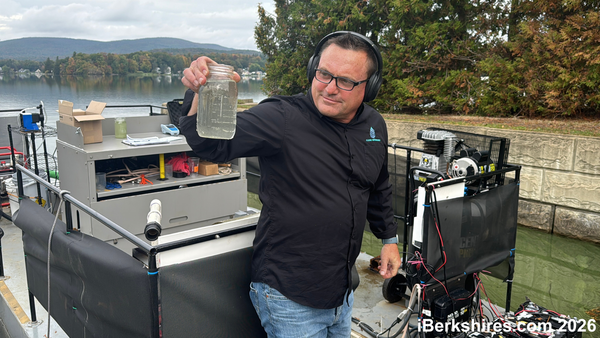
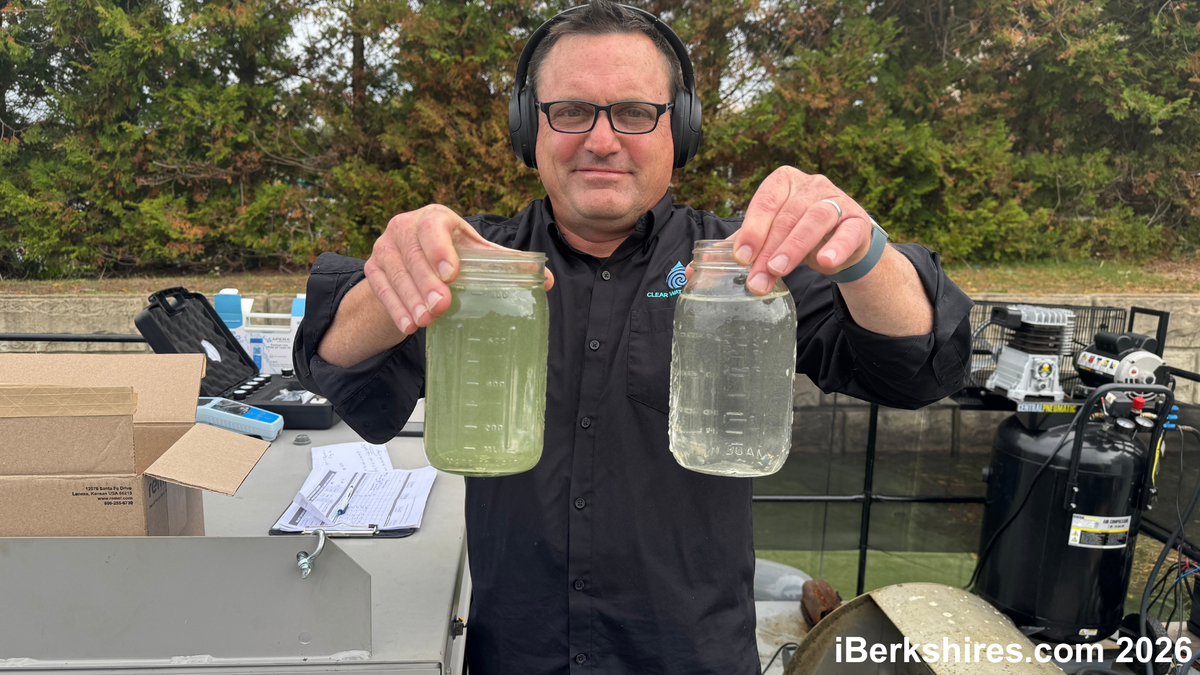
Marc Bellora holds a jar of lake water, left, to compare to water cleaned by his Aqua Clarifier Water System.

PITTSFIELD, Mass. — Marc Bellora has high hopes for a device he's created to treat lakes from harmful algae blooms.

His patented water clarifier can physically remove captured material rather than letting the nutrient-rich material settle back into the lake, which occurs when herbicides are used.

"It's a long-term lake management tool that can be used to reduce legacy nutrients in lakes and ponds over time," he explained. "We built the prototype, this is a prototype. It does approximately 65 to 70 gallons per minute. It's very environmentally friendly. Can be used with air only, or we can use a low-dose potable polyaluminum chloride (PACL) or chemical on board that can help improve results."

The water clarifier barge is based on well-proven technology for water treatment, he said. "It's a self-contained, portable, mobile unit that removes algae blooms, nitrogen, phosphorus, and the associated nitrogen and phosphorus within lakes."

Bellora founded Clear Waterways Group with business partner Mark Simon. They built a prototype mobile unit and are still working out the kinks. It's taken Bellora about five years to bring the project to fruition as he is also a full-time Realtor.

He says the repurposed barge they use has a device that uses air to filter the water to separate harmful bacteria or uses a chemical at low doses. They are testing both to see how well each does at cleaning the water.

"They would do the same thing here, except they would spray it, and it blocks all that stuff together," Bellora said of the use of herbicides. "But then it drops to the bottom. So now all the nutrients that are attached in that plot go to the bottom and contribute to the legacy nutrients only to fuel next year's bloom. Ours removes it."

He said just using air alone has removed 70 to 90 percent of harmful algae where he has been operating on the south end of Pontoosuc Lake.

"Essentially, we take in the bad stuff, we take in the lake water. We separate the good stuff from the bad stuff. Clean water goes back into the lake, and the bad stuff can either be composted, or it can be taken to the wastewater treatment plant, which is what we're doing here," he said. 

Bellora explained that tiny air bubbles attach to particles in the water, making them buoyant so they rise and can be removed. The unit can operate with air alone, or with a low dose of potable polyaluminum chloride.

PACL helps through flocculation: it gathers small particles into larger clumps that are easier for air bubbles to capture. He said this can help remove dissolved nutrients that air alone may not capture as effectively. 

Bellora said he was inspired to build something like this after noticing the lakes he enjoys being shut down because of algae blooms. 

The city issued a health advisory for Pontoosuc in August, warning residents not to swim or come in contact with the lake water because of an algae bloom. The cyanobacteria can cause skin irritations, vomiting and diarrhea and nerve or liver problems. 

Bellora previously worked for a company that used traditional dissolved air flotation (DAF) systems to treat water. In that role, he traveled around the country to work at paper mills and food-processing plants.

That experience gave him a practical understanding of DAF, and while flying between jobs, he would see green ponds and wonder whether the technology could be adapted to treat lakes. 

View Full Story

More Pittsfield Stories