Drury High School Life Skills Class Gets Bleed Training
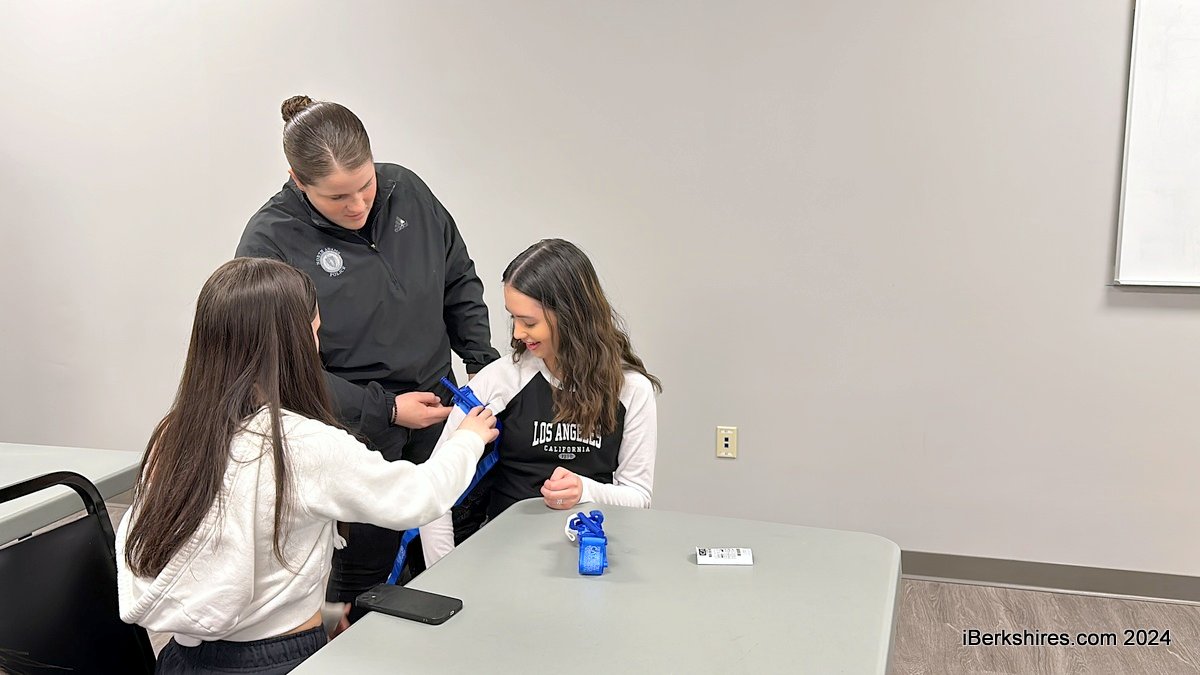
The course is part of a Strong Communities grant that includes life-skill training in other areas such as swimming, cooking and addressing domestic violence.
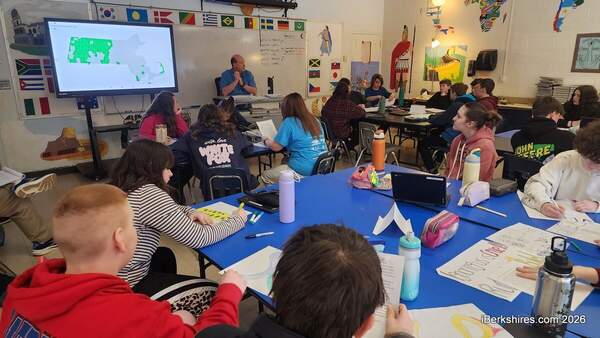
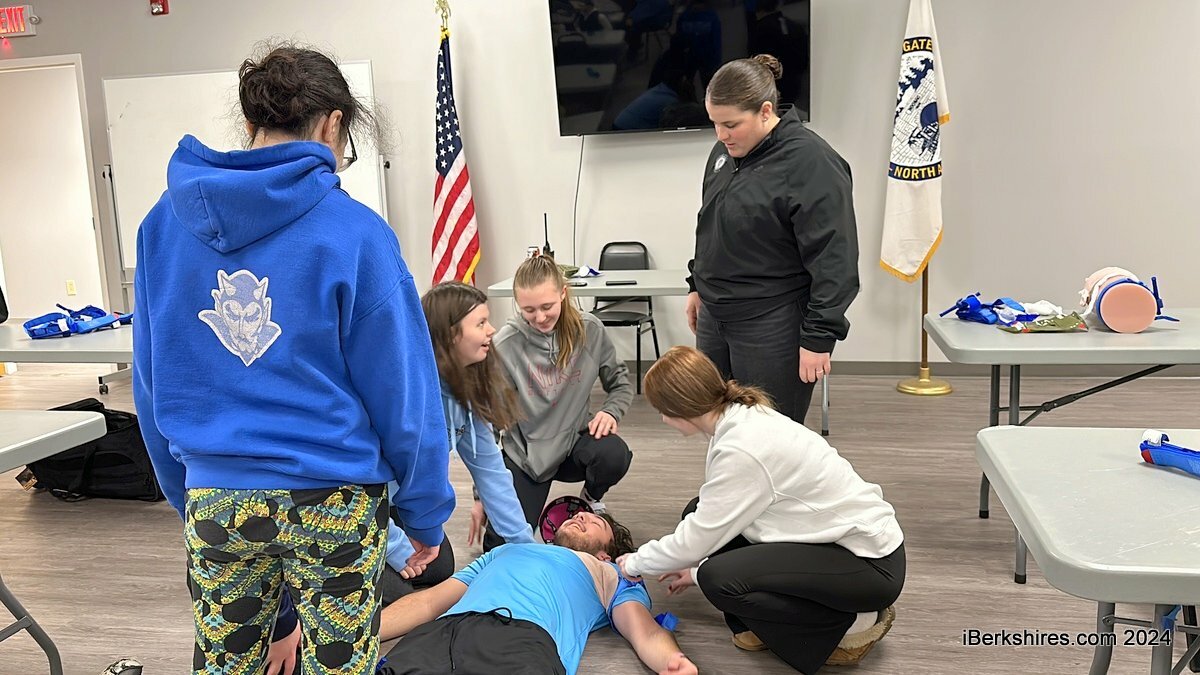
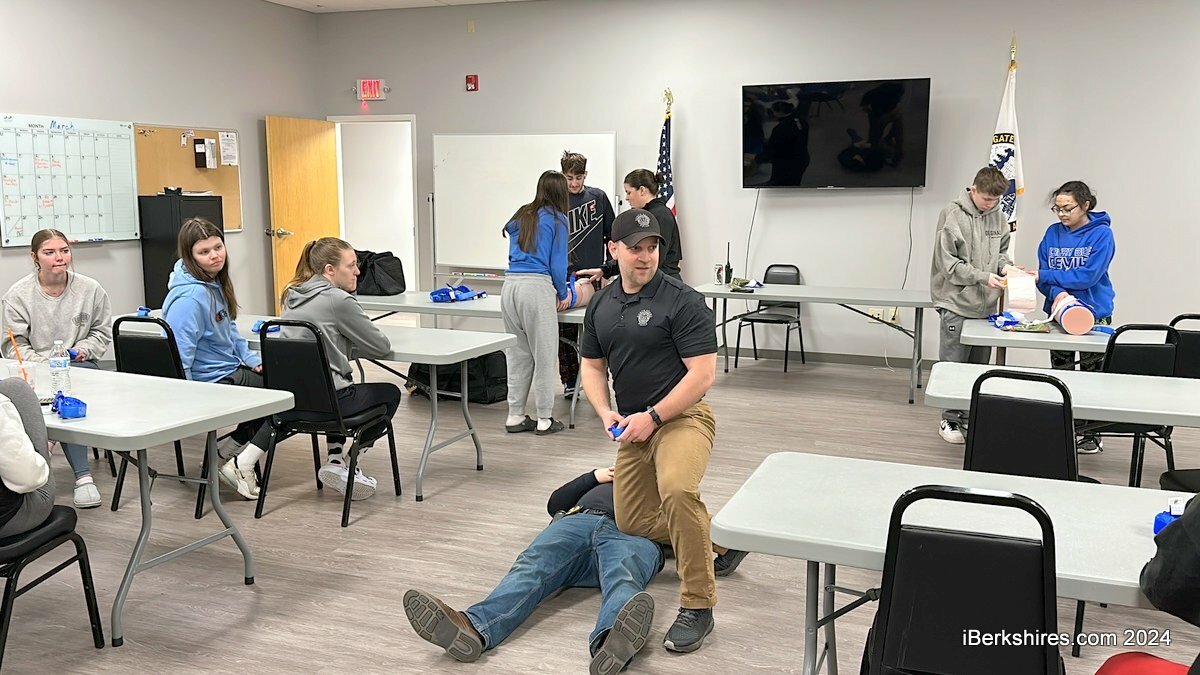
Teens enrolled in the high school's life skills class learned life-saving measures this week at the Police Department. They were trained in how to effectively use tourniquets, gauzes and bandages and when to use them based on the injury and its location on the body.
The class is funded by the five-year Up Street Violence Prevention Strong Communities grant for $629,000 from the Executive Officer of Health and Human Services. A Strong Communities Working Group made up of 20 members including community organizations, city officials, city departments and emergency responders was formed last year to design projects that address violence prevention, the group's co-Chair Stacy Parsons said.
"The Police Department has been able to launch a domestic violence response unit and we're helping launch the digital evidence unit," she said.
"So, all of these things, thinking about how do we work from two places of preventing community violence and interrupting but also providing care after an event."
The grant also funds the class that teaches kids life and safety skills such as sewing, swimming, cooking, fire safety, domestic violence training, first aid, and more.
The students involved in the class will also be getting their cardiopulmonary resuscitation certification.
"[The students learn] all types of those things that people need in life that necessarily aren't taught at home in some circumstances," group co-Chair Stephanie Mirante, the schools' resource officer, said.
"So, kids definitely, I feel, appreciate the class, appreciate the things that we're trying to give them that they didn't have the opportunity before and thankfully, that is all because of the grant that was written."
At the end of the class, the students will take a trip to Boston, said Mirante, estimating 98 percent of them have never left Berkshire County.
The skills these kids learn in the class has a ripple effect in the community, she said, because they may go on to show other people how to do these things.
"Then if an incident happens, where any of that medical attention is needed or anything they learned from the class, they're able to now provide that back into our community," Mirante said.
"So hopefully, our goal long term is that everyone in the school is going to go through my class at some point and be given new skills."
The supplies purchased through the can be reused so the class can continue as part of the school curriculum when the funding runs out, she said.
"I will say there's some kids in high school they only like going to this class during the day. We have like a 50 or 60 person waitlist to get into the class," Mirante said.
"So, I think they just enjoy during their day of schoolwork being able to do more hands-on things and learn new skills."
A lot has changed over the years. Schools are not just doing fire drills anymore, they are doing active shooter drills, too, Detective Sgt. Brad Vivori said.
"I think empowering these students, teachers, people within the community is important, because it makes them feel like they have some type of control over a situation which is outside their control and it allows them to save lives in the process," he said.
Unfortunately, many parents don't know these things, and safety training is not taught in school, said school nurse Lee Girard, and if it's not taught in school, where are they going to learn it?
The class started last semester and students have already been able to use some of the skills they have learned, she said.
"It's amazing and I hear them talking to each other, and kind of spreading the good vibes and the information and it's really amazing. They really enjoy it and I think that it's really needed for these kids," she said.
Sometimes students do not realize how much they are processing until they are put into a situation where the skills are needed, life skills teacher Patrick Boulger said.
"It's hands-on learning but it's also lifelong learning of where they are going to take so many pieces …of things that they're going to be taught in this class and it's going to be … a lifetime knowledge of particular concepts, which are not in a textbook, or it's not in a formal curriculum per se, that we have in education," he said.
"It's real life and that's one of the most important things we could probably teach these kids today."
Tags: Drury High, federal grants, life skills,