Black Bears Waking Up in Massachusetts

Print Story | Email Story
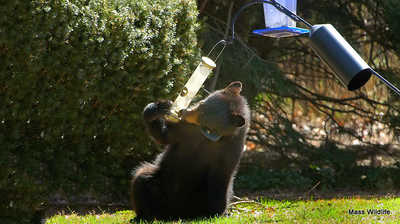
NORTH ADAMS, Mass. — March is hungry bear season, says the state Department of Fisheries and Wildlife. 
 
Wildlife officials are reminding the public that bears are beginning to emerge from their winter dens and seek out food. 
 
Residents in northern Middlesex County, Worcester County and Western Massachusetts, or other areas where bears have been spotted, should know it's time to take down bird feeders. 
 
Natural foods such as acorns and other nuts are usually available on the ground, but last year's fall hard mast crop was meager. Bears will often ignore seasonally available natural foods including skunk cabbage in favor of an easy meal at a backyard bird feeder. Other species including wild turkeys and coyotes may also frequent bird feeders leading to a variety of nuisance issues. 
 
To avoid these problems, MassWildlife asks property owners to be proactive by removing bird feeders and other potential food sources including garbage or open compost. If you enjoy watching birds in your yard, MassWildlife suggests adding a water feature, growing native plants, shrubs, and trees to attract birds. 
 
Individuals should also secure bee hives, chickens, and livestock. Properly maintained electric fencing is the only way to protect chickens or bee hives from bears. Taking these actions may prevent the unnatural feeding of bears and other kinds of neighborhood wildlife.
 
There are at least 4,500 black bears in Massachusetts and their range is expanding eastward. Take action by educating yourself and your neighbors about proactive measures to avoid conflicts with bears. Visit Mass.gov/Bears for detailed information and do your part to keep bears wild.

Tags: bears,   mass wildlife,   

If you would like to contribute information on this article, contact us at info@iberkshires.com.

Clarksburg Students Write in Support of Rural School Aid

By Tammy DanielsiBerkshires Staff

Mason Langenback calculated that Clarksburg would get almost $1 million if the $60 million was allocated equally.
CLARKSBURG, Mass. — Eighth-graders at Clarksburg School took a lesson in civic advocacy this week, researching school funding and writing letters to Beacon Hill that call for fulling funding rural school aid. 
 
The students focused on the hardships for small rural schools and their importance to the community — that they struggle with limited funding and teacher shortages, but offer safe and supportive spaces for learning and are a hub for community connections.
 
"They all address the main issue, the funding for rural schools, and how there's a gap, and there's the $4 million gap this year, and then it's about the $40 million next year, and that rural schools need that equitable funding," said social studies teacher Mark Karhan.
 
A rural schools report in 2022 found smaller school districts cost from nearly 17 percent to 23 percent more to operate, and recommended "at least" $60 million be appropriated annually for rural school aid. 
 
Gov. Maura Healey has filed for more Chapter 70 school aid, but that often is little help to small rural schools with declining or static enrollment. For fiscal 2027, she's budgeted $20 million for rural schools, up from around $13 million this year but still far below the hoped for $60 million. 
 
Karhan said the class was broken into four groups and the students were provided a submission letter from Rural Schools Advocacy. The students used the first paragraph, which laid out the funding facts, and then did research and wrote their own letters. 
 
They will submit those with a school picture to the governor. 
 
View Full Story

More North Adams Stories