Pittsfield Subcommittee Considers E-Bike Safety
PITTSFIELD, Mass. — Some city councilors want to explore ways to encourage safe e-bike use.
The Ordinances and Rules subcommittee earlier this month discussed the request by Councilor at Large Kathy Amuso and Ward 3 Councilor Matthew Wrinn to increase enforcement of bicycle and e-bike use on Pittsfield streets, install signage in high-traffic areas, and launch an educational program for kids.
Amuso has gotten reports of kids going 15 to 20 miles per hour on the sidewalk with motorized bikes while people are trying to back out of their driveways, and fears someone might get hurt.
She said if they could start with some of the basics such as riding with traffic in bike lanes and operators under 16 wearing helmets, it would address most of the calls.
"Do I think we need to put ten police on trying to find e-bikes throughout the city? I don't. But there are enough calls that I'm getting, and other councilors are getting, that we have to say, ‘Okay, what can we do?' And we have a lot of bike lanes in Pittsfield, and the e-bikes and all bikes should be in the bike lanes, not on the sidewalk,” she said.
The petition was tabled so that the Department of Public Works can study it and gather further information.
In Massachusetts, an e-bike with a top speed of 20 miles per hour and a motor of 750 watts or less is classified as a traditional bicycle. State law defines two e-bike classes:
A Class 1 electric bicycle is defined as having a motor of 750 watts or less that provides assistance only when the rider is pedaling and ceases to provide assistance when the bicycle reaches the speed of 20 miles per hour.
And a Class 2 electric bicycle as having a motor of 750 watts or less that may be used exclusively to propel the bicycle and that is not capable of providing assistance when the bicycle reaches the speed of 20 miles per hour.
Riders 16 years or younger must wear a helmet by law.
Commissioner of Public Services and Utilities Ricardo Morales said some new statewide e-bike regulations are in progress, and that it is difficult for police to distinguish between e-bike types and riders' age.
"I'd like clarity on what we're looking for the outcome of having signage placed because not all e-bikes are made equal,” he said.
Police Chief Marc Maddalena said the definition is kind of in limbo between 20 mph and 25 mph, which is the speed limit for a moped. Police issue Class 1 and 2 e-bikes the same $20 citation that bicycle riders incur for violations.
Maddalena said online bike purchases often don't accurately describe the motor's full power, and it's "one of those things where technology has gone way too fast, and legislation hasn't been able to catch up."
"And so we're all struggling to try to get there," he explained.
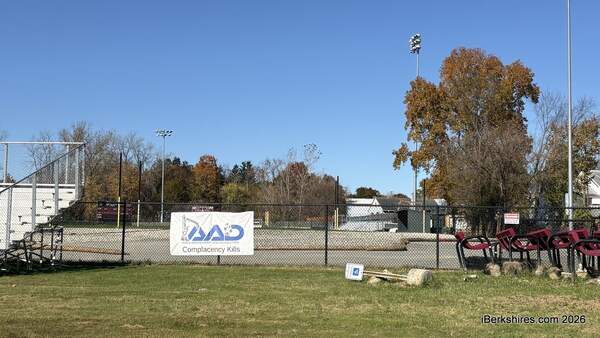
Bike safety was added to the school's Drug Abuse Resistance Education, or DARE, Program.
Amuso would like to see sidewalk riding addressed, especially on corridors like Elm and Williams Streets.
Tags: e-bikes,