A Poverty Line Frozen in Time
For more than 60 years, the United States has measured poverty using a formula developed for a very different America.
In 1963, John F. Kennedy was president. A new home cost about $18,000, rent averaged around $100 a month, gasoline was about 30 cents a gallon, and a first-class stamp cost 5 cents.
Most importantly, families spent about one-third of their income on food. Social Security Administration economist Mollie Orshansky was searching for a way to determine the income a family needed to meet its basic needs. She used the government's least expensive nutritionally adequate food plan. Because families at the time spent roughly one-third of their income on food, she multiplied the cost of that food plan by three. The remaining two-thirds was assumed to cover housing, clothing, transportation, healthcare, and everything else.
It was a thoughtful approach based on how families actually lived. The formula made sense.
In 1963.
More than 60 years later, the thresholds are adjusted for inflation, but the basic formula has never been fundamentally rebuilt around what families actually spend today.
Here in Berkshire County, that disconnect matters.
The Census Bureau reports that approximately 11 percent of Berkshire County residents live below the federal poverty level. But that number does not begin to tell the whole story of financial hardship in our community.
Consider housing. A home in Berkshire County can easily cost $400,000 or more, and rents approaching $1,800 a month are increasingly common. Now compare that with the 2026 Federal Poverty Guideline of just $33,000 a year for a family of four. That is $2,750 a month before taxes and only about $2,540 a month after Social Security and Medicare payroll taxes.
Imagine paying $1,800 in rent from $2,540 in monthly income. That leaves just $740 for heat, electricity, food, transportation, healthcare, insurance, clothing, child care, and every other necessity of raising a family.
That is not an economic theory. That is a family sitting at the kitchen table deciding which bill can wait.
But there is another family we rarely talk about.
Perhaps that family earns $45,000, $50,000, or even $60,000 a year. On a government chart, they are no longer living in poverty. At the kitchen table, however, the rent is still due. The refrigerator still needs groceries. The car still needs gasoline. The heating bill still arrives. A child still needs shoes, and an unexpected medical or car repair bill can still throw the entire household budget into crisis.
We see this every day at Berkshire Community Action Council.
In fact, we serve more people whose incomes fall between 100 and 200 percent of the Federal Poverty Guidelines than we do people with incomes below the official poverty line.
That should tell us something.
The official poverty rate may tell us how many people fall below a government threshold. It does not tell us how many families are struggling to meet their basic needs.
Today, financial hardship often wears a work uniform. It is the certified nursing assistant, teaching assistant, grocery clerk, daycare worker, home health aide, and restaurant server. Many work full time. Some work two jobs. They are not asking for a handout. They are trying to keep a roof overhead, food on the table, and hope in their children's lives.
That is why many Berkshire Community Action Council programs use 200 percent of the Federal Poverty Guidelines. We know that a family does not suddenly become financially secure when its income rises one dollar above an outdated poverty threshold.
Perhaps we need to distinguish between being officially poor and being unable to afford the basic necessities of life. They are not the same thing.
Behind every poverty statistic is a neighbor. A parent heading to work after dropping a child at school. A home health aide caring for someone else's loved one. A senior wondering which bill can wait.
These are not numbers on a government chart. They are people working, caring, contributing, and trying to build a better life.
The America that created the federal poverty guidelines no longer exists. Perhaps it is time our definition of poverty caught up with the America we live in today. The question we should be asking is not whether a family falls above or below a line drawn more than 60 years ago.
It is whether that family can afford a safe home, put food on the table, keep the heat on, care for their children, and still have enough left to face tomorrow with a little security and hope.
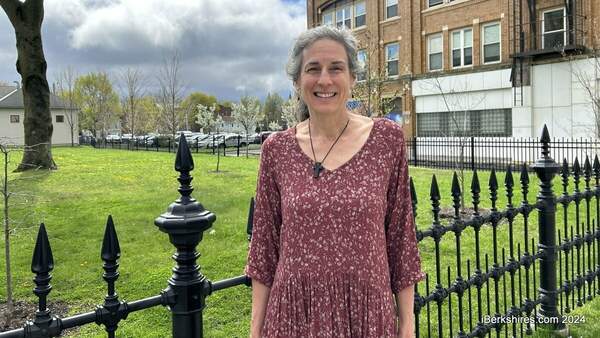
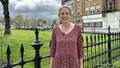
Deborah Leonczyk is executive director Berkshire Community Action Council.
Tags: BCAC, poverty,