Healey Administration Visits Pittsfield to Talk Green Energy Siting
PITTSFIELD, Mass.— Massachusetts energy officials visited Pittsfield to talk about clean energy infrastructure siting as the state works to cut greenhouse gas emissions.
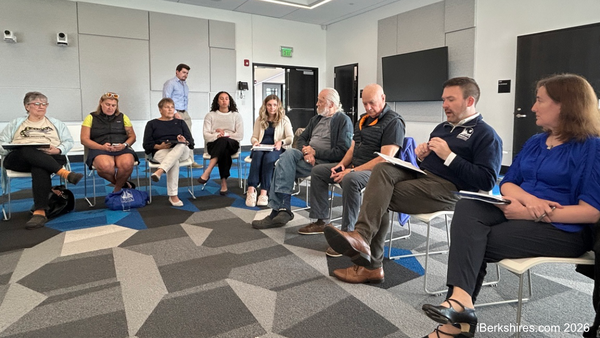
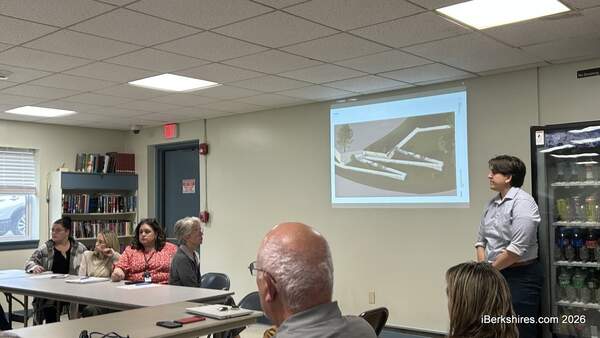
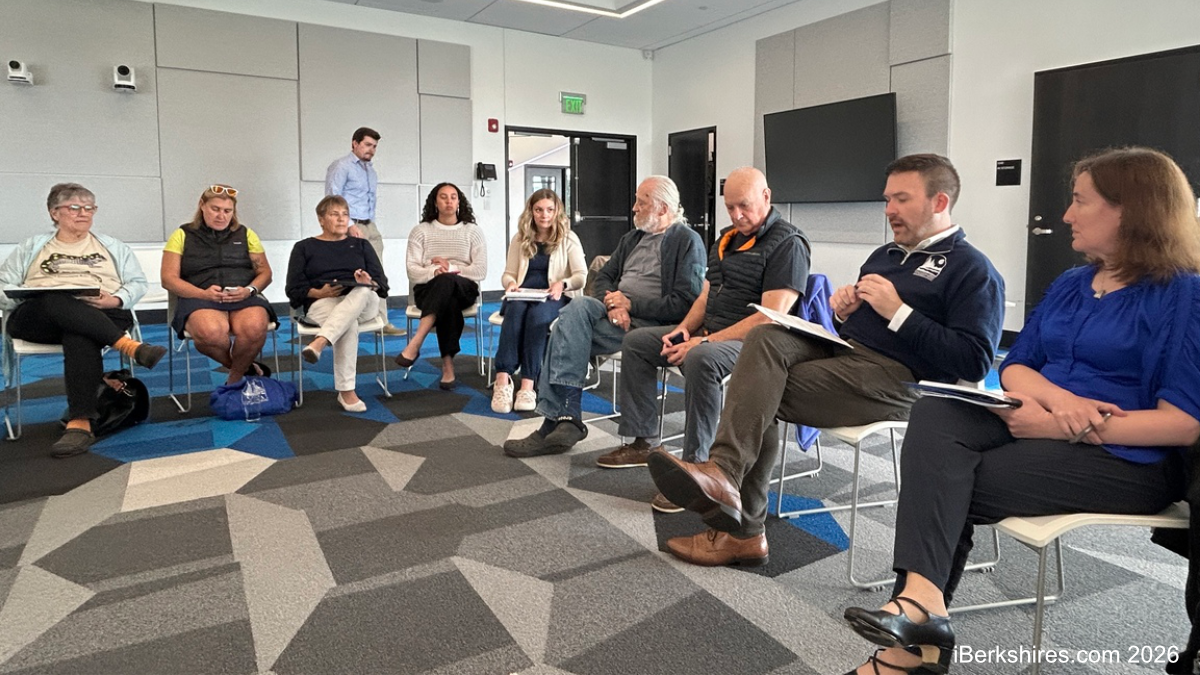
On Wednesday, Sept. 30, the Healey-Driscoll Administration hosted a listening session at the Berkshire Innovation Center. Representatives from Berkshire communities and organizations heard about solar arrays, battery storage, and more.
The 2024 clean energy bill aims for net-zero greenhouse gas emissions by 2050. As part of it, municipalities must begin accepting single consolidated local permit applications for small clean energy projects this month.
"We have new regulations coming into place, and just want to make sure we are hearing from people because we know it's not always easy. We have a lot of commitments on clean energy and climate that are really important, and they help us on our energy affordability, but we know there's also often tension with our land preservation values," Deputy Climate Chief Aladdine Joroff said.
"We want to preserve rural character. We have to protect critical forests and ecosystems for habitat and water supply. We're thinking about how we balance those different goals."
She explained that large clean energy systems, in addition to reducing greenhouse gas emissions, have public health benefits and are more affordable.
Since 2008, more than 200,000 solar arrays have been installed statewide, surpassing a 4,500 megawatt milestone. Roughly 98 percent of those installations are residential scale, sized between five and ten kilowatts, and solar is the second largest source of generation capacity in the state, as well as in New England.
Undersecretary of Energy Michael Judge explained that solar has shifted peaks into the evening by reducing demand in the middle of the day, largely contributing to the retirement of some fossil fuel generation facilities and lowering wholesale energy prices.
The 2024 Climate Act outlines significant reforms to the permitting and siting process of wind, solar, storage, and other electric infrastructure. It establishes a 12-month deadline for municipal permitting and requires communities to issue a single permit at the end of their process, and improves the equitable siting and community engagement processes.
The state encourages solar projects on rooftops, parking lots, landfills, and brownfields as opposed to open space. Overall, more than half of the installed solar has met this criterion; over 80 percent in 2025.
There are about 600 ground-mounted projects statewide that are one megawatt or larger.
"In terms of how solar fits into our clean energy and climate plans-it's really key to keeping electricity affordable and reducing greenhouse gas emissions," Judge said.
"Our last iteration of our clean energy and climate plan, which was issued in 2022, estimates that we will need somewhere between 27,000 and 34,000 megawatts of solar by 2050 to meet our greenhouse gas reduction requirements. That's about a six- to eight times growth of what we have installed today, so quite a bit more has to be installed. May not all have to be installed in Massachusetts. Could be installed throughout the region, but we need to build a lot more, basically, is the bottom line."
He explained that in the 2020s, there has been a shift to lithium iron phosphate batteries for storage, which have a much higher temperature threshold.
Since 2017, Massachusetts has installed about 1,600 megawatt-hours of storage over 7,000 individual projects, including around 175 grid-connected batteries with a capacity of one megawatt-hour or larger. The 1000-megawatt-hour target by 2025 was met.
About 25 percent of those batteries are in the four Western Mass counties, accounting for 15 percent of the statewide capacity, but most of the large utility-scale projects connecting to the transmission system are being proposed in Eastern Mass, Judge reported.
"The top 10 percent of hours in terms of peak demand account for 40 percent of the cost that you see on your bill," he said.
"That's because poles, wires, substations, power plants, higher priced energy, all has to be you have to build all of that into the system to meet that peak demand. So anything you can do to shave that peak really lowers costs."
Tags: energy, solar,