Discrimination Against Muslim Americans Persists 25 Years After 9/11
WILLIAMSTOWN, Mass. — Dozens of Muslim Americans were among people killed in the Sept. 11 terrorist attacks.
Untold numbers of Muslim Americans have suffered countless acts of discrimination in their aftermath.
"Of course, you'll find several accounts of Muslims from all over the U.S. describing how they went from the unknown kids in the school to being stereotyped or ridiculed for their Muslim names," Sidra Mahmood recalled recently. "However, many Americans forget that the victims of 9/11 were also Muslim Americans.
"I can't forget the time when a classmate broke down in sobs when 9/11 came up in our classroom at the Islamic seminary I went to in Texas, because her father's best friend who was like an uncle to her, died on 9/11."
Today, Mahmood is a chaplain at Williams College. In 2001, she was growing up in Karachi, Pakistan, when terrorists forced two passenger jets into the Twin Towers in lower Manhattan and another plane into the Pentagon outside Washington, D.C. A third plane, which terrorists hoped to crash into a D.C. landmark, was brought down in western Pennsylvania after passengers and crew fought back against the hijackers.
The attacks, which ultimately claimed 2,976 lives, horrified people around the world, including in Mahmood's native land.
"I remember being aghast like anyone who witnessed the fall of the Twin Towers in real time," she said. "However, even as a child, fear gripped me about the possibility of war, especially once we learned that Afghanistan, right adjacent to Pakistan, would be attacked by the U.S. My mother had told me about the 1971 war between India and Pakistan when she remembered hiding in the dark after bomb sirens would go off in Punjab after intentional blackouts.
"In my head, I practiced what that could look like in our home but quickly, elders who had gone through two wars (1965 and 1971) and a bloody partition of homelands (1947), knew what to do if we were indeed attacked. We practiced hiding in our walk-in closets and most interior nooks in the house and my grandfather who had been adamant about not getting a cable, asked my father to get a cable connection the very next day because he did not want to miss any news in case we were attacked."
Twenty-five years later, it remains unclear exactly how many of the nearly 3,000 victims of the attacks were Muslims, but estimates range from 40 to 60 deaths, which would mean anywhere from 1.3 to 2 percent of the victims. In 2001, the Pew Research Center reported that there were 2.75 million Muslims living in the U.S., or a little less than 1 percent of the country's population, meaning that Muslim American victims accurately reflected their representation in the country.
And, for a moment in time, there were signs that non-Muslim Americans would remain true to the ideals embedded in the First Amendment of the U.S. Constitution and not scapegoat their fellow citizens for practicing their religion.
Six days after the attack, President George W. Bush visited the Islamic Center of Washington and said, "These acts of violence against innocents violate the fundamental tenets of the Islamic faith. And it's important for my fellow Americans to understand that."
In a 2016 TED Talk posted on YouTube, Dalia Mogahed reports that she was trepidatious about taking her family to a mosque for weekly worship the Friday after the Tuesday attack but pleasantly surprised when she did.
"We talked it over, and it might seem like a small decision, but, to us, it was about what kind of America we wanted to leave for our kids: one that would control us by fear or one where we were practicing our religion freely?" Mogahed said. "So we decided to go to the mosque. We put my son in his car seat, buckled him in and drove silently, intensely to the mosque. I took him out, I took off my shoes, I walked into prayer hall, and what I saw made me stop.
"The place was completely full. And then the imam made an announcement thanking and welcoming our guests, because half the congregation were Christians, Jews, Buddhists, atheists, people of faith and no faith, who had come, not to attack us but to stand in solidarity with us."
As it turned out, that sense of solidarity was neither universal nor long-lasting.
In the 25 years since the September 11 attacks, Americans — on average — have grown more hostile to people who practice Islam, the religion claimed by al-Qaida, the terrorist group that executed the plot.
The nonprofit Pew Research Center has been tracking Americans' attitudes on Islam and Muslims for decades. This year, it released new data that shows the majority of people in the U.S. are less accepting of Muslims than ever before.
"In March 2002, just six months after the al-Qaida attacks, 25 percent of U.S. adults said the Islamic religion is more likely than other religions to encourage violence," Pew researcher Besheer Mohamed wrote in an article announcing the survey results. "In 11 subsequent polls, that figure has never been lower than 38 percent, and in the past decade it has hovered between 45 percent and 52 percent. Early this year, about half of U.S. adults surveyed (51 percent) said Islam encourages violence more than other religions do."
On a personal level, Muslim Americans feel the impact of those suspicions.
"Today we hear people say things like, 'There's a problem in this country, and it's called Muslims. When are we gonna get rid of them?,'" Mogahed said in her TED Talk. "So some people want to ban Muslims and close down mosques. They talk about my community kind of like we're a tumor in the body of America, and the only question is, 'Are we malignant or benign?' … The choices don't make sense because it's the wrong question.
"Muslims, like all other Americans, aren't a tumor in the body of America. We're a vital organ. Muslims are inventors and teachers, first responders and Olympic athletes. Is closing down mosques going to make America safer? It might free up some parking spots, but it will not end terrorism."
Mahmood, who came to America to study at South Hadley's Mount Holyoke College, said she had concerns about her safety before moving to a post-9/11 America but found the college campus to be a safe, welcoming space.
Off campus, it was — and is — a different story.
"I noticed a stark difference in people's attitudes after I started wearing hijab," she said. "Previously, strangers assumed I hailed from India — and was possibly Hindu — due to my dark skin and hair but once I started covering my hair, I obviously stood out as Muslim.
"While interning in Boston, folks would yell to 'go back where you came from,' and I even had pick-up trucks drive past me while I would walk back from my seminary in Texas around the 2016 election with the threat, 'I will kill you!' I've even been shouted at in Williamstown while walking down Park Street where I previously lived, so I can't even imagine how students feel in such moments when they're targeted for their religious and spiritual worldviews and/or identity."
In the last 10 years, discrimination against Muslim Americans has only gotten worse.
"Since 2016, the hate has felt quite pervasive on the ground and feels like it has intensified since October 2023 when the Democrats even turned against Muslims and those advocating for peace in Palestine," Mahmood said. "The Council on American-Islamic Relations has recorded record-level complaints of discrimination against Muslims every single year since October 2023 that keeps going up every single year. While we sometimes feel that only one party is to blame, the biases are deeply ingrained in the psyche of the white American."
The Institute for Social Policy and Understanding surveyed Americans about whether they "fear for personal safety" in the wake of the 2024 elections. For all Americans, the percentage reporting they had such fear was 12 percent; among those identifying as Jewish or Muslim, the numbers were 23 percent and 29 percent, respectively.
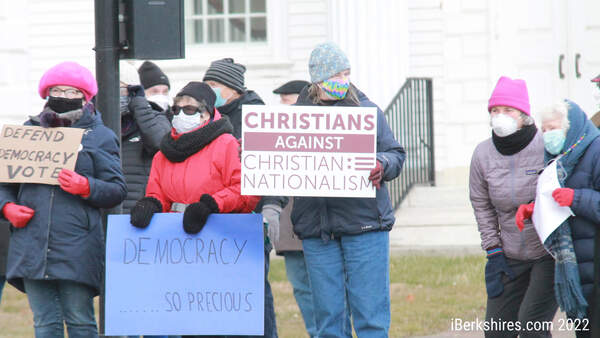
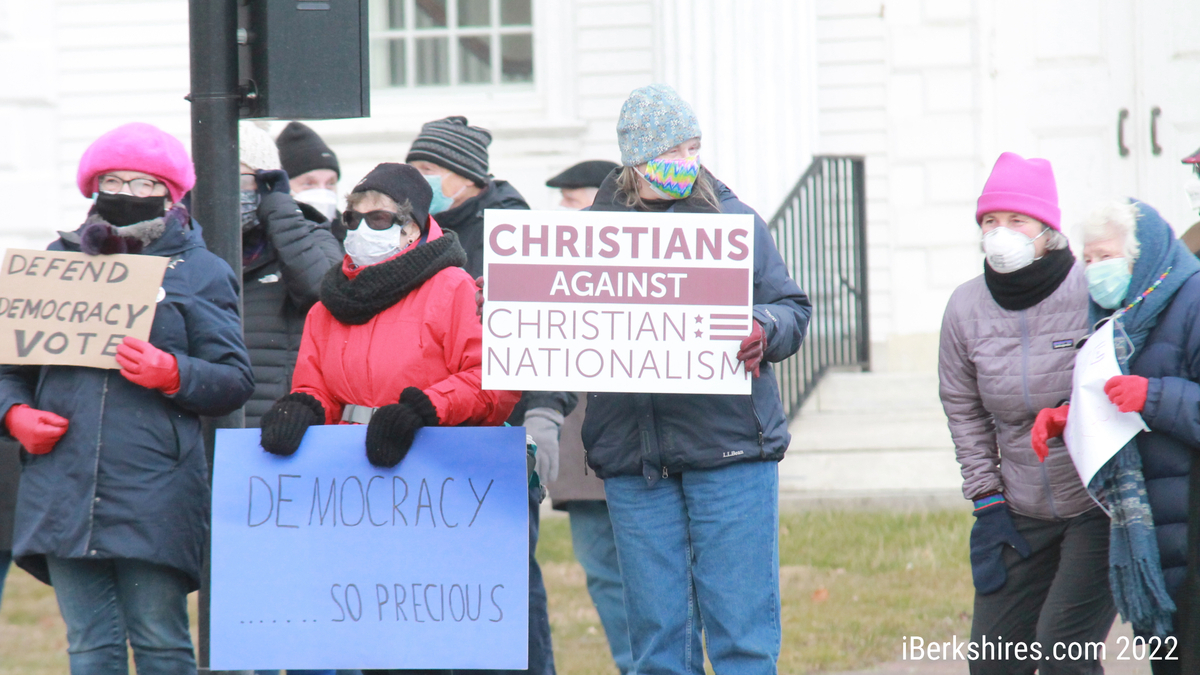
The rise in discrimination against Muslims and fear in the Muslim American community coincides with a rising tide of "Christian nationalism." In research published this spring, Pew reported that while most Americans continue to support the separation of church and state implicit in the First Amendment, the number with a favorable view of Christian nationalism rose dramatically in the last four years, from 5 percent in 2022 to 10 percent this year.
"I suggest you read 'White Christian Privilege: The Illusion of Religious Equality in America' [published in 2020]," Mahmood said. "Khyati Y. Joshi makes an excellent case of privileging whiteness through policies such as immigration to ensure that this nation remains a 'White Christian nation.'
"Whether you conform to the narrative or not, unless we demand change from something as basic as changing our academic calendars and federal holidays away from Protestant Christian holidays, we all perpetuate the notion that we are indeed a 'White Christian nation.' "
Tags: prejudice,