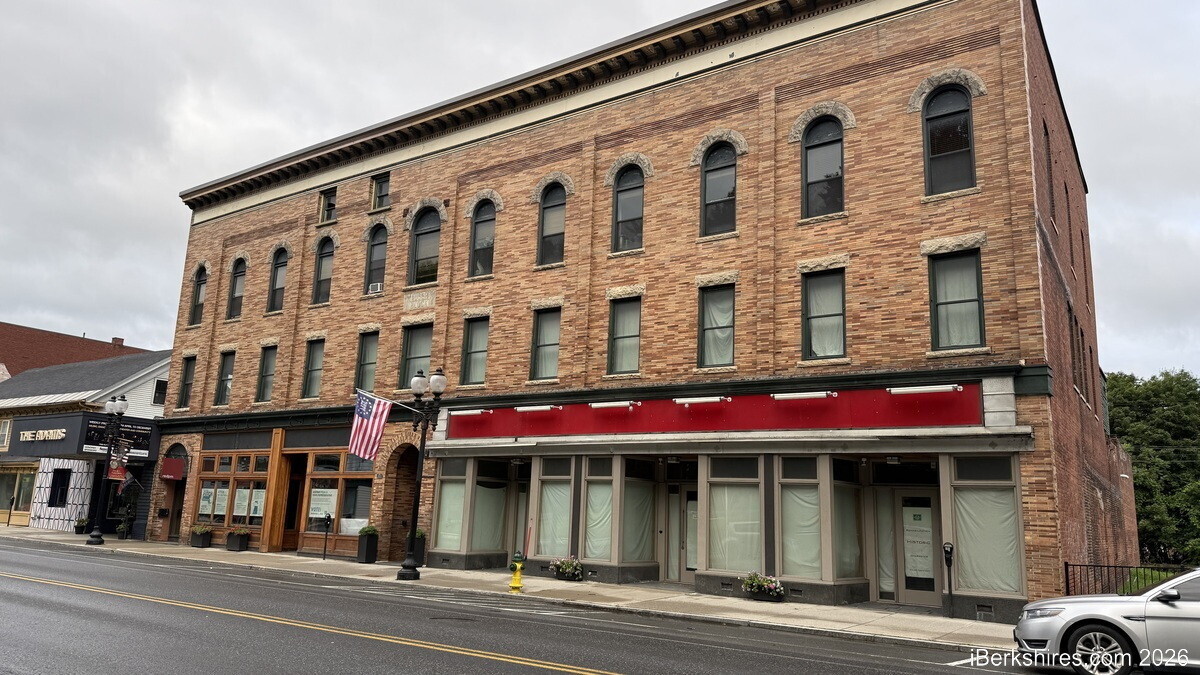
Adams Restaurants Near Completion, Signage Hits Zoning Hurdle
ADAMS, Mass.— Construction at 19 Park St. is nearly complete, with two new restaurants preparing to open—but one hurdle remains: getting a signage plan approved under the town’s restrictive zoning regulations.
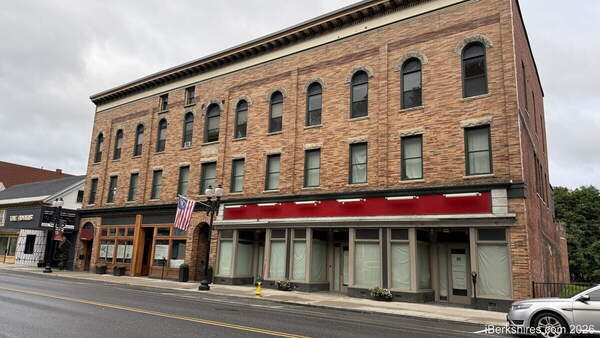
The Zoning Board met with architect Stephen Stenson last month to discuss signage for 19A and 19B Park St., which he aims to design in a way that aligns with the historical architecture of the building and improves visibility.
After a lengthy discussion, the board continued the hearing to Sept. 8, asking Stenson to return with a more detailed proposal showing exactly how the signage would look.
Stenson has been working to renovate the historic Mausert Block, already opening 10 two-bedroom apartments at 21 Park Street.
He hopes to complete the remaining work on the restaurants at 19A and 19B Park St. by the fall, which will bring two new businesses to downtown: Zep's Pizzeria, owned by Seth Martin, and The Burrito Bowl, owned by Timothy Samson.
The space is designed to address the evolving demographic, post-COVID environment, changes to the industry, and needs of the community, Stenson told iBerkshires.
During the renovation, he worked to maintain the building's historic character, including the arched windows, decorative stone trim, and a bracketed cornice, which he also wished to do with the signage.
The current bylaws allow signage by right that is 16 square feet per unit along Park Street, which equates to a sign height between 6 inches and 12 inches across each storefront, Stenson said in his variance application.
The town’s current sign regulations make it difficult to create balanced, proportional signage across the two restaurant storefronts, Stenson told the board.
The proposed signs would vary significantly in size and placement, leaving awkward blank spaces and making it harder for customers to clearly distinguish the burrito and pizza restaurants, he said.
"What we're asking for is nothing more than what other people have asked for…what we're doing proportionally is nothing different," he said, highlighting the Adams Theater marquee, Adams Bank, and Window World.
In 1925, F.W. Woolworth opened a five-and-dime store in the building, becoming the longest-running and most notable business to occupy the space. The store remained there for about 60 years.
During that time, the sign bar displayed the lettering "F.W. Woolworth Co." Today, the large red sign bar spans across 19A and 19B Park St. and now has lights illuminating it, but doesn’t have lettering.
Stenson is asking the board to allow both businesses’ signs to fit within the existing sign box, creating a more balanced look while respecting the building’s historic architecture.
This is similar to the signage Martin K. Bush had done next door, he said.
Board members raised concerns because Stentson is seeking approval for the overall sign bar rather than individual business signs, which is how the aforementioned businesses had their signs approved.
Requirements for the size and placement of each business’s sign on the sign bar would be built into the tenant lease agreements, Stentson said.
However, some board members were uncomfortable giving blanket approval without knowing what the final signs would look like.
When they move in, new tenants would know from the start exactly how much space they have for a sign. As a developer, it is important to have that consistency because it gives a potential tenant certainty, he said.
"You're talking about the capability of renting it and already have a sign board approval for a sign that they want to put in that we have no regulation over," said David Rhinemiller, board member.
Stentson can inform the new tenants that they can place a sign that is 16 square feet on the sign bar, and if it goes over that, they can seek a variance with the Zoning Board, Rhinemiller said.
The problem is that size restriction is unreadable and doesn’t work architecturally or historically, Stentson said.
"It's almost like putting the cart before the horse…You want us to approve a sign that doesn't exist," Rhinemiller said.
Additionally, on the side of the building facing the Ashuwillticook Rail Trail, Stenson is requesting signage to act as a screening for its Heating, Ventilation, and Air Conditioning system.
"This has a higher foot traffic than Park Street and has become an entirely separate retail edge to the downtown. The signage size restrictions at 8 square feet make it impossible to produce legible signage," he said in his application.
"There is also an historical precedent for appropriate sized signage on the back of the building. An additional component to rail trail signage is to use it for screening HVAC equipment, which would be visually detrimental to the historical look of the building."