

Scenic Vistas, Open Spaces Central to Berkshire's Rural Character
 |
This is the first of a two-part series looking at types of land trusts, their missions and their place within the Berkshires.
Land is an essential resource for life. We all spend the vast majority of our lives directly connected to the land or in structures built on it. Land is also a central core of the global ecosystem that makes the earth sustainable for all lifeforms.
The landscape has special significance in the Berkshires. It is a central element in the region's scenic rural character and quality of life, as well an economic resource that is a basis of tourism.
Access to land, and control of its use, is largely based on ownership. This system enables people to own homes, build businesses, establish communities, and pursue other goals and activities.
However, the private use and control of land can also be a source of contention and conflict — from debates about development at local planning boards to international wars over territory.
Traditionally, local and regional planning policies and regulations such as zoning have been used to balance the concepts of private ownership with shared public goals and needs. In addition government ownership provides land for schools, roads, infrastructure, parks and nature preserves, and other public purposes.
In recent decades another form of land ownership and control has gained increasing visibility and prominence. This concept is often known as land trusts.
In a sense, land trusts are hybrids of public and private land. Land trusts are non-profit organizations that acquire and manage land and earmark it for public purposes.
While they have varying structures and specific strategies, their common goal is to provide land that is protected from rising real estate prices and development pressures.
They are generally independent organizations that rely on a combination of grants, memberships, donations, and earned income to support their operations. They also may be affiliated with or closely collaborate with governments to implement programs and policies.
They acquire land through donations by property owners, bargain sales (voluntary sales at prices below market rate value) or outright purchase on the open market. They also work with property owners to protect land through easements that limit its future uses to specific purposes such as farmland or conservation.
They have varying priorities, but generally fall into two categories.
Conservation Land Trusts are primarily focused on preserving natural land to protect scenic open spaces, habitats and eco-systems, outdoor recreational opportunities, farmland, waterways and wetlands, and sites of historic or cultural significance. They also steward these lands through maintenance and the creation of trails and other features.
"Our primary goal is to conserve and protect the connection between communities and nature," said Jenny Hansell, president of the Berkshire Natural Resources Council (BNRC), one of the largest locally based conservation trusts in the county. "That includes providing everyone with access to land for enjoyment and recreation, as well as protecting the land, water and wildlife that are necessary for resiliency and survival"
Community Land Trusts are oriented to providing sites for affordable housing, and other community-oriented economic development and revitalization initiatives.
Community Land Trusts are one strategy to help overcome the disparity between high property values and community income levels, said Beth Carlson, executive director of the Berkshire Community Land Trust and its affiliated organization the Community Land Trust of the Southern Berkshires.
"Land access and ownership is in direct parity to the income gaps we're seeing," said Carlson. "Those with the highest incomes own most of the land. But keeping communities thriving and healthy requires that workers should be able to afford to live here, businesses should be able to afford a site, and farmers should be able to farm."
While their emphasis differ, there is overlap in the goals and activities of organizations within these categories. Land trusts often collaborate with each other and with governments on activities and specific projects. Both types of trusts are actively involved in the preservation of farmland and farms to support the region's agricultural economy.
"We work together," said Hansell. "For example there may be a property in which a portion already contains structures or is more suited to housing or other purposes. We can work with other organizations and the property owner to separate those sections from the conservation portions."
Land trusts vary in size, from small local ones focused on specific communities, to statewide or national ones.
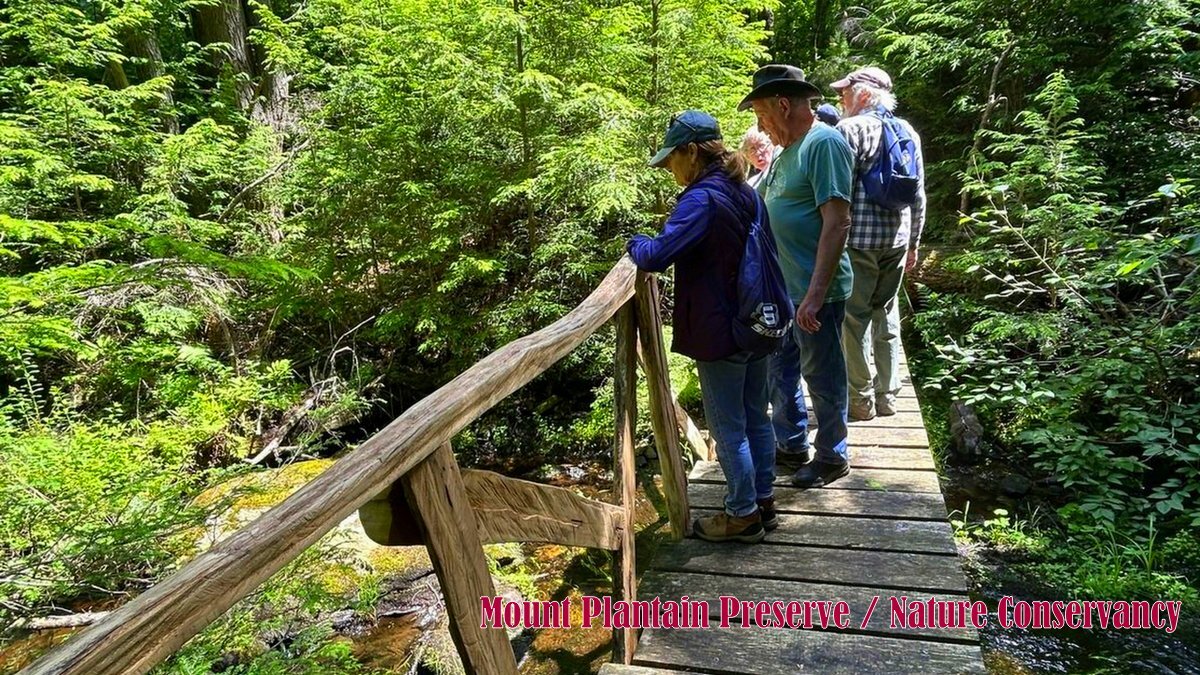
The Trustees of Reservations and the Massachusetts Audubon Society work throughout Massachusetts. The Nature Conservancy, a national organization also works with local organizations to create a protected forested corridor
from Vermont to the Hudson River valley.
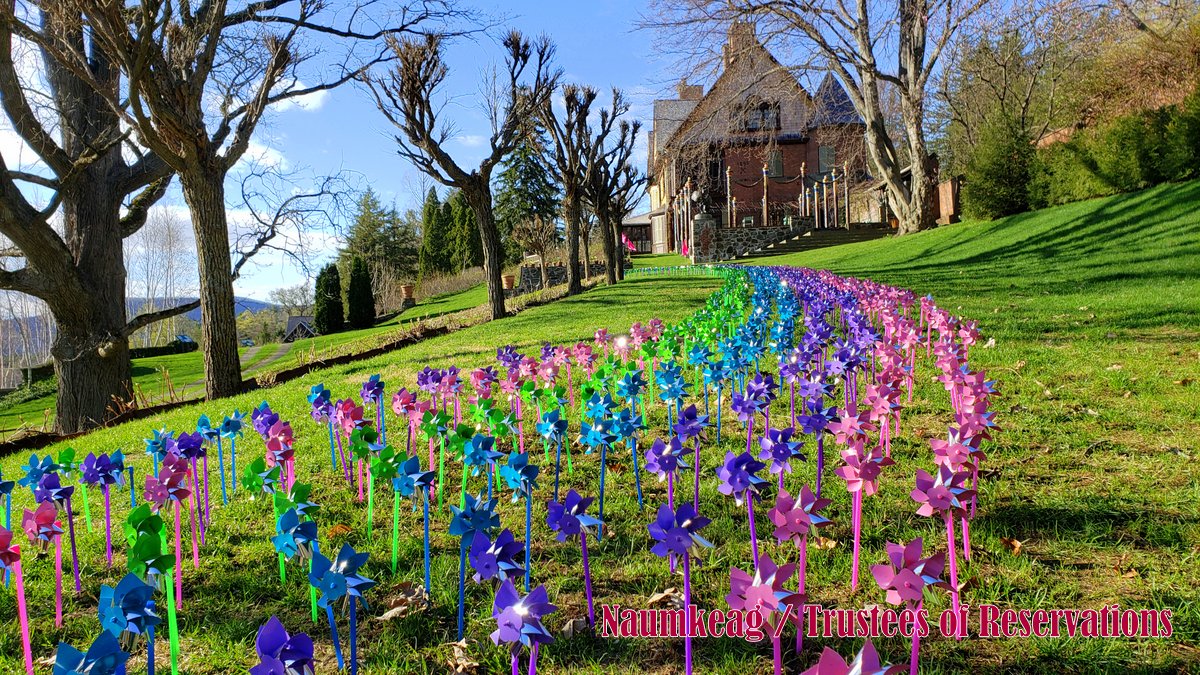
The Trustees, founded in 1891, is one of the nation's first conservation trusts. Its 120 reservations spanning 27,000 acres statewide include 15 properties with 6,529 acres in Berkshire County. Among them are historic homes and estates such as Naumkeag and the Mission House in Stockbridge, and Ashley House in Sheffield. Its reserves include Monument Mountain in Great Barrington, Bartholomew's Cobble in Sheffield, and the Field Farm preserve with a historic bed and breakfast in Williamstown, among others.
The Mass. Audubon Society has six wildlife sanctuaries with 3,400 acres in the Berkshires, including Pleasant Valley Wildlife Sanctuary in Lenox and Canoe Meadow in Pittsfield.
The Berkshire Natural Resources Council is the largest regionally focused conservation land trust in the county. It was founded in the 1960s by George Wislocki, a conservation activist who served as its longtime director; Donald B. Miller, former publisher of the Berkshire Eagle; and Fred Crane Jr. of Crane & Co.
Initially BNRC focused on filing open-space grant applications for local towns and cities, organizing campaigns to clean up rural blight, and promoting conservation and ecological restoration.
It took an expanded role role in 1969, with passage of state legislation sanctioning perpetual conservation restrictions. A major initial step was a 1971 donation of land on Yokun Ridge from the Hatch and Stokes families. In addition to acquiring sites on its own, Wislocki also facilitated the creation of local land trusts such as Williamstown Rural Lands.
Another major step was the donation of 3,200 acres of conservation land to BNRC by Bob Thieriot, a Monterey resident whose family owned the San Francisco Chronicle.
The organization continued to expand its holdings and role following Wislocki's retirement in 2001 under successive presidents Tad Ames and Hansell, and a growing staff.
Today BNRC owns or holds conservation restrictions on more than 26,000 acres of land containing 60 miles of trails. It includes 14,000 acres in 49 designated BNRC reserves of various size ranging from over 1,000 acres down to a one-acre scenic viewpoint. These include open space, woodlands, wetlands, water bodies, and other terrains and habitats, They are free and open to the public for hiking and other permitted recreational activities.
"Reserves are areas that are protected because they contain significant natural
resources or features," said Hansell.
They include Olivia's Overlook at Yokun Ridge South (734 acres) in Lenox, Richmond, Stockbridge, and West Stockbridge; Mount Hunger at Konkapot Ridge (1,728 acres) in Tyringham; Steepletop (1,320 acres) in New Marlborough and Sandisfield; Hoosac Range (989 acres) in North Adams and Florida; Berlin Road (280 acres) in Williamstown; the Boulders (645 acres) in Pittsfield, Dalton and Lanesborough, and Widow White on Potter Mountain in Lanesborough (270 acres), among others.
One of BNRC's major ongoing projects is the High Road, an ambitious long-range plan to create a corridor that connects existing protected areas and trails throughout the county, with easy access points from the center of communities.
BNRC and its partners opened the first segment of the High Road in 2021 with an eight-mile path along Yokun Ridge from Pittsfield to Lenox, connecting trails among the properties of five landowners who together conserve and steward over 5,000 acres along this ridgeline. The goal for the next phase is to have 30 miles of sites for trails by 2030.
Hansell noted that are practical reasons for conservation of natural land in the Berkshires. One is the economic benefits of the region's natural qualities as a basis for the tourism economy.
There are also more fundamental environmental reasons, including the ability to handle the impacts of climate change.
"The Berkshires are part of a huge Appalachian ecosystem that extends from Maine to the Carolinas," she said. "It is one of the most biologically diverse regions in the world.
Because of its geography and location it influences the global environment and climate. There are numerous efforts to protect these qualities and support it with initiatives like wildlife corridors that allow animals to migrate.
"It's also important for our own regional resiliency and ability to adapt to climate change," she said. For example, she cited the need for the land to naturally absorb the excess water that results from the increasing severity of storms that have been occurring.
Hansell also said there are less tangible but equally important benefits to enabling continued access to nature, in terms of the happiness and even mental health of communities.
"We saw a particularly dramatic example during the COVID pandemic," she said.
"Many people expressed appreciation to us about being able to get out and enjoy walking in our reservations during the lockdown. Some said it helped them maintain their sanity."
Tags: land conservation, land trusts, nature,