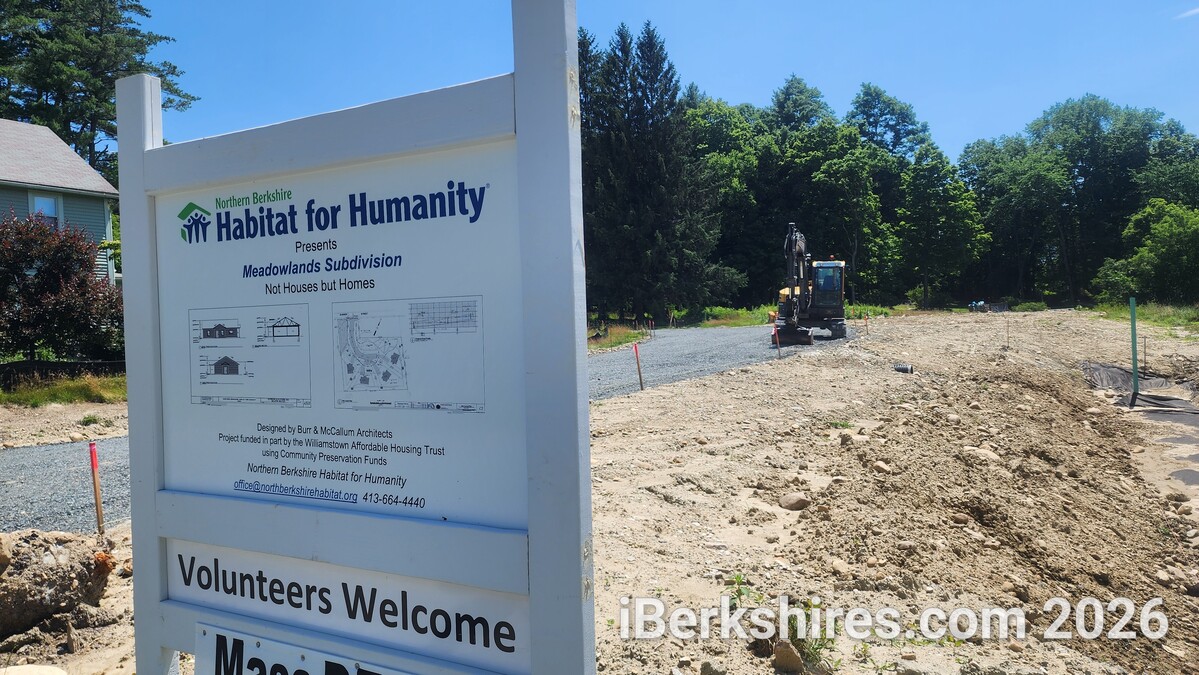
Williamstown Housing Trust Clarifies Status of Contributions to Habitat Project
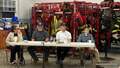
WILLIAMSTOWN, Mass. — A representative of Northern Berkshire Habitat for Humanity appeared before the board of the town's Affordable Housing Trust on Wednesday to make sure the body still was committed to a $100,000 contribution toward the first home to be built in a subdivision off Summer Street.
Keith Davis told the board that his understanding was the board committed at its Aug. 20, 2025, meeting to make the contribution in addition to the $120,000 the trustees pledged to help build infrastructure to serve the planned four-home subdivision.
Although the first payment was received, Davis was concerned that the board was not accounting for the $100,000 contribution at its monthly meeting when it received a report from the trust's treasurer on the body's available funds.
"When I listen to your meetings and don't hear the commitment for $100,000, that makes me a little nervous," Davis said. "Because that is a major contribution."
The three trustees who were on the board last summer all agreed that the commitment for the second six-figure contribution was made.
Then-treasurer Ruth Harrison did not choose to serve another term after her term expired on June 30.
Davis told the panel that something in one of her recent treasurer's report caught his attention.
"I"m listening to the meeting, and I heard, 'We committed $120,000 to the first house,' which was not true, and, 'We paid it.' " Davis said. "That is what was said at the meeting. That's what made me nervous."
During the June 23 meeting, Harrison reported that the trust had about $248,000 in its coffers before receiving the $145,000 grant of Community Preservation Act funds approved by May's annual town meeting for fiscal year 2027.
"Am I right to think we've dispersed the money for Habitat House 1 … and the next time we expect that sort of transaction is when they do House 2?" Cheryl Shanks asked Harrison.
"It was $120,0000," Harrison replied. "That's what we agreed to. And that was disbursed."
Originally, the trustees had committed the $120,000 figure to go toward both infrastructure and the cost of building the first home. Last summer, Davis told the board that given rising costs, NBHFH needed the full $120,000 toward infrastructure and, subsequently, asked for $100,000 to defray the cost of materials for home No. 1.
On Wednesday, he asked to make sure the $100,000 was still going to come from the town.
Daniel Gura, who chaired the meeting, told Davis that the board should have a document that outlines current commitments to the Northern Berkshire Habitat for Humanities and which could be amended with future commitments.
"I blame myself as chair," Gura said. "There shouldn't be any confusion about how much money we owe you.
"We need to figure out a way to have a simple, standardized sheet that says, 'Here's what we thought we were going to spend, and here's what we have spent.' … That way, for you, you will never have any confusion. You won't need to listen to a meeting. You can look at the sheet."
On an unrelated subject, Davis asked the AHT board to consider creating a critical repair program for homeowners.
The board members explained that they have discussed such an initiative in the past but were stuck when a representative of the Massachusetts Housing Partnership explained that under the rules of the Community Preservation Act [the source of the overwhelming majority of the trust's funding], such a program would require recipients to sign a deed restriction on their home to keep it affordable to those making 100 percent of the area median income in perpetuity as a condition of the grant.
Davis told the board that he felt the town should be able to create a repair program that would serve residents without requiring such a restriction.
"The only deed restriction Northern Berkshire Habitat for Humanities places on home owners is for new or totally renovated homes," Davis wrote in an email read aloud at Wednesday's meeting. "Neither our veterans program nor our Brush with Kindness program place any restrictions on homeowners, other than qualifying. It's something to think about."
Thomas Sheldon, the longest serving member of the board, told Davis that a critical repair program has been on the board's radar for years.
"I certainly understand the thinking behind it, but I do think there is, at the heart of this, a legal question about using funds that are CPA-generated," Sheldon said.
Gura suggested that the board could look into either a short-term affordability deed restriction that would expire after a certain number of years or a silent second-mortgage that would require payback of the grant money for a specified period and, like the short-term restriction, sunset.
"Cities and states do this a lot with down payment assistance," Gura said. "The whole point is they don't want you to immediately be able to flip the house.
"A deed restriction could be three years, two years, one year. But the idea that you would give this money [for repairs] and then give someone the freedom to, effectively, monetize it, doesn't make a lot of sense."
Gura noted that the trust's current DeMayo Mortgage Assistance Program, which helps income-eligible first-time homebuyers with grants of up to $20,000, has a silent second mortgage provision that requires recipients to return all or some of the money out of the sale proceeds if they sell the home in a five-year period after the grant is awarded.
The board's newest member, Debra Chaulk, agreed to be the point person for exploring the critical repair question and whether CPA money could be used for a grant that carries time-limited deed restrictions or second mortgages.
In other business on Wednesday, the board welcomed Chaulk and discussed, at Gura's suggestion, whether it should restructure its treasurer position as it looks to replace Harrison. Gura suggested that since the volunteer board member does not have the power to move money around, it might make sense to rely more on the services of the town's treasurer, who actually makes disbursements from the trust.
Tags: affordable housing trust, habitat for humanity,