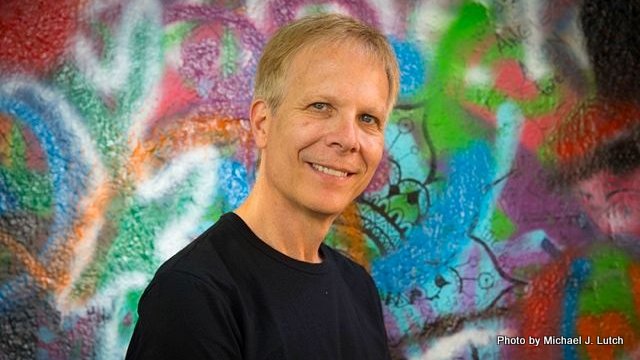
Mark Ludwig founded the Terezin Music Foundation in 1991. The musician and Holocaust scholar will present at Tanglewood this Saturday.
LENOX, Mass. — One day in 1988, while rummaging through a used book shop in New York City, Mark Ludwig found a biography of 20th-century German rabbi and scholar Leo Baeck. Something caught Ludwig's eye: Baeck, who had survived imprisonment at the Terezin concentration camp in Czechoslovakia, noted that despite the inhumane conditions, inmates produced an impressive and important output of music.
Ludwig, who at the time was a tenured violist with the Boston Symphony Orchestra, decided to explore the history of music written (and performed) during the Holocaust.
The next time he was in Europe, Ludwig stopped at an archive in Prague, where he was given sheet music written by Terezin inmate Gideon Klein, who had been murdered by the Nazis at 25.
"I opened the score and started playing it in my mind's ear," recalls Ludwig. "And the beauty of it was astounding. It opened up a whole new world to me in terms of music."
The obsession continues. A car accident stopped Ludwig's career with the BSO, so he devoted his time to Terezin, about 30 miles from Prague.
"One door closed, another door opened," said the Boston resident who is founder and executive director of the Terezin Music Foundation.
On July 18, he hosts "I am Alive Because of Music," his fifth presentation at Tanglewood featuring live music from Terezin and World War II. Here, we speak to the Holocaust scholar, who also teaches Jewish Studies at Boston University.
Your work sounds depressing.
I've made more than 100 trips to Terezin, and it never gets easier once you know what transpired there. I've slept in the barracks and I've performed in the crematorium and got overwhelmed emotionally. The experience is so profound it stays with you for the rest of your life.
Did the camp music come out of defiance?
There is no real, quick, easy answer. We must make sure we do not inadvertently romanticize the music or instill our own interpretations. There are pieces that have messaging in them, creating a multi-dimensional statement of defiance that operates on many levels simultaneously. There are also works that were written for fellow prisoners. I think we can safely say that like any composer, the music from Terezin was also for an audience of generations.
Is the music being played depressing?
There's a huge palette, an array of emotions. Some are very dense-like, some are really driving rhythmically, some are like laments. What we will be experiencing at Tanglewood is live performances that transcend nature and are full of hope, and in some sections, defiance.
In the program the act of faith will be explored and how it translates to music. We will be at the intersection of faith. What is the
power of faith in music and of music in faith? My hope for this program is what does the power of music do for performers, composers and the people listening?
Am I right in thinking that any music, especially the music that came out of Terezin, inspired and challenged not only those in the camps but us as well?
Absolutely. You are so right. The music in the program goes beyond the camps, goes outside the barbed wires and walls of Terezin. It traces the journey of being a human being. Some will be familiar, some different, some striking a common denominator. The program brings together music teetered to the Terezin time period. There's Messiaen, Copland, Bernstein. It is music of a time period, the landscape of humanity.
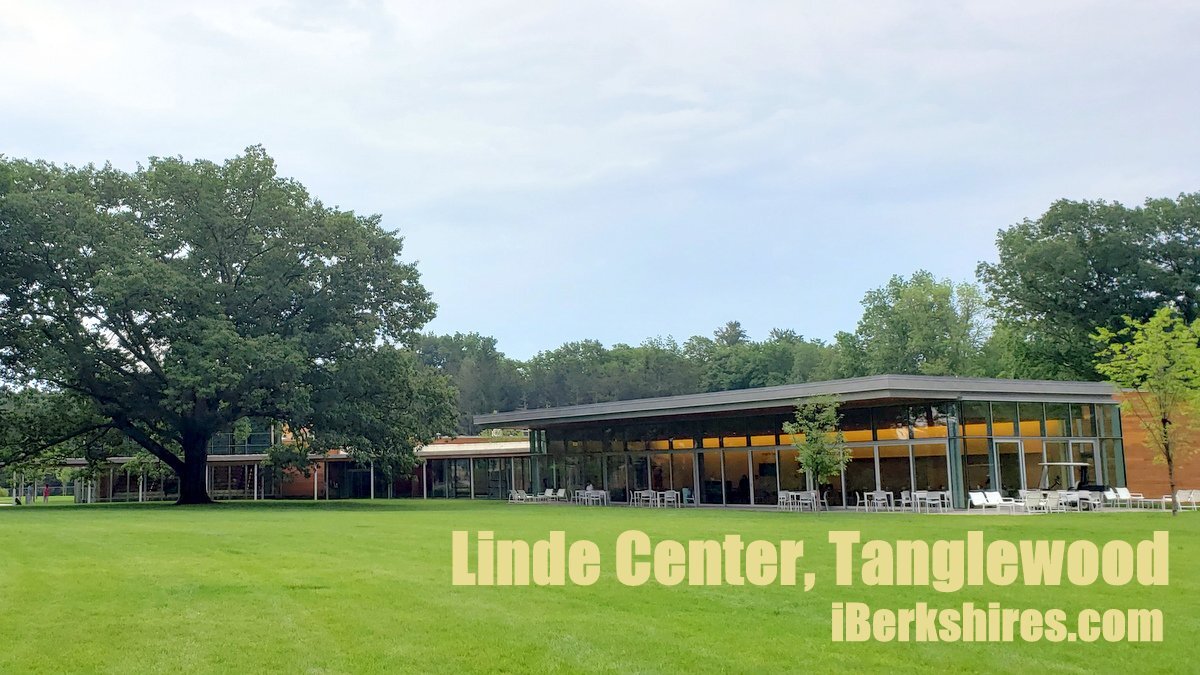
Mark Ludwig presents "I am Alive Because of Music" on Saturday, July 18, at 2 p.m., at Tanglewood's Studio E, Linde Center for Music and Learning. For more information or tickets, call 617-266-1200.
If you would like to contribute information on this article, contact us at info@iberkshires.com.
Your Comments
iBerkshires.com welcomes critical, respectful dialogue. Name-calling, personal attacks, libel, slander or foul language is not allowed. All comments are reviewed before posting and will be deleted or edited as necessary.
No Comments
Pittsfield Schools Finalizing Bus Routes for Fall
By Brittany PolitoiBerkshires Staff
PITTSFIELD, Mass. — The district currently has enough bus drivers for the upcoming school year, and families will know their child's transportation schedule in mid-August.
With about five weeks left of summer vacation, Superintendent Latifah Phillips updated the School Committee on transportation for the 2026-2027 year with middle school restructuring and the closure of Morningside Community School.
Busing is a question that has continuously been raised as the Pittsfield Public Schools approach an academic year with a couple of big changes.
"The reason that the bus stops and times aren't shared until very close to the school year is that routes change based on every student that moves into the district and requires a bus, and so it's important for us to wait as late as possible to ensure that families are getting the most accurate timetable," Phillips explained during a meeting held at Reid Middle School on Thursday.
"We are also continuing to explore after-school transportation for the four schools receiving Morningside, and a survey was given to students who attend the Summer Morningside 21st Century Program to assess transportation needs."
That survey found that transportation does not appear to be a big impediment to students participating in the after-school program, but funding is set aside to ensure students are able to access the same services as they were the previous year.
The district is still planning to offer after-school programming for Morningside transfer students, and is working with the four receiving elementary schools (Allendale, Egremont, Williams, Capeless) to plan a practice bus ride.
Phillips explained that, for someone who has never ridden a bus before, and especially a school bus, they want to ensure that students are poised for success and understand the rules and expectations before the first ride. Students will be able to get on the bus, ride the route, arrive at school, have a quick break, maybe play on the playground and have a popsicle, then return home on the bus.
There was a time when the economy of the Berkshires was significantly impacted — for better and worse — by the operations and fluctuations of GE, Sprague and the other major industrial employers in the region. click for more
For this months Nonprofit Spotlight, iBerkshires sat down with the Elizabeth Freeman Center's Executive Director Divya Chaturvedi to give us an insight into the organization. click for more
One version is that there are many available jobs, but employers have a hard time finding workers to fill them. On the other hand, we also hear that Berkshire County does not have enough good jobs, and people have to move elsewhere because of poor job prospects here.
click for more
The Historical Commission is giving people the opportunity to bring a piece of the town home with them through the sale of hand-thrown and stenciled, colonial-style pottery featuring the Dalton's name and incorporation date. click for more
iBerkshires joined Zustra on a hike at Wild Acres trailhead, where we released two adult eastern painted turtles, one yearling eastern painted turtle and one yearling common snapping turtle.
click for more