Dalton Fire District Voters OK Annual Meeting Articles
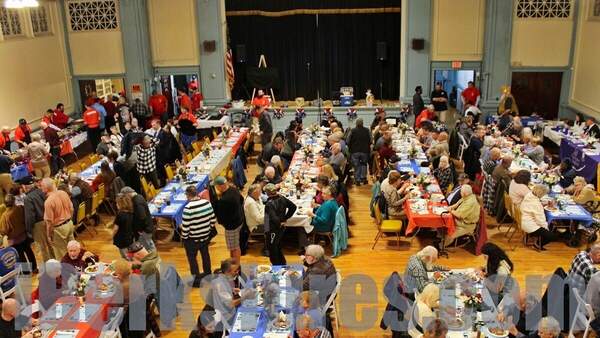
DALTON, Mass. — Voters approved all articles but one on the warrant at the annual Fire District meeting on Tuesday night at the Stationery Factory.
Some 48 voters attended the meeting, which lasted an hour and 40 minutes, to vote on several articles that make up a total budget of $3,663,081.
However, that amount was reduced to $3,660,581 after voters decided the town would assume responsibility for funding the required 50 percent match for a state Department of Conservation and Recreation grant.
If approved, the grant covers forest fighting in fiscal year 2027. The Fire District and the town are separate governing entities, and under state law, responsibility for funding the Forest Warden position and all related expenses falls to the town.
Historically, the district has included a $2,500 article to fund the match, but this year the request was "tabled." However, because articles at annual meetings cannot formally be tabled, the action effectively resulted in the request failing.
"The Forest Warden budget does provide enough money to supply. I believe it's $3,900 … within the budget to cover that amount of money," the town's Finance Committee chair William Drosehn said.
Drosehn, who also moderated the annual meeting, clarified before making the comment that he was speaking in his capacity as finance chair.
The motion to table was made by the town's Finance Committee Vice Chair Thomas Irwin, who moved to table the article to permit the town to fund the matching funds portion of the proposed grant.
The district has consistently spent the funds supplied in the town's Forest Warden budget so if the state awards the town the grant, the budget will presumably need to be increased to adjust for this change, Town Manager Eric Anderson said.
In a follow-up, district officials explained that the state has consistently awarded them the grant for at least a decade.
Voters approved the Fire Department and Ambulance budget, Article 15, of $1,763,008 after requesting that the district provide more data on how much the district's ambulance service costs.
Of that amount $106,000 is allocated for the ambulance, not including salaries, which is a separate line-item of $923,597.24.
Officials explained that determining exact year-to-year ambulance costs is difficult because of the timing and variability of insurance reimbursements, as well as the deeply intertwined staffing structure in which Emergency Medical Technicians also serve as firefighters.
Although it is complicated, Administrative Deputy Chief Charlotte Crane said the district will work to provide more detailed data in the future.
The department provides both Advanced Life Support and Basic Life Support services. The district took on the ambulance service about five years ago when the Dalton Ambulance and Rescue Association closed.
The department will never make money operating an ambulance. There will always be costs associated with providing that service, Board of Water Commissioners Chair James Driscoll said.
When the district took over after the association's closure, it didn't have an idea what that cost would be, but the district is getting better at it, he said.
"We're getting better at it, our cost ratio, or how much we're losing, is getting better every year. We tighten up everything. We watch what we're spending, but we can't control the cost or how often that rolls out," Driscoll said.
"And it's not just it rolls out to Dalton, but it rolls out our mutual aid also. So, it's always out, but we are getting closer and closer to, I think, what I think is going to be an acceptable amount of money to run the ambulance."
The district is looking into going to bordering towns that they cover the most to see if they can get support fees for doing it, he said.
The importance of an ambulance service in town to ensure short response times was also emphasized.
The water department budget of $1,351,961 was approved. Included in this was a request for $30,000 to fund commercial meter replacements. This amount was also approved last year.
"This is so we can have the meters that we use to calculate the water usage calibrated…We've been on a five year program and try to get the meters all up and running and replace the bad ones," Driscoll said.
The district has about two years of this kind of funding left to get all the meters done, and then they should be good for 10 years, he said.
The administration budget of $199,506 was approved. Included in this was a request for $10,000 to fund municipal financial consulting fees.
The district does not anticipate needing this much but wanted to include funding for this because it has only been using the Vadar Systems accounting software for about eight months, Driscoll said.
This funding covers any technical assistance and training for the software.
Also approved was appropriating $356,429 to pay the principal and interest of district loans.
Loans include two 1.2 million-gallon water storage tanks, a $5 million loan for the dam at Windsor Reservoir, and the Elser Pump Station, which was built about 15 years ago and moves water around town.
Each is on a 40-year federal loan with interest rates of between 1 and 2 percent, Driscoll previously said.
All remaining articles passed with little to no discussion.
Elections
Voters elected incumbent Daniel Fillault to the Prudential Committee with 68 votes, while newcomer David Pugh fell short with 54 votes. The position also had 38 write-in votes for Thomas Irwin.
Uncontested Races:
Incumbent Camillus "Cam" Cachat was re-elected to the Water Commissioners seat with 68 votes. District Moderator Anthony Doyle was re-elected into the position with 72 votes. Voters elected incumbent Jeri Kubicki for the district auditor position.
Tags: annual meeting, fire district, fiscal 2027,