Williamstown Housing Trust Advised on Future Planning
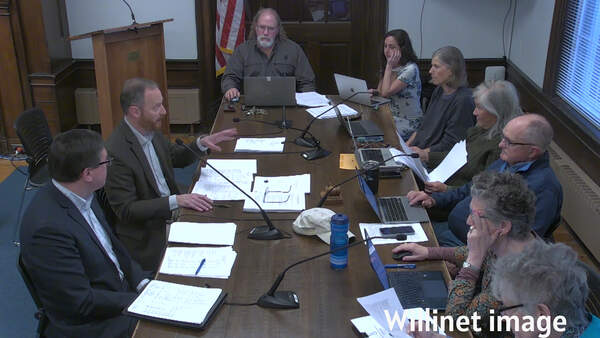
WILLIAMSTOWN, Mass. — The board of the Affordable Housing Trust last week met with a consultant from the Massachusetts Housing Partnership to talk about what sorts of initiatives the trustees should explore.
"This is a common place for trusts to get to," said Shelly Goehring, the senior program manager at MHP. "The needs in our communities are great. The resources are never enough. So figuring out how to move forward can be a struggle."
Goehring provided a statewide perspective on some of the projects that have been funded by trusts in other municipalities. And she told the local board that it should develop a mission statement to bring its work into focus.
"If you don't have a mission statement, I think taking some time to develop a simple statement to identify your niche and your role in the community is helpful," Goehring said, telling the trustees that she could not find a mission statement on the AHT's page on the town's website. "If you have one, maybe relook at it.
"[The mission statement] also helps the community understand how you see your role and what you're focused on. Having this on the webpage could be really useful."
Although the AHT board has never gone through a mission statement exercise, it can look to the "purpose" clause in the 2012 bylaw that created the trust, which reads:
"The purpose of the Williamstown Affordable Housing Trust shall be to provide for the creation and preservation of affordable housing in the Town of Williamstown for the benefit of low- and moderate-income households and for the funding of community housing, as defined in and in accordance with the provisions of Massachusetts General Laws Chapter 44B. Without limiting the foregoing, such purposes shall include the acquisition, creation, preservation and support of community housing."
And, for the last 14 years, the trustees have taken steps to provide that support, notably by developing a successful mortgage assistance program for first-time homebuyers of existing homes, supporting the large-scale development at 330 Cole Ave., and acquiring two parcels of land that, when fully built out, will have six owner-occupied homes built by Habitat for Humanity. Two of those homes are finished and occupied, a third is under constriction.
"I've been encouraging trusts to take some time to really dig into trying to create some goals, strategies and tasks — to come up with a simple action plan to move forward to help focus the work of the trust, to help the community understand what the trust is working on," Goehring said. "This could also help your relationship with the Community Preservation Committee."
The CPC sends Community Preservation Act grant requests to the annual town meeting for approval. Those grants have been the primary source of funding for the Affordable Housing Trust since its creation.
Goehring said that, statewide, CPA funds are the most common force of funding for municipal housing trusts but some communities have gotten "creative" with fund-raisers to supplement that funding, she told the trustees via video conference.
Some communities with inclusionary zoning have created an option for developers to pay a fee that goes to the local housing trust in lieu of building income-restricted units. Other communities transfer free cash to their trusts. One town on Cape Cod passed a property tax override to directly fund its trust.
"We have some communities that have directed short-term rental fees to their trust," she said. "You likely know there is legislation [in Boston] to allow real estate transfer fees to be directed to affordable housing."
Goehring also walked the trustees through several projects that have been completed around the state with support from local housing trusts. In Barnstable, 124 units of affordable family housing were created by redeveloping existing market-rate housing after a $500,000 infusion of CPA funds. And in Brewster, 30 units of income-restricted rental housing was built with a $550,000 contribution from the town.
Before the Williamstown trust moves forward with any new initiatives, Goehring advised that it obtain a housing needs analysis or housing production plan. The last housing needs assessment in town was conducted in 2013 and funded, in part, by the trust. Currently, the trustees are working with a consultant from the Berkshire Regional Planning Commission to do a housing production plan.
Goehring told the trustees that plan will be helpful to the board as it looks to develop its action plan going forward.
"Once you've worked through [the housing production plan], I think the trust should really look at that and think about what parts of it make sense for the trust to take on," Goehring said. "Acknowledging that you're a volunteer board and you can't do everything, what are the pieces from it that might make sense.
"I'm encouraging trusts to create measurable goals, smart goals."
In other business at its Wednesday meeting, the trustees approved the 28th Richard DeMayo Mortgage Assistance Program awarded by the body.
The $20,000 grant will allow a current Williamstown resident who is working in town to purchase their home, according to testimony provided by the local lender who vetted the application.
"I think this is a unique case of someone living in a rental property that they'll be able to buy," said Thomas Sheldon, the lone original member remaining on the AHT board. "A rental-to-buy agreement, I believe, is unprecedented [under the DeMayo MAP]. And, again, the lender is saying the mortgage wouldn't happen without the grant."
Tags: affordable housing trust, housing,