Cheshire Hears Schools, Police Budget
CHESHIRE, Mass. — The Select Board heard presentations on the the two regional school districts that education the town's children and reviewed, again, the police budget.
The total spending plan for the Northern Berkshire Regional Vocational District is $13,218,090, up $564,753 or 4.46 percent over this year. The budget includes a second assistant principal, a special education teacher and interest on the building repair project. The budget was approved in March.
With a capital project in place this year for the school, nine municipalities including Cheshire, has a proportional cost based on population.
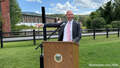
"According to the district's agreement in compliance, this is how that proportional cost is put together. So in this case, that's 8.96 percent population, and it's the equalized valuation and the population get those percentages, add them together, divided by two," Superintendent of Schools James Brosnan said.
The equalized value for Cheshire is $447,945,500.
Chair Shawn McGrath asked if any programming was eliminated with the few cuts with numbers.
Brosnan said it was not necessary as they were able to shift numbers and replaced a full-time librarian who retired with part-time post that meets expectations. He also said building maintenance has been a lot of internal repairs and modernization that has minimized costs.
"So we've done a lot of those in the building itself to save money on certainly when the roof goes in and the windows are done, we're going to go back and say, now we have an energy savings that we are going to add to that as well as the maintenance piece," Brosnan said.
Brosnan also mentioned with the school fixings triggering a need for Americans with Disabilities Act compliance and was able to get permission to have students do some of the work. Metal fabrication, carpentry, and computer assisted design students worked on the projects.
"The occasion was an exciting period for the students who absolutely loved it. It's an opportunity that we couldn't give them or simulate that, to get out and work those build the forms, get set, get ready, pour the concrete, do the finishing. Anybody that's involved in that it's very time consuming, and it's very time exactly," he said. "So the kids had a great time doing it. And looking forward to the next piece, fab will be doing all the railings and will be doing all the fittings. So that's kind of a little bit of a unique piece of what we're doing with the project we're fixing the school with your funds, thank you, and with MSBA and also with our students being involved."
They are already starting construction during school vacation week with the gym roof and once school ends June 12 they will start full construction to hopefully be ready to open in August.
Afterwards the Hoosac Valley Regional School District presented its budget. Cheshire will see its total assessment rise by $196,900, or about 6 percent, to $3,402,982. This budget was also approved by the School Committee in March.
The major drivers are special education costs, including out-of-district placements, and insurance, as well as students school choicing out and charter school tuition, for about $10,012,070, or almost half the budget. That's up about $1.6 million over this year. Dean explained he doesn't have much of a choice over the number of the special education costs.
"So we'll have students that move in, families that move in, and we have to assume responsibility for for the special education services, whether in district or out. So we get what's called an LEA [local education agency] designation, and here's your bill," said Superintendent Aaron Dean.
Dean also explained the amounts and why they have risen.
"School choice, going from $915,000 to $1.1 million. Now the majority of that is a student actually choiced to a district and ended up on an outplacement through that district, and we get billed back through the school choice," he said. "So we have a $252,000 increase that, again, is not anything we created, something that we would get and then our out-of-district placements, we're looking at probably a $300,000 increase at this point in time. ...
"The increase to our budget has nothing to do with the students that walk through our doors, they're students that we're financially responsible for."
The district has partnered with the New England Center for Children to help run severe needs programs. The center will supply a licensed teacher, a board-certified behavior analyst, the curriculum program, and the training while the district will provide the support staff. The superintendent said it's very hard to find severe-needs teachers.
The program was expanded to elementary as well, saving money to help keep students from needing to go out of district.
"So we felt this was an investment worth making in terms of servicing the kids. And again, we're keeping them in their community and making them part of who we are, which I think they deserve," he said.
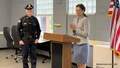
Lastly, interim Police Chief Timothy Garner came to answer questions on his budget, including whether the chief's salary should be $100,000. Some board members felt this necessary to attract candidates based on other communities' pay. It was also questioned if a third full-time officer was necessary right now.
"At one time Cheshire had 12 part-time officers, and we covered from 7 in the morning until 10 on weekdays and midnight on weekends. Part-timers are gone. If we don't have that third full-timer, you're going to with a four-day on two-day off schedule. You're going to have a ton of gaps, but it won't be any coverage," Garner said, acknowledging relying on State Police and can be difficult.
Garner also said it could leave only the chief and two full-timers.
The board also mentioned that they may have to look at the budget with a pair of scissors since they are over budget or if town meeting doesn't approve it.
"So you're beating me up for one full-time officer, but you said absolutely nothing to the people that were sitting here (referring to school budgets)," he said. "You know, every year they come in and sit down and present you what they have, and we're up against what they present. But you get something that wants to keep the town going and moving forward, and we're bucking it."
The board members said they don't want to cut the third officer but might not have a choice, as they may have to pivot if town meeting does not support it and maybe only focus on a chief and two full-time officers.
"Someone could stand up at town meeting, set aside that budget and make a motion to reduce it, and if it gets voted on at the town meeting. It's out of our hands. Yeah, we wouldn't support it, but that's the power of town meeting," said McGrath.
Tags: cheshire_budget, fiscal 2027,