Pittsfield's Peer Outreach Program Coming Into Focus
PITTSFIELD, Mass. — What began as a proposed ban on public camping has transformed into a charge for a peer support outreach program led by the Health Department.
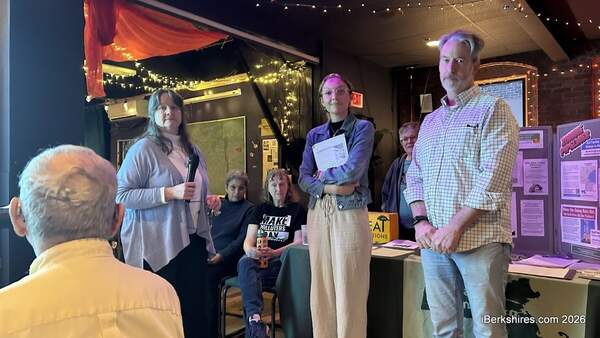
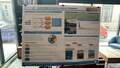
Last week, Director of Public Health Andy Cambi updated the City Council's Public Health and Safety subcommittee on the upcoming program. This public health outreach model is designed to build trust, improve service connection, and support safer, healthier community conditions across Pittsfield.
He pointed to the division in the council chambers when the camping ordinance was still on the table.
"That's not a well, healthy community. We need to make sure that we have understanding and not pointing fingers at one another and creating a sustainable peer outreach model, thinking long term," Cambi explained.
"We want to make sure that all these inputs and activities create that because, again, we want to make sure that we get a return on this investment and then share this model with other communities."
In June 2025, community members flooded council chambers for the Public Health and Safety subcommittee meeting. On the table was a proposed ordinance that would have banned encampments on city property. Mayor Peter Marchetti, at the time, said it "Never has to see the light of day if we come up with a solution."
The camping ordinance was officially scrapped by the City Council last month.
But the effort toward a solution was to put into the Health Department and Board of Health's hands in September 2025. After months of consideration and a visit to the Northampton Division of Community Care, the BOH recommends piloting an alternative community response program with two new peer outreach staff who would begin work in the spring.
Utilizing opioid settlement funds and grants, the department will advance the community health worker to a supervisory position for the two new staff members. The team will work with community partners and municipal departments to conduct outreach and follow-ups on the streets, ensuring that people don't fall through the cracks.
Peer outreach is an intervention model that uses staff with lived experience.
The program is intended to expand the Health Department's capacity to engage residents who might be disconnected from services, to build trust, and to improve access to vital resources. It was designed to be broader than a single-issue mission and evolve with community needs while being grounded in outreach, not enforcement.
The BOH will finalize the program framing model at its next meeting and then share it with the community. They are also reviewing data systems to track the program and finalizing an implementation budget and timeline.
Cambi pointed out that the department has been expanding its capacity in the last few years, hiring a community health worker and a social worker who work with the public health nurse in outreach activities such as community wellness clinics and a car seat program.
"This work has brought me a lot of personal development and professional development, so I'm excited to share this with everybody," he said.
The voluntary program's goal and purpose are broad, but designed to evolve with community needs.
He clarified that the peer support program won't try to replace agencies currently doing the work, but will be a community asset to them and help identify where there are gaps in service.
This program also aims to improve sanitation and safety in public spaces to promote general community wellness.
"What we're saying is that we're going to make a designated effort to improve these spaces in our area," Cambi explained.
"What I've seen recently in the past couple months is there's been an increase in graffiti, and so what we need to do is to make sure that our department is focused on addressing that."
Dignity and respect will be guiding principles when approaching this work, as well as data-informed decision-making. The health director said having a data management tool is "very, very" important for the program's success.
The city has started building a relationship with the University of Massachusetts' Center for Program Evaluation for feedback during the formative stage, process stage, and a summary after the program has been implemented for some time. This will provide an outside view of the work and highlight opportunities for adjustments.
The First recently opened in Pittsfield. It is a housing resource center funded by Pittsfield's American Rescue Plan Act dollars in the basement of the Zion Lutheran Church, with nine permanent supportive studios at the rear of the building.
This is one of the key resources that the program will connect people to, offering showers, storage, and a place to rest. Cambi noted that after looking at other municipalities, Pittsfield is "very well ahead" in that sense.
"I think as a municipality, we made a good investment and a good partnership with The First," he said. "Let's continue that type of engagement. Let's continue that type of movement."
Related to mental and physical health conditions, this will allow the department to engage with service coordination, hoping to improve referrals and follow-ups to doctors and specialists.
The plan is currently a working document, and at its next meeting, the Board of Health plans to finalize the program framing model. Cambi said that planning will be finalized by April 8, and he will present it to councilors when it is complete.
Councilors are glad to see where the proposal has gone and commended the Health Department and BOH for the approach. They offered suggestions and feedback after the presentation.
"I think that this is a genuinely positive reset to the conversation," Ward 6 Councilor Dina Lampiasi said.
Tags: board of health, homeless, social services,