OLLI Players to Hold Auditions for Reading of 'Sinclair Lewis Work'

Print Story | Email Story
PITTSFIELD, Mass. — The OLLI Players, part of the Osher Lifelong Learning Institute at Berkshire Community College (OLLI at BCC), welcome all to audition for a reading of "It Can't Happen Here." 
 
The reading is adapted from Sinclair Lewis's novel and play, which relates the rise of a dictator in America in the 1930s and its impact on society at national, local, and individual levels.  
 
Auditions will be held on Wednesday, March 18 from 9 a.m.–noon and Thursday, March 19 from 1–4 p.m. at BCC's main campus, located at 1350 West Street, Pittsfield, in room G-12. Visitors should park in the visitor parking lot and walk across the driveway to the Susan B. Anthony Building. 
 
The OLLI Players are seeking 15 adult actors of different ages and genders, each of whom will play multiple roles. Copies of the script will be provided at the audition, and audition sheets will be furnished. If you have a resume, please bring it with you. 
 
After the actors have been selected, approximately 10 rehearsals will be held from mid-March through Saturday, April 18. A reading of the full-length script will take place on Sunday, April 19 (time to be announced).  
 
Questions? Contact Director Barbara Waldinger at barbarawaldinger@gmail.com.  
 
This performance is supported by the Michael and Nancy Vale Performing Arts Program Endowment at OLLI at Berkshire Community College. 


Tags: BCC,   
If you would like to contribute information on this article, contact us at info@iberkshires.com.

Berkshire Museum Explores Ancient Egypt With ‘Soulful Creatures’

By Sabrina DammsiBerkshires Staff
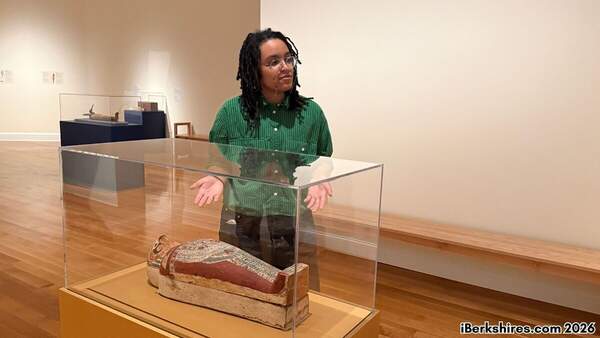
PITTSFIELD, Mass. — Following its multimillion-dollar renovation, the Berkshire Museum is welcoming an exhibition unlike any it has been able to host before.
 
Marking the museum's first major exhibition since its renovation, "Soulful Creatures: Animal Mummies in Ancient Egypt," opening Saturday, Oct. 10, thins the veil between the ever-evolving history of Egyptian culture and society and modern day people. 
 
"The most important thing about history is recognizing people from the past as actual people. Ancient Egyptians are no different than us," said William Dore, the museum's chief curator. "They have different cultures and beliefs and different viewpoints, but you can say the same thing about people today."
 
When audiences experience the exhibit, they will see the humanity in the people of the past, which in turn helps them connect with different views and perspectives around the world today, he said. 
 
Combining archeology with modern scientific imaging, Brooklyn (N.Y.) Museum curators Yekaterina Barbash and Edward Bleiberg designed an exhibit that works to uncover the mysteries behind these objects and the beliefs and rituals that surround them. 
 
"I think something that people kind of misunderstand about history is none of it's ever settled. ... History is a science that is constantly questioned,” Dore said. "It only works if everyone's constantly rethinking things, learning new things ... which is for me super exciting because as much as we know a lot about the ancient Egyptians, there's a lot we don't know.”
 
The installation features dozens of artifacts on loan from the Brooklyn Museum that explores the practice of animal mummification and the role animals played in ancient Egyptian religion. 
 
View Full Story

More Pittsfield Stories