image description
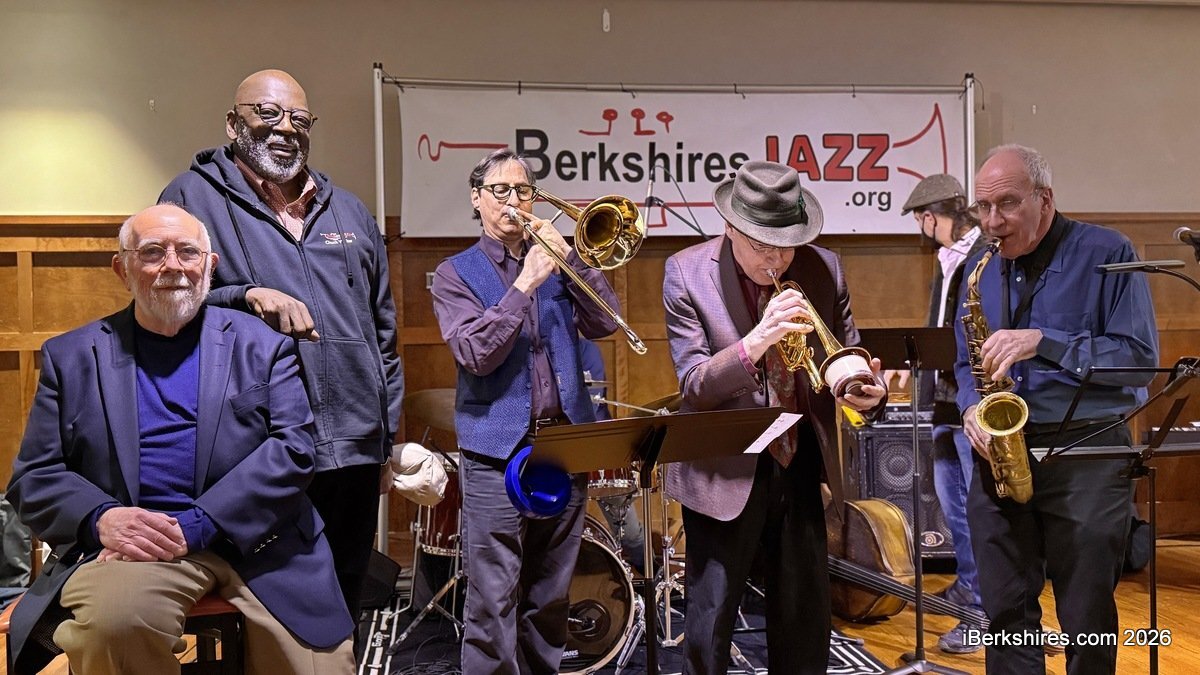
Ed Bride, left, is stepping back from the organization he founded to foster jazz in the Berkshires; Chuck Walker, next to him, is taking up the mantle to further jazz education and appreciation.

Berkshires Jazz: New Leadership Continues Founder's Passion
By Sabrina DammsiBerkshires Staff
Print Story | Email Story

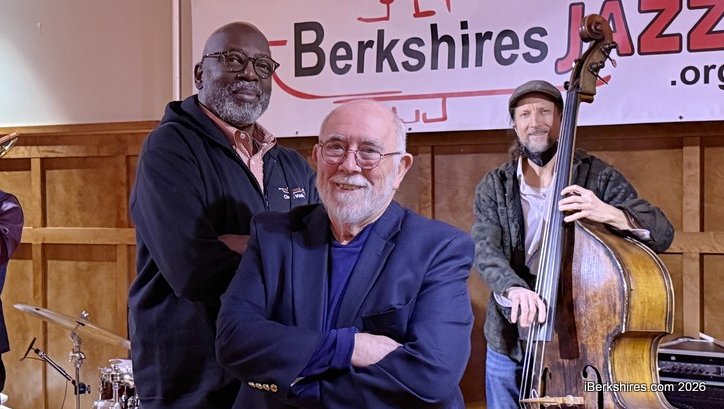
Chuck Walker, left, found Berkshires Jazz a year after moving to the Berkshires and shared his enthusiasm for the musical form with Ed Bride, not realizing he was the founder. It eventually led to Walker become the organization's president.
PITTSFIELD, Mass. — Berkshire County is jazz, said Chuck Walker, the newly appointed president of the nonprofit Berkshire Jazz. 
 
Jazz embodies freedom way of thinking, improvisation, and a distant respect for the rules, Berkshires Jazz founder Ed Bride said. 
 
It is an emotional refuge from today's atmosphere. The Berkshires, too, is like that, a place to escape and clear your head, which is why so many artists over the years have visited the area, the duo said. 
 
"You need a place to escape from that in order to, as we all used to say back in the '60s, to get your head right. The Berkshires are a place where you can get your head right," Walker said. 
 
"The way that you just described jazz as improvisational … as being out of lockstep with  whatever the prevailing society is. That's what makes jazz jazz. That, too, is what makes the Berkshires the Berkshires." 
 
For the last 20 years, Bride has been rejuvenating jazz in the Berkshires, a genre that was once alive thanks to venues such as Music Inn and The Lenox School of Jazz, sometimes called the Music Barn, active from 1950 until the late '70s. 
 
Bride said when he started the Pittsfield City Jazz Festival in 2005, which became the Berkshires Jazz nonprofit in 2009, you could go months without hearing jazz, with only one place in the county that would regularly play it: Castle Street Café in Great Barrington, which closed in 2016. 
 
"After five years, we sort of proved it was safe to do jazz in the Berkshires, because after we did our first festival, we found it in more and more of the lounges and restaurants. We found more and more organizations presenting jazz on the stage. I think that it had just lost its way," he said.
 
There were 10 to 20 years where it wasn't heard on the radio, and you still don't hear it a lot on the radio and it wasn't taught, Bride said. 
 
"All those things have reversed and I think that the amount of performances we had, had something to do with it. People showed up," he said.
 
Since its inception, Berkshire Jazz has been dedicated to fostering jazz education and enhancing the local jazz scene. 
 
Through year-round programming, the organization brings renowned jazz artists to the area and supports sustained education with workshops, master classes, clinics and student performance opportunities.
 
Berkshire Jazz supplements local school music programs by providing in-depth workshops and master classes for middle and high school students across the county. 
 
These activities immerse students in jazz history, group playing, listening, and improvisation, often culminating in student ensembles opening for major concerts, Bride said. 
 
"The whole concept is, get them involved when they're young – they'll appreciate it. They may not go into jazz. They might not become the biggest fans, but they will understand it, and some of them will, in fact, gravitate to it," he said.
 
One of the best moments was in 2009, when Dave Brubeck, American jazz pianist and composer, was sitting at a piano next to a high school freshman at a concert at the Colonial Theatre. It is a moment people are still talking about, Bride said. 
 
"Jazz is not something that forces itself on you. Jazz doesn't come looking for you and grab you, but you know you like it, especially the young people, when they first start to get into it," Walker said.
 
The organization's workshops aim to help students understand what draws them to jazz, teaching them both how to appreciate and perform what is already inside of them, he said.
 
"Education is one of the most important things that we do. We all love jazz. We all love to hear performances of jazz. We certainly love putting on those performances. But if jazz is to survive, we're going to need that next generation of producers, performers, engineers, who have a love of jazz to carry it forward, Walker said.
 
After serving as the organization's president since its inception, Bride is stepping back from the role to move to New Hampshire to be closer to family. 
 
Berkshires Jazz's board selected Walker because of his passion and enthusiasm for jazz, strong organizational skills, and what Bride described as "wise counsel."
 
Walker is a Berkshire County transplant, moving to the area during the pandemic and drawn by the area's beauty and quieter, calm atmosphere; a contrast from his life in New York. 
 
Before moving to the Berkshires, Walker worked nearly 40 years in television in several roles for the ABC and Disney including as a producer, production manager and director of engineering and operations.
 
Less than a year after moving to the region, Walker attended a Berkshires Jazz event during the Pittsfield City Jazz Festival. There, he enthusiastically shared his love of jazz with another attendee, who, unbeknownst to him, was Bride.
 
This is just a new evolution to the organization, Walker said. Bride is still involved and Berkshires Jazz has a team dedicated to continuing and expanding what Bride has built. 

Tags: jazz,   music,   
If you would like to contribute information on this article, contact us at info@iberkshires.com.

BRTA Focuses on a New Run Schedule

By Breanna SteeleiBerkshires Staff

PITTSFIELD, Mass. — The Berkshire Regional Transit Authority is still working on maintaining its run schedules after dropping the route realignment proposal.

Last Thursday's meeting was Administrator Kathleen Lambert's first official meeting taking over the reins; retiring director Robert Malnati stayed during a transition period that ended last month.

Lambert is trying to create a schedule that will lessen cancellations. There was a two-hour meeting the week before with the drivers union to negotiate run bids and Lambert is working with the new operating company Keolis, which is taking over from Transdev.

The board spoke about anonymous emails from drivers, which Lambert said she has not seen. iBerkshires was not able to see those letters, but has received some. 

"They were lengthy emails from someone describing themselves as concerning BRTA employee, and there was a signed letter from a whole group of employees basically stating their concerns. So, you know, to me, it was a set of whistleblowers, and that, what my understanding is that this really triggers a need for some type of process to review the merits of these whistleblowers, not going to call them accusations, but basically expressions of concern," said member Stephen Bannon.

A letter iBerkshires received spoke of unhappy drivers who were considering quitting because of decisions being made without "input from frontline staff," frustration and falling morale, and the removal of the former general manager shortly after Lambert came in.

Lambert said it's difficult to navigate a new change. She also noted many drivers don't want to do Saturday runs and it has been hard negotiating with drivers on the new runs.

"I would like you all to keep in mind that the process of change is super difficult. Transdev has been here for 20 years, and some of these drivers have never known any other operating company, the way some of the operations have been handled has been archaic," she said. "So getting folks up to speed on how a modern transit system works is going to be painful for them. So I don't want to say that I'm unsympathetic, because I am sympathetic, but I am trying to coax people along with a system that's going to seem very strange to them."

The board spoke about better communication between them and Lambert, citing cooperation will be best moving forward.

"There's just a lot of stuff in the air right now, and there are a lot of fires to put out to make this a coordinated effort. And if we don't keep our communications open and be straightforward, then you get blindsided about how you know the input that you could get from us about your position, and how you know what's going on in your direction, and we get blindsided. And I think that we have to make sure that this is a collaboration," said member Sherry Youngkin.

"Both sides have responsibilities, because in the long run, this advisory board is going to have to make decisions as to how we brought forward and if we've gone forward in a fair and helpful way. And I think that's hopefully what everybody is looking for also." 

Transdev and Keolis held a three-day recruiting event interviewing almost 40 candidates and offering jobs to eight, but only three stayed on to start training. Lambert said it was disappointing but she will keep trying to retain more people.

In her first report to the board, she noted that ridership dipped a little over 10 percent, but still remains higher than last year, adding that was because of cancellations of services because of the lack of drivers.

Like the last meeting, some of the advisory board members were torn over the start of the Link413 service, worried that the start of the service took drivers away and the numbers of riders are low.

Lambert, however, said the ridership has doubled from last month.

"As I've spoken before, we have, generally, a six-month adoption for brand-new service before you can really go in and evaluate, are you being successful based on the grant that my predecessor wrote along with the team for PBTA and RTA, we are ahead of schedule, which is pretty good, so I'm hoping that will continue to improve," she said.

Member Renee Wood said the board never approved the service, adding the only thing she could find in the minutes was a vote to accept the equipment. She said it was supposed to be put on the agenda to discuss.

"The Link413 service has been three years in the making. It's been a grant that was accepted and has been working with our partners, PVTA and FRTA, to put into place. So I don't have the entire history of how that process worked, but it's been three years in the making, and did we not understand that once we accept that grant that we were going to put in new service?" Lambert said.

The board discussed if Title VI, the Civil Rights Act, was followed with an accurate review and accurate amount of time for public comment period on the service changes and if its attorney should review if the  grant conditions were properly followed.

Lambert said changes had the 60-day comment period included in the proposed route realignment packet, giving the opportunity for the community to respond to that as well but will look into the legality of the situation with their attorney.

View Full Story

More Pittsfield Stories