Big Y Donates 1 Million Meals to Local Food Banks

Print Story | Email Story
SPRINGFIELD, Mass. — Big Y's annual Sack Hunger campaign provided 1 million meals to food banks serving families across Massachusetts and Connecticut. 
 
Through Sack Hunger, every $5 customer donation helps deliver 10 meals to neighbors in need. This impact is amplified by Big Y's additional contributions, including designated proceeds from Produce, Floral and Meat departments, along with a portion of sales from Big Y's family of private label brands. Together, these efforts help ensure food banks can meet increased demand during the winter months.
 
Since its launch in 2010, Sack Hunger has continued to grow in reach and impact, stated a press release.
 
"Reaching one million meals is a powerful reminder of what's possible when a community comes together with a shared purpose," said Michael P. D'Amour, President and CEO of Big Y. "We are grateful for our customers and employees who consistently and generously support this annual campaign. Sack Hunger reflects the heart of who we are as a company and our belief that access to nutritious food should never be out of reach."
 
The funds raised through Sack Hunger directly support four regional food banks: The Food Bank of Western Massachusetts, Worcester County Food Bank, The Greater Boston Food Bank and Connecticut Foodshare, which together serve nearly 1500 local agencies working on the front lines of hunger relief.
 

Tags: big y,   
If you would like to contribute information on this article, contact us at info@iberkshires.com.

Berkshire Museum Explores Ancient Egypt With ‘Soulful Creatures’

By Sabrina DammsiBerkshires Staff
PITTSFIELD, Mass. — Following its multimillion-dollar renovation, the Berkshire Museum is welcoming an exhibition unlike any it has been able to host before.
 
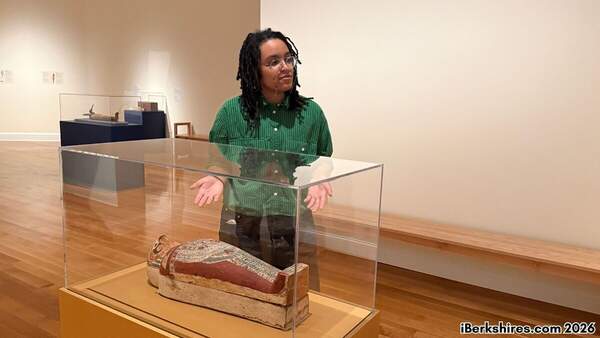
Marking the museum's first major exhibition since its renovation, "Soulful Creatures: Animal Mummies in Ancient Egypt," opening Saturday, Oct. 10, thins the veil between the ever-evolving history of Egyptian culture and society and modern day people. 
 
"The most important thing about history is recognizing people from the past as actual people. Ancient Egyptians are no different than us," said William Dore, the museum's chief curator. "They have different cultures and beliefs and different viewpoints, but you can say the same thing about people today."
 
When audiences experience the exhibit, they will see the humanity in the people of the past, which in turn helps them connect with different views and perspectives around the world today, he said. 
 
Combining archeology with modern scientific imaging, Brooklyn (N.Y.) Museum curators Yekaterina Barbash and Edward Bleiberg designed an exhibit that works to uncover the mysteries behind these objects and the beliefs and rituals that surround them. 
 
"I think something that people kind of misunderstand about history is none of it's ever settled. ... History is a science that is constantly questioned,” Dore said. "It only works if everyone's constantly rethinking things, learning new things ... which is for me super exciting because as much as we know a lot about the ancient Egyptians, there's a lot we don't know.”
 
The installation features dozens of artifacts on loan from the Brooklyn Museum that explores the practice of animal mummification and the role animals played in ancient Egyptian religion. 
 
View Full Story

More Pittsfield Stories