Hoosac Valley Regional Faces Challenging Budget Season
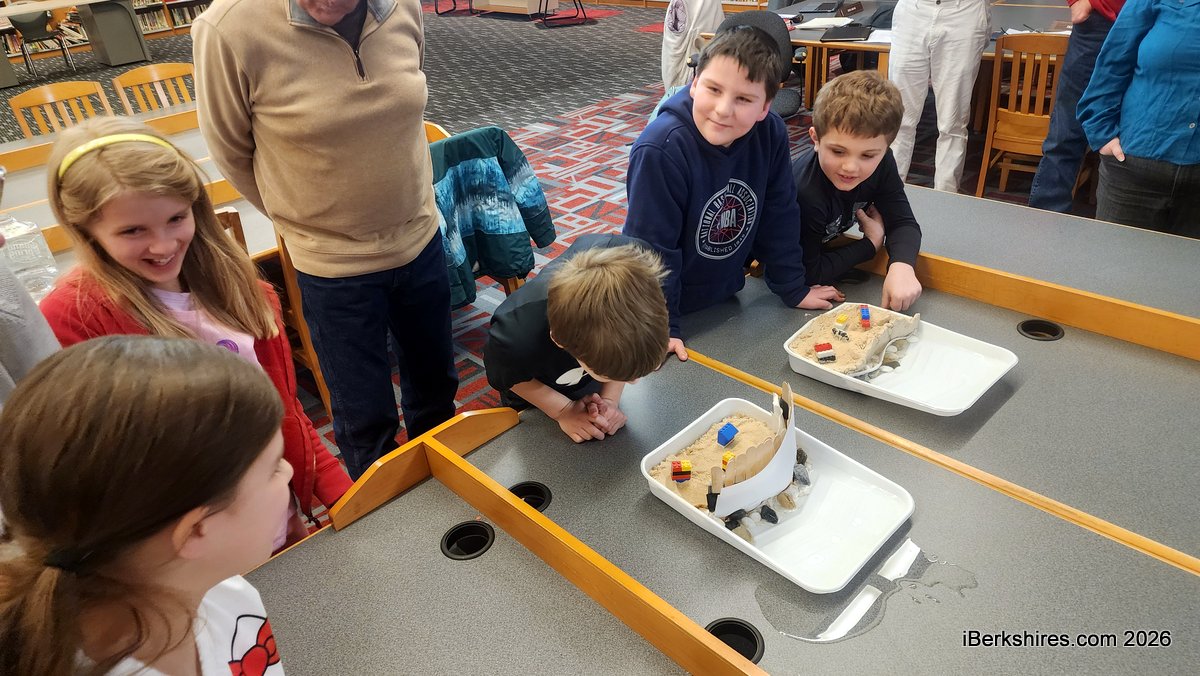
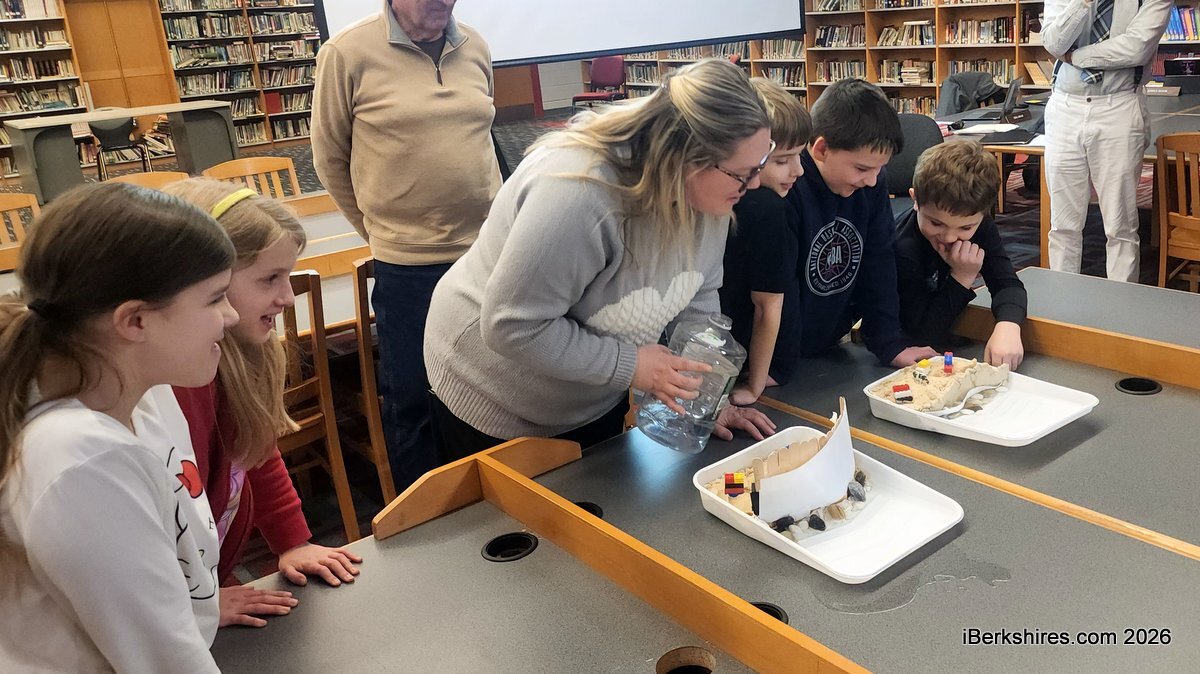
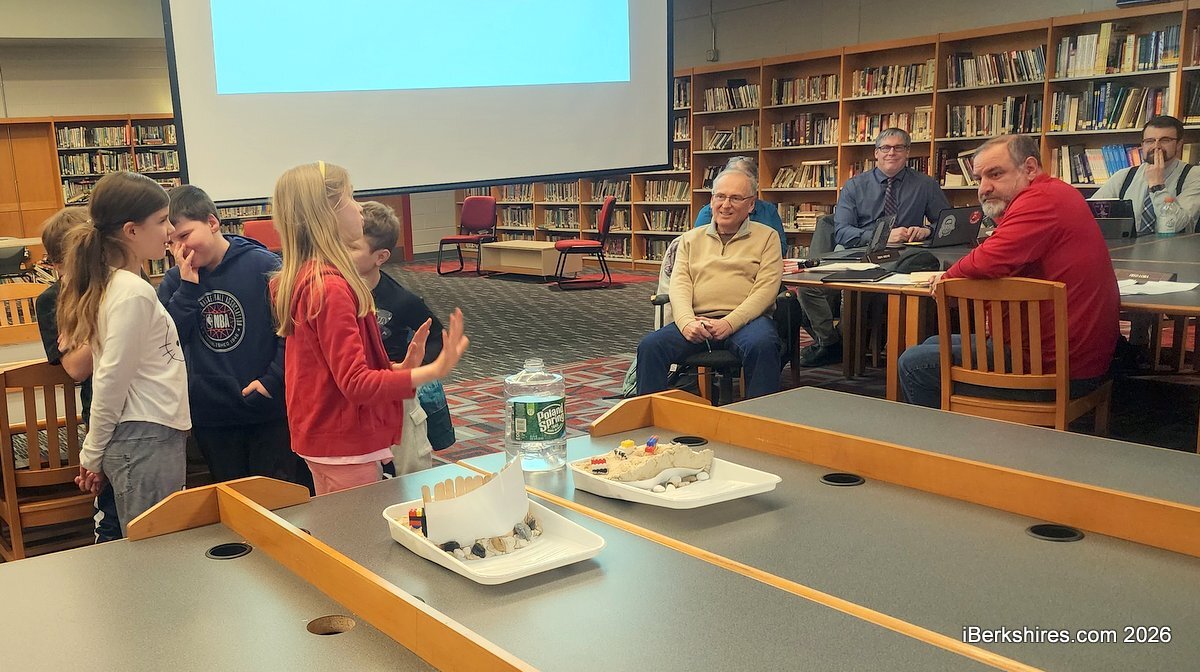
The demonstration of the 'seawalls' the students created was a 'Spotlight on Applied Learning,' a frequent agenda item for the monthly meetings.
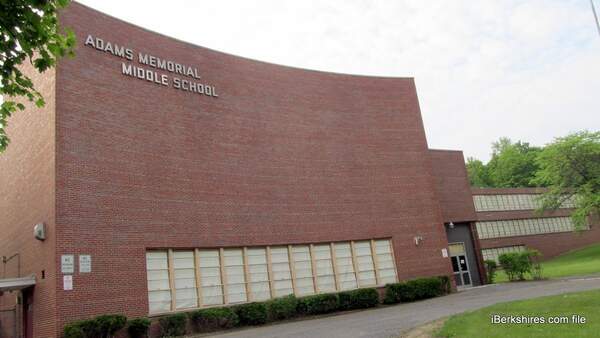
The School Committee on Monday night got a first look at a draft budget of $24,763,431, up $1.62 million from this year.
Superintendent Aaron Dean said he and Business Manager Erika Snyder have been "trying to nail Jell-O to a tree" with this budget the last three weeks.
"And this is kind of what it is already chipping away something. So there's going to be plenty of challenge with our finances," he said, adding that filling that gap is not realistic, "given the constraints that the towns have. So we have to kind of work to find a more reasonable number. That work will be through reductions, unfortunately, but it'd also be looking at other funding sources and revolving sources."
Like most school districts, Hoosac Valley is seeing increases in special education costs, which are up about 22 percent for fiscal 2027.
Between specialists, contracted services and outsourcing, the district is looking at about a half-million increase alone in special education costs.
Dean said the student population was nearing 30 percent needing services and that up to 10 will be requiring out-of-district services with two more "in the queue."
"The work we're doing is to try to provide quality program for severe needs students, so we can manage their needs in district, and so they can grow up and learn with their peers," he said. "We can't always meet the needs. There's only so far that we can go as a public school."
In addition to hiring more staff to meet students' needs, there's the problem of finding scarce professionals in competition with other school districts. Hoosac, for example, has had to contract for a virtual services in speech language assistance, which Dean estimated cost twice what it would be to hire someone.
"We're seeing an increase in need for severe needs students, but we're seeing a decrease in available personnel," he said. He said encouraged residents and School Committee members to advocate with the Berkshire delegation to fully fund the special education circuit breaker reimbursements at $60 million, which would make Hoosac "almost flush."
Prior to the budget discussion, the committee voted to close school choice slots for the coming year. Dean recommended the action based on costs and space. About 18 of the current 42 choice students are receiving special education.
"We don't have the space and we don't have the resources to take on more students," the superintendent said, noting four students moved in last week. "We need to make sure we have seats for people who move into our community."
Other drivers behind the budget hike is $437,000 in liability insurance and school choice tuition for the 130 students choicing out of the district; and $351,961 for health insurance.
The district also has to absorb half of the four preschool teacher salaries for the early child care program at about $173,000. The state grant changed the salary coverage after the district's budget was approved last year, but working with state Rep. John Barrett III, Hoosac was able to get a waiver.
"I think we've actually done a tremendous job of keeping the district right-size and working to provide and maintain quality program, but this is a significant challenge to maintain what we have and close that ground going through this year's budget," Dean said.
Committee member Adam Emerson, said, "I feel like we're in survival mode" and that "it's beyond admirable that our schools are performing at a level given how much cuts we've had."
The superintendent said there will be have to some reconfigulation of programming and reductions ahead. The draft summary had been communicated to the member towns of Adams and Cheshire, and the district's finance subcommittee was to meet Tuesday evening for a in-depth review.
"It's really our planning has put us in a position where we can still sustain -- not face closing the building and shutting down program -- at this point in time," said Dean. "So I think we think we have to have an eye towards getting through this year. We also have to have an eye towards getting through next year."
In positive news, third graders demonstrated what they had learned about seawalls with science teacher April Mazzeo and Alissa Rosier, assistant principal of teaching and learning.
Assistant Superintendent Kristen Palatt has been bringing students to the committee meetings to show their work as a "Spotlight on Applied Learning," and how their activities align with the educational standards and connect across disciplines.
Five of the pupils presented their work to the committee, answering questions and getting a final look at how their work held up to water.
The children first brainstormed with prompts provided by Mazzeo on what materials they would use, what's realistic, what they'd dream of doing.
"Kind of really honed in on as real engineers and scientists to take these ideas, build things with trial and error and keep making adjustments," Mazzeo said.
The pupils could use four materials — such as clay, popsicle sticks, rocks, plastic, duct tape. One group made a popsicle stick seawall strengthened with plastic and duct tape and rocks; the other a steep clay cliff with plastic underlayment and rocks.
The "walls" were built inside paint trays and committee members watched as they were tested with water. The popsicle-stick wall held but water seeped around the sides; the cliff seemed to hold pretty firm.
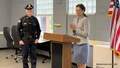
Palatt gave the students certificates recognizing their efforts both in the classroom and presenting to School Committee.
Tags: HVRSD, student presentation,