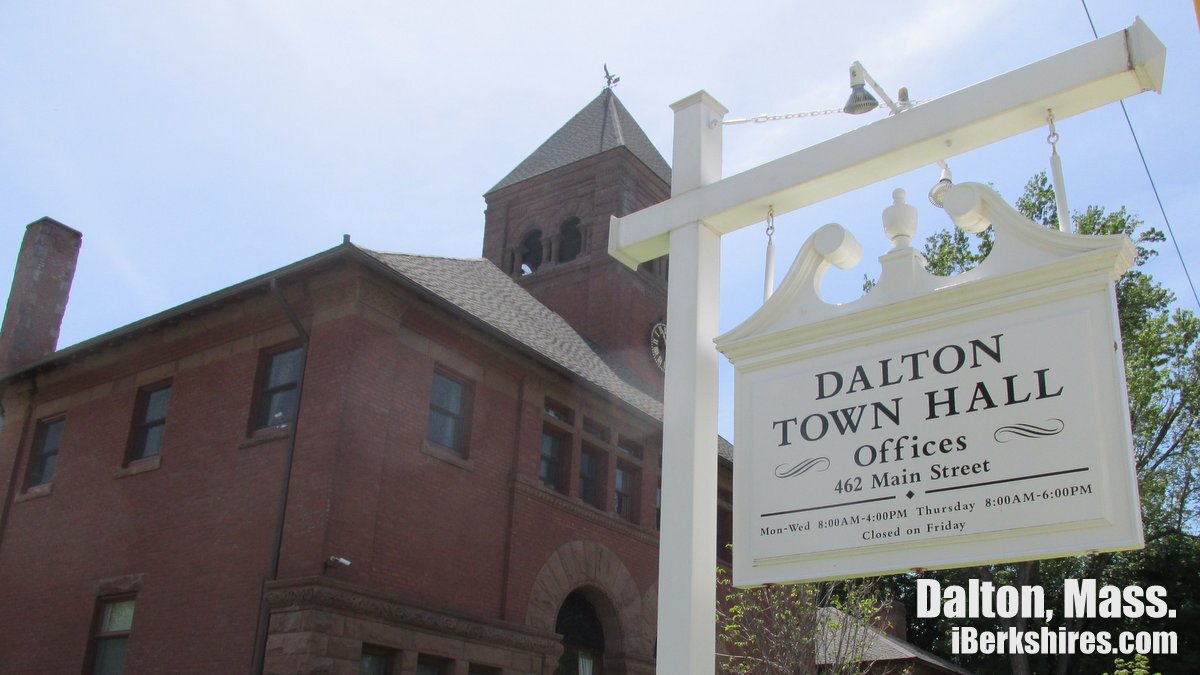
DALTON, Mass. — In the worst-case scenario, the town could be forced to reduce staff if projected increases in the school budget, health insurance, and other uncontrollable costs occur.
Town Manager Eric Anderson presented the "grim" budget to the Select Board on Monday, showcasing the anticipated major driver in the fiscal year 2027 budget.
"The first thing I want to say is the first cut of the budget always looks hopeless. I mean it always does. This is, in many ways, what we should probably think of as the worst case scenario," Anderson said.
"The goal here has got to be to make this budget better and more reasonable overall because this one talks about doing some fairly drastic things."
Currently, the town estimates an operating budget of $12,015,278, a $1,121,684 or 10.3 percent increase, but a lot of data is still unavailable, so this is expected to decrease.
The town's single-family tax bill is significantly higher than the rest of the Berkshires but lower than the state. The tax bill as a percentage of household income is also significantly higher than the rest of the Berkshires on average, Anderson said.
"About 14 percent of the average, the median household's income in Dalton is going to pay town taxes. So that's a pretty significant number. In Berkshire County as a whole, it's about 12 percent," he said.
"So, we're about 17 percent higher than Berkshire County on average. We're certainly not the highest, not by far, but there's a lot more that are less than us overall."
At the end of this budget year, the town will be under its levy limit by about $350,000, and if the town were to max its limit, which is not recommended, fiscal year 2027's budgeted tax could increase by approximately $810,000.
"It's probably much smarter to try to stay at least $100,000 to $150,000 under the levy limit so you have a little cushion if something goes better in the next year," Anderson said.
Although it is still early in the process and these projections may change, preliminary numbers indicate the Central Berkshire Regional School District forecast a nearly 10 percent budget increase.
"To keep under the levy limit if the school budget remains as it is, the funding for the town has to decrease by at least $200,000 to even make the levy limit and that's going to be brutal," Anderson said.
"The regional school district is going to have to address that number. If we got that number down to a 4 percent increase, we could live with that at the town and we could get through with no staff cuts and some trimming, and a little bit of hardship, but nothing crazy. The question is can they really do that and what they're going to come in as a final number."
Anderson said he spoke to Gregory Boino, the district's director of finance and operations, on Friday, and was told that the individual levies for the towns is between 8 and 14 percent.
"They're more than half of our budget. So, a 9.9 percent increase in half of our budget translates into at least a 4.5 percent increase in our overall town budget if we have the exact same spending next year as this year," Anderson said.
Officials from Central Berkshire Regional School District will be presenting the budgets rational and updated numbers during a future Finance Committee and Select Board meeting.
Additionally, overall state aid as a percentage of town budgets has dropped by 50 percent since the 2007 recession.
There are also planned sewer bill increases because of Pittsfield's sewer treatment plan upgrades. More information here.
The budget builds in cost-of-living and step increases for more employees by 3.75 percent, which also drives up Medicare costs by the same percentage. The town has a total of 41 employees across the town hall, police and dispatch, library, senior center, and public works department.
Contributing to the budget challenges the town does not have a lot of capital reserves considering the amount of deferred maintenance needed, including the roads, sewer, water, public safety facility, and making the town hall handicap accessible, Anderson said.
There is only so much the town can trim from without having to make staff cuts because the majority of the budget for most departments is salaries, he said.
If the worse case scenario comes to fruition, Anderson presented several options including
a Proposition 2 1/2 override, which is unlikely given likely strong opinion from residents
staff cuts, which has a substantial ripple effect such as reducing town services and lowering moral
Decreasing the cost-of-living allowance, which is currently 2 percent. However, due to various contracts, this would be applied unevenly and not recommended.
Exclude certain town debt above the levy limit to free up levy capacity.
Adjusting the tax rate from a single rate to a split tax rate, which would assign a higher rate to businesses.
Adjusting the tax rate would not affect the proposition 2 and a half or spending, rather determines how tax is appropriated.
If the board were to adopt a split rate, Anderson would suggest doing so gradually over a four-year period, increasing by a 1.5 multiplier.
He also presented a three-year projection based on anticipated budget strains and where it aligns with the levy limit including,
how the core inflation is running between 2.5-and-3 percent,
the need for capital spending due to deferred maintenance,
government operations becoming more complex with increasing state reporting requirements,
And state procurement process and prevailing wage laws make capital projects more expensive, further straining the town's budget.
If you would like to contribute information on this article, contact us at info@iberkshires.com.
Your Comments
iBerkshires.com welcomes critical, respectful dialogue. Name-calling, personal attacks, libel, slander or foul language is not allowed. All comments are reviewed before posting and will be deleted or edited as necessary.
No Comments
BRTA Focuses on a New Run Schedule
By Breanna SteeleiBerkshires Staff
PITTSFIELD, Mass. — The Berkshire Regional Transit Authority is still working on maintaining its run schedules after dropping the route realignment proposal.
Last Thursday's meeting was Administrator Kathleen Lambert's first official meeting taking over the reins; retiring director Robert Malnati stayed during a transition period that ended last month.
Lambert is trying to create a schedule that will lessen cancellations. There was a two-hour meeting the week before with the drivers union to negotiate run bids and Lambert is working with the new operating company Keolis, which is taking over from Transdev.
The board spoke about anonymous emails from drivers, which Lambert said she has not seen. iBerkshires was not able to see those letters, but has received some.
"They were lengthy emails from someone describing themselves as concerning BRTA employee, and there was a signed letter from a whole group of employees basically stating their concerns. So, you know, to me, it was a set of whistleblowers, and that, what my understanding is that this really triggers a need for some type of process to review the merits of these whistleblowers, not going to call them accusations, but basically expressions of concern," said member Stephen Bannon.
A letter iBerkshires received spoke of unhappy drivers who were considering quitting because of decisions being made without "input from frontline staff," frustration and falling morale, and the removal of the former general manager shortly after Lambert came in.
Lambert said it's difficult to navigate a new change. She also noted many drivers don't want to do Saturday runs and it has been hard negotiating with drivers on the new runs.
"I would like you all to keep in mind that the process of change is super difficult. Transdev has been here for 20 years, and some of these drivers have never known any other operating company, the way some of the operations have been handled has been archaic," she said. "So getting folks up to speed on how a modern transit system works is going to be painful for them. So I don't want to say that I'm unsympathetic, because I am sympathetic, but I am trying to coax people along with a system that's going to seem very strange to them."
The board spoke about better communication between them and Lambert, citing cooperation will be best moving forward.
"There's just a lot of stuff in the air right now, and there are a lot of fires to put out to make this a coordinated effort. And if we don't keep our communications open and be straightforward, then you get blindsided about how you know the input that you could get from us about your position, and how you know what's going on in your direction, and we get blindsided. And I think that we have to make sure that this is a collaboration," said member Sherry Youngkin.
"Both sides have responsibilities, because in the long run, this advisory board is going to have to make decisions as to how we brought forward and if we've gone forward in a fair and helpful way. And I think that's hopefully what everybody is looking for also."
Transdev and Keolis held a three-day recruiting event interviewing almost 40 candidates and offering jobs to eight, but only three stayed on to start training. Lambert said it was disappointing but she will keep trying to retain more people.
In her first report to the board, she noted that ridership dipped a little over 10 percent, but still remains higher than last year, adding that was because of cancellations of services because of the lack of drivers.
Like the last meeting, some of the advisory board members were torn over the start of the Link413 service, worried that the start of the service took drivers away and the numbers of riders are low.
Lambert, however, said the ridership has doubled from last month.
"As I've spoken before, we have, generally, a six-month adoption for brand-new service before you can really go in and evaluate, are you being successful based on the grant that my predecessor wrote along with the team for PBTA and RTA, we are ahead of schedule, which is pretty good, so I'm hoping that will continue to improve," she said.
Member Renee Wood said the board never approved the service, adding the only thing she could find in the minutes was a vote to accept the equipment. She said it was supposed to be put on the agenda to discuss.
"The Link413 service has been three years in the making. It's been a grant that was accepted and has been working with our partners, PVTA and FRTA, to put into place. So I don't have the entire history of how that process worked, but it's been three years in the making, and did we not understand that once we accept that grant that we were going to put in new service?" Lambert said.
The board discussed if Title VI, the Civil Rights Act, was followed with an accurate review and accurate amount of time for public comment period on the service changes and if its attorney should review if the grant conditions were properly followed.
Lambert said changes had the 60-day comment period included in the proposed route realignment packet, giving the opportunity for the community to respond to that as well but will look into the legality of the situation with their attorney.
The Berkshire Regional Transit Authority is still working on maintaining its run schedules after dropping the route realignment proposal. click for more
The town election is less than a month away and, unlike recent ones, all open seats are uncontested, with even a vacancy remaining on the Planning Board.
click for more