Dalton Officials Talk Meters Amidst Rate Increases
DALTON, Mass. — The anticipated rise in the water and sewer rates has sparked discussion on whether implementing meters could help mitigate the costs for residents
The single-family water rate has been $160 since 2011, however, because of the need to improve the town's water main infrastructure, prices are anticipated to increase.
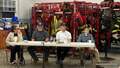
"The infrastructure in town is aged … we have a bunch of old mains in town that need to be changed out," said Water Superintendent Robert Benlien during a joint meeting with the Select Board.
The district had contracted Tighe and Bond to conduct an asset management study in 2022, where it was recommended that the district increase its water rates by 5 percent a year over five years, he said.
This should raise enough funds to take on the needed infrastructure projects, Benlien said, cautioning that the projections are a few years old so the cost estimates have increased since then.
"The AC mains, which were put in the '60s and '70s, have just about reached the end of their life expectancy. We've had a lot of problems down in Greenridge Park," which had an anticipated $4 million price tag, he said.
The main on Main Street, that goes from the Pittsfield/town line to North Street, and up through woods to the tank, was priced at $7.6 million in 2022, he said.
"There's a bunch of stuff that needs to be started, and start working on water main improvements and right now, we don't have the funding for it, especially with the debt that we already have for the two tanks, and the dam, and the Don Elser Pump Station," Benlien said.
"I think we need to start being proactive and I think this is a good start to get us going in the right direction to have the funding available if we do decide to take debt on or work on saving up some money so we can do the smaller projects."
Additionally, the town pays Pittsfield for its share of sewer usage and with upgrades needed at the $74 million upgrade to the wastewater system, rates are expected to rise there as well.
The town sends sewage to the city's treatment plant and is billed by Pittsfield based on the total tonnage Dalton sends into its system, Town Manager Eric Anderson said in a follow up.
The town then divides the bill it receives from Pittsfield between all the town residents and businesses at a flat rate.
According to Town Collector Joseph Dinofrio the current sewer rates are $282.00 twice a year, which is $564.00 annually per unit.
Pittsfield has proposed raising its fees for the town to include a charge to contribute towards the capital costs. However, there is not an official agreement with the city yet, everything is still in flux, Anderson said.
"Up to this point, they've borne the capital costs of upgrading the system. Whereas in the past, Dalton has borne its fair share of the capital costs. Whereas up to this point, we really haven't with this project," he said.
It can be assumed that the sewer costs will increase at least one and a half times, because that is going to be the multiplier Dalton residents are going to pay, he said.
However, the city is also looking into taking on an additional bond to upgrade its wastewater treatment infrastructure, primarily to address stricter requirements for removing nutrients from effluent, Anderson said.
The city's Department of Public Works is requesting the City Council authorize borrowing up to $15.2 million; this request was referred to the Finance subcommittee.
Previously, treatment focused only on eliminating biological hazards, but new regulations require capturing more nutrients, making the process more technologically complex and costly, he explained.
It is yet to be determined the financial impact this will have on Dalton, Anderson said.
Although overseen by separate governing bodies, water and sewer services are closely intertwined. The water department which is managed by the Fire District and overseen by the Board of Water Commissioners, while sewer services are governed by the town.
With projected increases looming, this is a perfect junction to consider meters, because households would be billed based on its usage instead of a flat free across everyone in town, said Select Board member Anthony Pagliarulo during the joint meeting.
"We're not in a drought condition," he said, adding that the Quabbin Reservoir is at 80 percent capacity, which is its lowest lever since 2017 and "water is a precious resource."
If the town were to implement meters, it would use water usage as a proxy for sewer output so sewer charges to residents would be allocated based on water use estimates, Anderson said.
"Ideally, if you're a homeowner, and you want to conserve and you want to use low flow devices, and you make sure you don't have leaks in your system, and your toilet doesn't run…and you don't take hour-long showers, that will affect your costs. So you have a built in incentive to save by having it metered," he said.
In some cases, it is challenging to measure sewer usage based solely on water consumption—particularly for activities like gardening, where water is used but doesn’t enter the sewer system, Anderson said.
"So, it's harder to account for that. There's nothing we can do that's totally fair, and I'll be perfectly willing to admit that. But I think it's more fair by [metering,]" he said.
The downside is the town would have to pay for the meters, which is not cheap, and they have a life expectancy of about 20 to 30 years, depending on the meter, Anderson said.
The question remains, is the amount the town would spend on water meters with the cost of being able to "accurately or more fairly" bill residents.
"If you're really being a high user, theoretically you should pay more, because you cost the town more…that's kind of the way most utilities work," Anderson said.
"Everybody doesn't pay the same electrical rate you pay for what you use. And the goal here is to do something very similar."
Tags: sewer rates,