Mill River Folk School Cultivates Traditional Skills
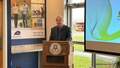
NEW MARLBOROUGH, Mass. — New Jersey transplants Steve Butler and Liesl Carlson are bringing the joy of learning traditional handiwork — from wood carving to candle making, from fly-tying to banjo playing — to their new Berkshires home.
Butler taught at the Peters Valley School of Craft in New Jersey, where he was head of the woodworking program, and has a YouTube DIY show. Carlson makes handcrafted jewelry.
The husband and wife were looking for a similar artisan community here and founded Mill River Folk School in 2024.
"We were just commiserating, going, boy, I really miss that community, right? Because we're so sparse, and Marlborough is five villages all over the place, and there's a lot of people here, but there isn't something like this to bring them together. So we are just saying, well, let's create the community," Butler said.
"We just really wanted to get the message that this is for everyone, and it's hands on. So a folk school is basically preserving, originally traditional crafts, but we're just preserving hands-on skills and crafts, trying to do our best at that."
Butler asked around for appropriate space and United Southfield Church pastor Robert Olsen donated the vacant Southfield Ladies Hall, which has a kitchen.
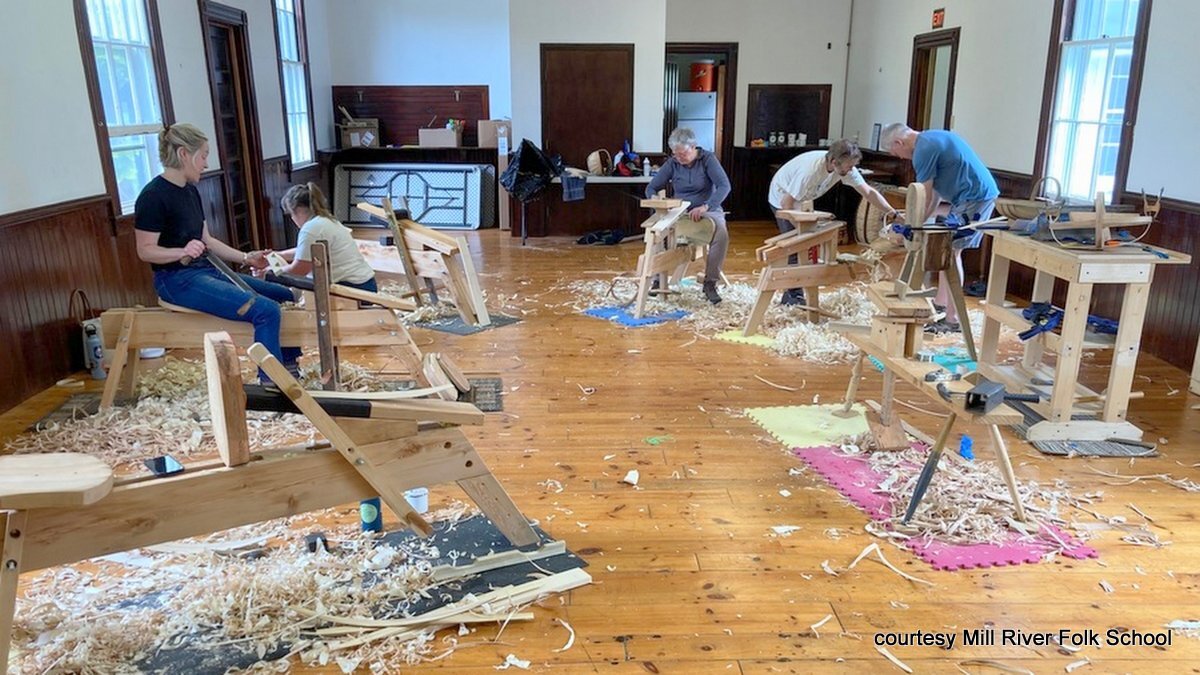
The workshops started last year with eight classes and eight different instructors. People were able to learn from those in the community. The lineup of classes has grown for this year and the couple are trying to expand even more now that the school has nonprofit status.
"We doubled, already doubled the amount of workshops. We now have 16 workshops. And we're just, we're growing," said Butler. "We got our 501(c)3, tax-exempt status, which helps us secure some grants and fundings. But it's a little bit of a struggle. It still is a labor of love."
Butler seeks craftsmen and artisans from the community teach the courses, like sculptor and artist David Lane of North Adams, who teaches wood carving, and Joe Pappas of Sandisfield Orchard, who plans to teach a free course on apple tree pruning.
They hope in the future to find a bigger space and work with local farms to offer agricultural courses.
"We're trying to keep it all local ... We have a small three-person board, but we're growing just in our second year, so hopefully, with some fundraising and more greater foundation grants now, that we'll have a few years under our belt and that we'll have a barn, or even be able to have this under one roof, and create a community center," Butler said.
The school is not year-round but hopefully will be in the future. Butler's goal is to have his space inclusive for everyone.
"It's very important, doesn't matter of anybody's economic status or social status, gender, anything. That's what a folk school is about. It's all inclusive for everybody, learning opportunities for everybody, they're not formal, they're not graded or critiqued in some learning for learning's sake sort of thing, and they're hands on," he said. "So the courses are geared to bringing people together, but also just to preserve some traditional skills."
He tells people to not be discouraged to try, whether you've done it a couple times or not at all.
"To not be intimidated at all. It's about using your hands and having fun. And when we use our hands to do anything, it creates I feel confidence," Butler said. "As a teacher, I'm not formally teaching in a classroom setting at the moment, but when I was, you see people struggle, and then there's that 'aha moment.' Especially if they're starting something for the first time, or learning something for the first time."
You can sign up for workshops on the website; materials may be included, but some are an extra fee or must be brough to the site. The first course of the year is apple tree pruning in February; there's also several woodcarving courses, paper work, some weaving and a caning course, introductions to banjo playing and blacksmithing, hand and machine sewing, fly-tying and candle-making and felting. There's even a course on building a cigar box guitar.
Costs range from $105 to $345; the pruning class is free. Times range from a few hours to two days.
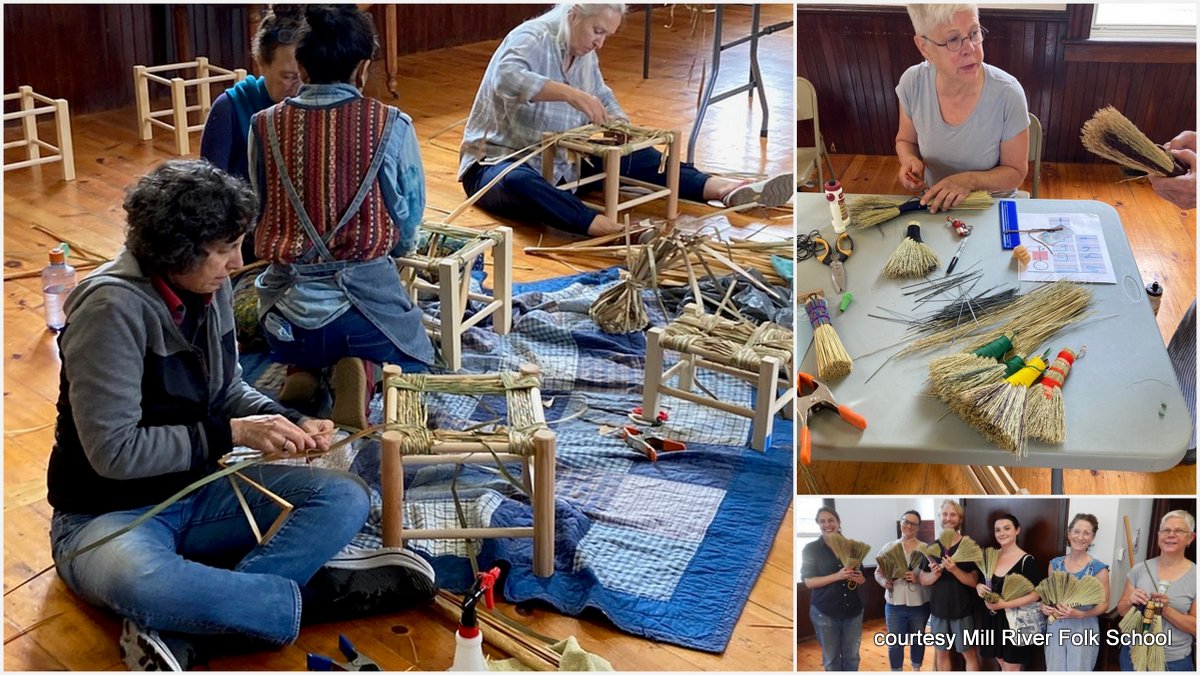
"Some of the courses have a material fee, and it will say that's extra and some will say all inclusive, everything included, but all the tools, it's basically just the materials. So all the tools they use, and everything are included," he said.
He has seen people from all over come to take his classes. He hopes that his school will help bring business to New Marlborough as well.
"We had someone from Michigan last year. I noticed someone, a few people from Florida, whether they're summer-home people are not here that have registered for classes, but then hopefully, people will travel to the area to take a workshop, there's no reason why not, and help out local B&Bs and establishments as well. So that's the big, the grand picture," he said.
Butler said he is always looking for new instructors and recommendations on classes people might like to take; those who want to teach can fill out a form on the website.
"We're always looking for instructors. We're trying to not to be prejudiced of other areas, but we're really trying to support local Berkshire economy and instructors as well. That's our vision," he said. "And so there's a space on the website if someone has an idea for a workshop, or know somebody or themselves, please reach out."
Tags: artisans & crafters, crafts,