image description
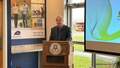
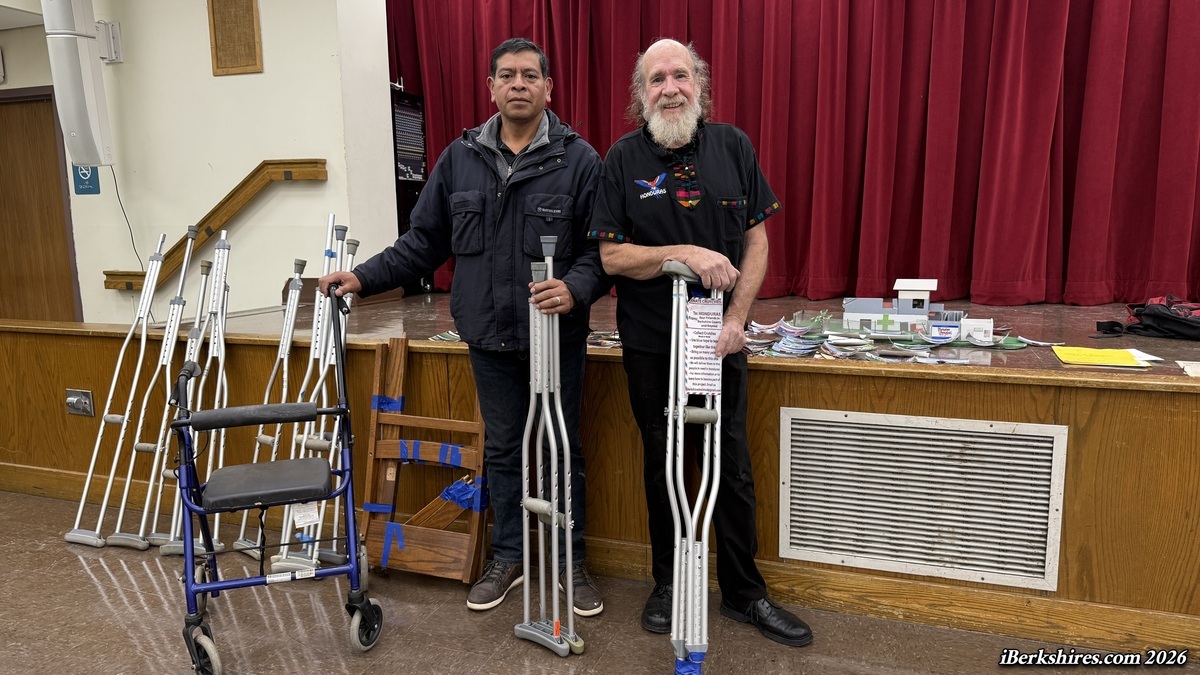
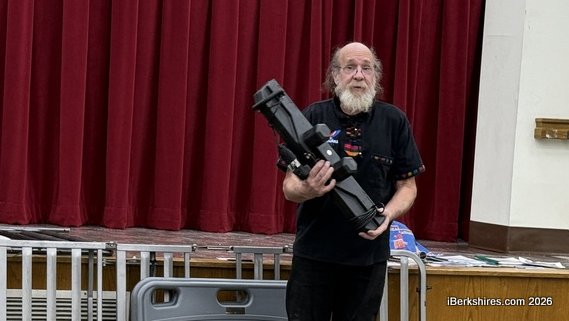
Berkshire Amistad partners Edmundo Mendez Sanchez and Eddie O'Toole with donations for Honduras. The two were giving a talk at the Berkshire Athenaeum.
image description
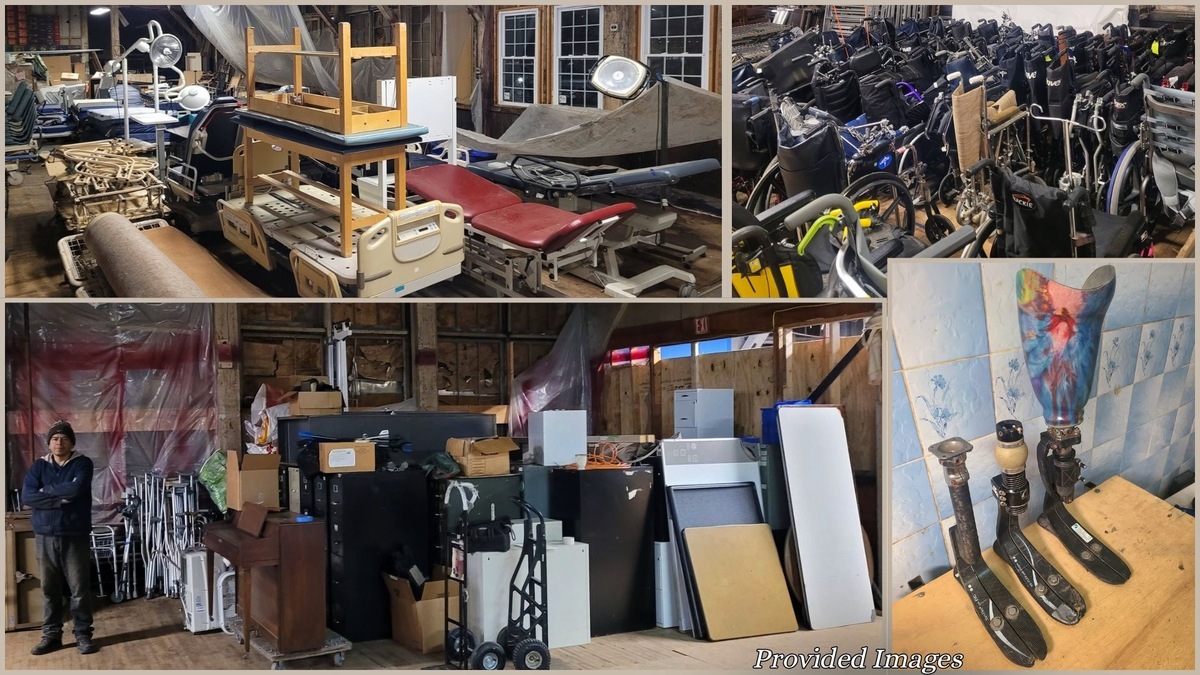
Medical equipment and related materials shipped to Honduras.
image description
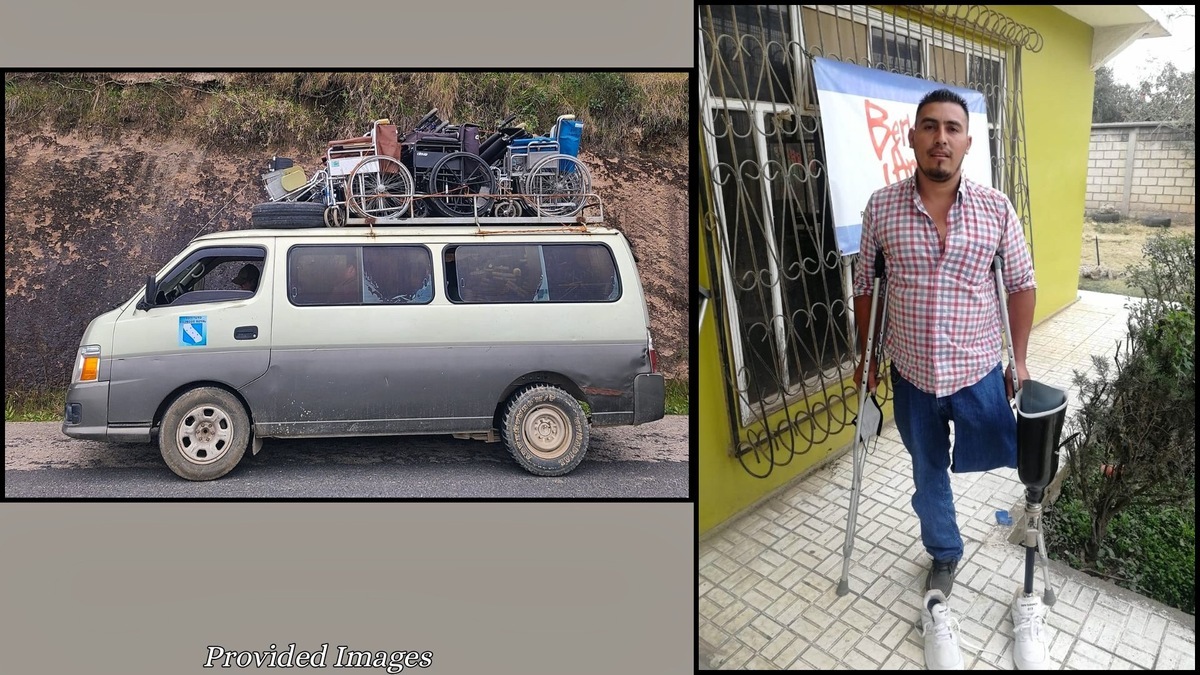
Prosthetics and other ambulatory equipment are helping people take part in everyday activities.

Berkshire Amistad: American Waste to Aid in Honduras
By Sabrina DammsiBerkshires Staff
Print Story | Email Story

Eddie O'Toole found that empty banana shipping containers could be used to bring medical equipment to Honduras. 
PITTSFIELD, Mass. — More than four decades ago, Eddie O'Toole returned from the Peace Corps with the realization that good things were being thrown away when they could be used elsewhere. 
 
The question was how to get those resources to where they needed to go in the most cost-effective way.
 
The solution came from an unlikely item — bananas. 
 
O'Toole discovered that shipping containers carrying bananas and pineapples from Honduras to the United States return empty each week. 
 
He partnered with shipping companies to use returning containers for transporting donated equipment and supplies to Honduras, and the nonprofit Berkshire Amistad was born. 
 
Last Saturday, O'Toole and his partner in Honduras, Edmundo Mendez Sanchez, spoke at the Berkshire Athenaeum to ask for help and provide an update on their most recent shipment. 
 
"A lot of people up here just see this really as garbage, that it is really not needed and in Honduras, it's the need," Sanchez said in Spanish as O'Toole translated. 
 
The organization sends donations of ambulatory equipment such as walkers, rollators, wheelchairs, and especially crutches. It also takes items including hospital beds, exam tables, filing cabinets, glasses,  empty pill bottles, hospital equipment, school supplies, and more. 
 
O'Toole said he hopes to build connections with local transfer stations and landfill facilities because they are prime locations where people dispose of items that can be used to help people in the Central American country. 
 
Partnering with these sites will allow them to recover and collect items before it's thrown away, ensuring that more items get reused to help people in need — rather than ending up in the landfill, he said. 
 
The total cost of shipping the items is $8,000, which is funded through fiscal donations and reselling. 
 
Berkshire Amistad accepts monetary donations by mail to P.O. Box 83, Pittsfield MA 01201. As a registered nonprofit, donations are tax-deductible. More information here
 
"The effect that we can have just with a pair of crutches or anything like that, it's just amazing.  We do it all just to promote peace in the world. That's really what we're trying to do," O'Toole said. 
 
Much of the operation focuses on redistributing items — either by liquidating donations to help offset shipping costs or by sending goods to Honduras, where they can make a real difference.
 
For example, O'Toole will use his background as a mechanic to repair a vehicle, sell it, and use the funds to cover the operation.
 
The nonprofit was also able to construct a hub in Honduras to store and redistribute items using material from a building in Lenox that was being taken down, O'Toole said. 
 
Their efforts have improved access to medical care in Honduras, with the donation of an ambulance, beds, oxygen machines, and even dental and X-ray units. 
 
These donations have allowed for an increase in clinics. When O'Toole first met a doctor in Honduras, he had only one clinic; today, he has opened 103.
 
O'Toole recounted the death of a friend, a young child in Guaimaca, who was struck by a truck while riding a bicycle. Despite his father's efforts to get him to the hospital, which was an hour and a half away, he didn't survive because of the distance 
 
"I just said, 'This is crazy. They don't have an ambulance, so I gotta get an ambulance,'" O'Toole said, and he did just that. 
 
He found and purchased an ambulance, drove it down to Honduras with his family, and started an ambulance service.
 
For years, the nonprofit had to rely on its partners for import approval. However, its most recent shipment, a 40-foot container, is entirely under its own import license and certification.
 
Despite challenges, including the recent snow storm, the container was strategically stacked to the point where there was really no airspace, O'Toole said. 
 
This shipment and all future shipments use all corners to its advantage, including space in the donated cabinets.
 
The support from the community has had an astronomical impact, O'Toole said, highlighting several donations they have received over the years from a prosthetic leg to a 2010 Ford van that, once sold, will help cover the cost of shipping. 
 
Over the years, they have also received donations from local organizations, including the Berkshire Athenaeum, which recently donated 50 solid oak chairs and 15 round tables; the South Congregational Church, which donated 20 tables; Berkshire Medical Center, which donated its blood mobile vehicle; and Tanglewood, which donated a moving van. 
 
O'Toole shared the story of a woman who lost her leg and longed for the simple ability to stand and wash dishes —something she couldn't do without her limb. Thanks to a prosthetic, she regained her independence and could once again take part in everyday activities.

Tags: donations,   medical devices,   nonprofits,   
If you would like to contribute information on this article, contact us at info@iberkshires.com.

Prospect Meadow Farm Opens New Vocational Barn

By Breanna SteeleiBerkshires Staff

A charcuterie board at the event displays fare from some of the regional producers.

PITTSFIELD, Mass. — Prospect Meadow Farm last week officially opened a new barn to sell plants and other goods it produces.

Prospect Meadow Farm Berkshires is an expansion of ServiceNet's first farm in Hatfield that has provided meaningful agricultural work, fair wages, and personal and professional growth to hundreds of individuals with intellectual and developmental disabilities since opening in 2011. 

The Berkshires farm opened on Crane Avenue two years ago and has now introduced a new vocational and unwinding space for the more than 25 farmhands who get paid a minimum wage.

"This is a facility for our folks who work on the farm to learn additional skills and do additional work," said Vice President of Vocational Services Shawn Robinson at the Friday event. "So we have a food packaging space, we've got a walk-in cooler space, we've got a floral design space, we've got a farm store room for staff, lunch room, and then a meditation room that we're standing in now, which is when you're having those hard moments and you need to get away from everything.

"This is going to be a peaceful place you can find and sort of find some comfort, and then hopefully get back to work."

The barn was built by funds from the state Executive Office of Economic Development and the state Department of Agricultural Resources that equated to around $600,000, with ServiceNet contributing around the same amount. The structure took over a year to build.

The state's Department of Developmental Services Commissioner Sarah Peterson spoke on how meaningful this farm and ServiceNet is to her and that this place is important to those who need it.

"Places like this are so crucial because they create opportunities for people living with disabilities that aren't plentiful," she said. "People living with developmental and intellectual disabilities have an unemployment rate over 25 percent five times the rate for people without disabilities, even more jarring is under appointment, which is at 80 percent. That means that four out of every five people with disabilities earn below market rate wages and have limited upward mobility.

"The building itself is really impressive, but what you're really seeing here is the result of vision. It's about opportunity, it's about community, and it's founded in the belief that every person deserves the chance to learn and work and contribute to thrive under the leadership of ServiceNet."

One aspect of the barn will be the market where produce from the farm and other local growers will be sold as well as keeping the tradition of Jodi's Seasonal, which previously occupied the location, alive with plant sales. The market will be open Monday through Saturday from 10 a.m. to 3 p.m.

"Everything you see in terms of the tomatoes, the fresh produce, that's all done with the hands of our farm hands here, individuals with disabilities who get out every single morning, get in those greenhouses, put their hands in the dirt, and make all of this happen, and this is just the start," said Robinson. "This farm is a little over a year old at this point, but give it another two years, and we hope to be growing enough food to share throughout the Berkshires."

Robinson said the farm is focused on local food security, recently partnering with the Hatfield Council on Aging and planning to work toward making enough food to partner with places in the Berkshires.

He said the barn serves the Hatfield farm and what the employees here needed.

"We've been able to learn the needs of the farm hands who work there and so we have learned that they need a comfortable break space for those times where it's hard to be out in the fields, we've learned that a quiet space for when you're going through something you need to be away from people are key, and then also we have a small farm store in Hatfield, but we've seen increasing interest in retail work from our participants, so we thought it was time for a larger-scale farm store," he said.

Robinson noted that Prospect Meadow Farm has helped the individuals working there feel valued and head.

View Full Story

More Pittsfield Stories